A Box Of Chocolates

My husband and I got to know each other shortly after 9/11. When we met, I had been officially divorced for about 4 months. My first husband had asked for a separation, late in 1999, when I was very early into the pregnancy with my eldest child. In the fall of 2001, I had been “single” for about one and a half years and was ready to play the dating game again…

I didn’t know many people in the county where I was living, with the exception of my neighbors and the few people I met through them. Having moved to the area in the spring of 1997, my job was a good 45 minute commute; there was no time for me to really meet anyone outside of work. When I decided to dip my toe back into the dating world again, online dating was the best way for me to meet someone. After exploring the few free sites there were at the time, I realized most of the men were just creepy and not looking for anything lasting. My friends said, “Sarah, if you pay for a dating site the men who are on there are also interested in a relationship”.

I joined match.com or “Match”, as it is now called. When stating the type of man I was looking for, I said “you must love children and cats” (as I had both).  A man responded “I love children and will tolerate cats”; I appreciated this man’s honesty. Over a short period of months I communicated with four different men and went on dates with three of them. Greg, the man who “tolerated” cats, was the man that I was most interested in: we were close in age and both transplants to the area. His honest words touched me, as I felt there had been a lot of secrets in my first marriage. 

My neighbor, who had become a good friend, helped me figure out what to wear on my first date with Greg: something understated as I knew he was fairly conservative. My friend and I made a plan as to how I could break off the date if it wasn’t going well; I can’t remember what it was. Most likely she was going to call me and give me an excuse to leave if I wasn’t enjoying myself.  

Greg and I met at a bar which had an adjoining restaurant. I was five minutes late. He was five minutes early. We had a drink and good conversation, then decided to extend our date to dinner. At the end of dinner, Greg pulled out a box and handed it to me; it was a small box of chocolates.

By December of 2001, a few months after we met, Greg took the time to help me pick out a Christmas tree and put it up. I was in love with this kind, considerate, gentle man. He accepted me for who I was and all that came with me. We married in January of 2003.

We have both grown and changed over the years. Life’s path can be beautiful, fun, heartbreaking and hard, but we have taken those roads together. Greg has continued to be the man I fell in love with. Over the years, I have learned that he is the one with the romantic heart and giving nature.  This year, for Valentine’s Day, Greg (knowing I love written words) tried his hand at poetry. He had a little help, but this didn’t matter to me; the gift melted my somewhat cold heart. 

The Valentine’s Day poem Greg wrote me this year


My husband, with his heart on his sleeve, gave me this unexpected gift…and a box of chocolates.

,

The Keeper Of Stories

(Unedited)

Today I was reminded of a story I wrote almost 1 year ago for my “Professional Facebook Page”. For those of you who only follow my blog, you may not know I have a “professional page”; these words are in quotes because I am not a professional, nor do I make money from my blog. Tell Me Your Story was started because I like to write, tell my own stories (which my husband and kids were getting sick of hearing) and I am genuinely interested in what others have to say about their own lives. I wanted to make a space for people share something about themself- some have taken me up on this idea.

The story I wrote for my “Professional Facebook Page“ almost a year ago.

Yesterday, while I was swimming, the pool was crowded. There was a young lady waiting for a lane, so I offered to share my lane with her. Today, again swimming, I was in the lane beside this same young woman We introduced ourselves and started chatting. I asked a few questions and she started talking, then stopped and said “I don’t know why I am telling you my story”. In response I said “I have have a blog called Tell Me Your Story, I like hearing about other people. She talks for another minute or two and she stops again and says “Wait, what? Do you really have a blog”. I just laughed and said ‘yes’…. today I was reminded of my Facebook post from almost one year ago. Remember you are invited to share your story with me and, if you choose, with those who read this blog.

On Thin Ice

Part 2 of An Unexpected Journey

Imagine life is like a frozen lake. You decide to walk out on the ice because you think it is solid. Unfortunately, you hear a cracking sound and feel the ice breaking. The ice is not as solid as it seemed.

We felt those cracks the summer of 2018.

Bay, (our 14 year old) wrote us a five page letter entitled “I Am Still Here”, but in reading an email I wrote to a friend the actual title was “I Am Alive”. In that letter our child told us about his past year and how he was suicidal, depressed and had made plans to kill himself. We were fortunate; Bay took pen to paper, that summer night of 2018, and wrote us the letter rather than taking his life. I was at our family cottage with my husband, eldest daughter, son, and my mother. The morning we read the letter we were in a state of shock and sadness, not knowing how to proceed. A friend of my mother’s telephoned my mom while we were trying to process this. My mom was crying when she answered the call. Our neighbor took it upon herself to come right down to find out what happened. She did not come because she was a gossip and busy body; she was the opposite of that. She showed concern. When she found out what Bay told us, she said: “Take him to the emergency room”. An answer that was staring us in the face, but I never considered a mental condition would be looked at in the ER.

We went to the ER, and they were a great help, but it was determined that Bay was no longer in danger of killing himself and he could go home. We saw a social worker every week, for four weeks, while were at the cottage.

The ice held steady.

When we got home from our time in Canada, it took us a long time to actually find somebody who had any availability to see Bay. He started seeing a therapist in October. Bay seemed OK. However, he hid what he was thinking and feeling from his therapist and from us.

Bay’s friend group changed that fall. A few more cracks formed.

By December of 2018 Bay looked like he was closing in on himself. He would come home from school and go to bed.  On the weekends, he barely got out of bed except to do routine things ( eat, shower, etc.).  I guess the fact he still had a semblance of routine was good, right? He would eat very little and then had junk food late at night. At the dinner table Bay would make himself as small as he could. I was the only person in the house he would have a conversation with.

More cracks in the ice, with open water ahead.

One afternoon, I took him out after school and told him I could see how much he was struggling. I let him know we were trying to find a psychiatrist because therapy alone was not working. Bay agreed that he needed medicine.

I called around to find a psychiatrist that would take our insurance. In December of 2018, just before Christmas, I made an appointment to see a psychiatrist in April. There was no availability to see this psychiatrist for four months! Meanwhile, his therapist knew nothing of what was going on. WE only knew what we saw.

The ice continued to break. But I had not fallen through.

In early January we found Bay’s journal. We discovered many things that might be contributing to his extreme depression and suicidal ideation. He had been depressed for almost two years. Until then, we really didn’t understand how dark things were for him.

You might ask why we didn’t take Bay to the hospital. I wish I could put myself back in that time to answer this question. Why didn’t we? All I can remember is that we were in crises and “walking on eggshells”. Bay wasn’t truthful about how he was feeling and we didn’t want him to know we had been looking in his room for answers. I do know we wouldn’t have been able to get Bay in the car, unless he agreed. To be admitted to a hospital for mental health reasons the person has to be able to say they are in danger of hurting themself; at least that is what we understood at the time.

I ran, I swam, I practiced yoga….This allowed me to sleep at night. Every morning I held my breath not knowing if my child had made it through the night; when I heard him move in his bed I would let out a sigh of relief.

At this point, I felt like I was on a thick piece of ice floating in the middle of an open lake.

I found a little support group of sorts with some women I met in yoga, along with someone I had known for 19 years. One of these women was going through something similar, one was a psychiatric nurse, and the others had been touched by severe depression in one way or another. I also had made another friend, a single mom and pastor, who was easy to talk to.

By late February/early March, my husband found Bay’s journal again and told him so. Everything was out in the open…

With the way our son was treating us, our home had become increasingly unhappy. He would yell at his father, tell us he hated us and to “fuck off”. I knew Bay said these things because he was hurting; no matter what was said, we loved him unconditionally.

My youngest daughter, who has the biggest heart, was beginning to suffer. I was sad all the time and my husband was hurting too. Luckily my eldest child was in her second semester of college and away from home.

In early February we went to our lawyer to change our will and prepare for what the future might hold. Tears came to my eyes and I started crying because I didn’t  know if my middle child  had a life ahead of him. Our lawyer gave us the name of a fantastic psychologist who had saved her daughter. I called the psychologist and left a message using our lawyer’s name. I discovered, at the time, it is all about who you know to get anywhere. A week later I had heard nothing back. Then a friend, who was (and still is) a school counselor gave me the name of the same psychologist. I called, using the names of both the women who recommended us to this psychologist and was called back right away. Unfortunately, we had to wait at least a month for an appointment.
I continued to float on my piece of ice.
In February and March we told Bay’s therapist (the one he started with in October) all the things we had found out, they finally started to make some headway. Really, it was too little too late. The last time they met, she finally suggested medication.

The first day we saw the new psychologist, she suggested we take Bay to an inpatient clinic right away. She didn’t know how he was still alive. Bay would have been admitted to the clinic, however there were no beds. We went to the ER. In an emergency room, if it’s determined a person is a danger to themself, they have an obligation to find that person a bed. After 9 hours between the inpatient clinic and then the ER, Bay came home with us.

My heart was heavy, I was constantly afraid of what I might wake to. I was still floating, but my piece of ice was shrinking.

The following week (mid April), we saw the psychiatrist that we had been waiting months to see, only to be told: “Did you know March, April and May are the highest months for suicide? I fully believe that Bay will need medication, but it may take several appointments to reach that point”. We were looking at the end of May before our son MIGHT be given medication. When Bay told his new psychologist this (on his third visit) she was appalled and suggested we pay out of pocket for a private psychiatrist. She gave us two names. I called both of them. Simultaneously, she gave them the heads up that I would be calling. We were seen within a week.

We saw the psychiatrist and Bay was put on Zoloft; a medication that starts on a low dose and takes some time to take effect.

Not quite a week later, My eldest called us in the middle of the night and said she was really worried about Bay. She had been sent pictures of her brother’s side of a Snapchat conversation. What Bay had said was extremely ominous. My eldest thought her brother might take his life that night. After I hung up the phone, I went into see my son. He said the crisis had passed for the night.  My eldest sent the pictures to me. I, in turn, sent them to both of his doctors.

In real life, the area of Muskoka, where our cottage is, was flooding and destroying property at this time. I was worrying about that along with what was happening here. My little piece of ice felt like it was being tossed in the flood.

We had an emergency visit with Bay’s psychiatrist the afternoon following the phone call from my eldest and an emergency visit with the psychologist the day after. When I say an “emergency visit”, it’s because there are certain times that are saved for a patient in crisis; he was in crisis. The psychiatrist put him on lithium, a medication that helps reduce the risk of suicide.

The lithium seemed to be working. However, there was still a long road ahead of us. 

The ice started to freeze over again; I felt safer.

A few cracks were heard along the way:

I was called about a finding on my mammogram; I went in for further testing and was fine. Then my mother fell and broke three ribs. She probably would have died if her significant other hadn’t been with her.

During this emotional turmoil I ran so I could breathe; went to yoga so I could focus; swam to allow the water to hold me up; and went to therapy so I didn’t drown if I fell through frozen water. Sometimes you don’t realize the how fragile life can be. Four years ago we were a family standing on thin ice, every day thinking it might break. Even now that life is fairly solid, I hear distant echoes of the ice cracking.

Author’s notes:

In May of 2019 I wrote an email to a friend to explain what I had been going through since the summer of 2018. This story is taken from the “letter” I wrote, hoping to paint a picture of why my year had been so incredibly hard. For those of you who have not read The Beginning- An Unexpected Journey, this story summarized some of it. The name of my child has been changed.

If you or someone you know is experiencing a mental health related crises, please call 988 or chat with somebody at https://988lifeline.org/ . Suicide is a leading cause of death in the United States; if you are reading this story from another country and have a help line to add, please share it in the comment section.

Cedar Springs- Joy, Sadness and Death in Dallas

By Alexander Troup

The greatest tragedy in the state of Texas, was the shooting of John Fitzgerald Kennedy, on the  streets of Dallas. He was shot on the corner of Elm and Houston Streets, early one afternoon, just before Thanksgiving.

I was in Dallas at a private school called Saint Monica. The day JFK came was to fly into Dallas, we were told to go to the school’s lunchroom. We assembled in groups, by class, to see the Catholic president step off the plane. We were watching the news clip on a small TV set. As the flight began to land at Love Field, most of the kids in the lunch room then started to chant “crash, crash, crash!”. This is a true story.

That morning the Kennedy motorcade drove into town to an area where my folks ran a fine art print studio and frame shop. As part of a crowd, my parents stood near the intersection of Fairmount and Cedar Springs, where they saw the president, his wife (Jackie), and the governor drive-by. With this procession of motor vehicles was a large group of security people: Secret Service and motorcycle police from Dallas. However, the president took time to stop and shake hands with the spectators.

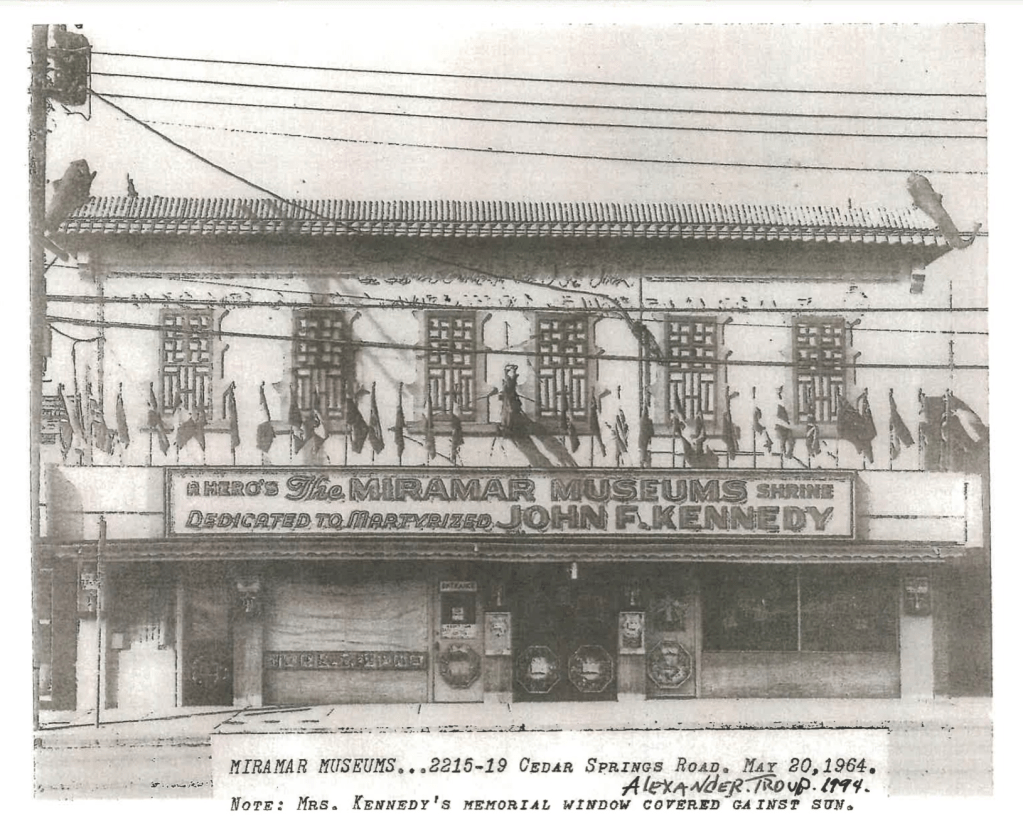
As the motorcade moved along Cedar Springs, it passed by C.F. Newtons Miramar Museum; it was a folk art kind of political statement with a neon sign that was to go against conservatives. Having been run out of Highland Park (an affluent area that is surrounded by the city of Dallas) in the late 1950s, the Newtons were exiled to this location. In 1964 the Newtons changed their sign to the John F. Kennedy Shrine and Museum. For years it remained with this sign, until the couple passed away in the mid 1970s.

Later that the day, in school, we were told the president had been shot! Hundreds of kids were crying, regretting what they had said earlier when the flight was landing at love Field.

That evening the capture of Lee Harvey Oswald in Oak Cliff was released to the public. He was apprehended at the Texas theater, and this was the beginning of the mystery that has become the 1963 Kennedy assassination.

Over the years there have been many JFK Memorials. Some museums that opened up were large and others were  small, but most have disappeared. In 1968 six places memorializing JFK were open, now few locations exist. Today’s memorials are more for tourists than, for reflection and respect. The big question: Why did this happen?

Almost a decade after John F Kennedy  took his drive on Cedar Springs, where the crowd shook hands with the popular  president, a terribly sad event occurred….In July 1973, there was a shooting of a 14-year-old boy Mexican boy from the nearby barrio of little Mexico. The sad fate of the boy took place at Bookout and Cedar Springs, across the street from Mac’s Fina gas station, by the side of the Parisian strip club. The shooting was by the two Dallas policeman, who had arrested the youths, for the supposed break-in to a Dr. Pepper machine at the gas station. 

When the boys were arrested, my folks and I were in the fine art gallery making picture frames for a bank commission. We missed the noise of the events that took place. When we left the gallery, we didn’t see the flashing lights that were up the street. Here is what happened:

The boys were placed in the backseat of the police car at the time of the arrest. The officers then began to play Russian roulette, with their pistols, on one of the boys, to get him to confess the crime. A round went off by accident in the backseat of the police car, killing the youth and blinding his brother forever. My folks and I heard about the death of the youth (Santos) the next day. I had met Santos once, at the gas station, while getting the flat tire for my bike fixed. A truly traumatic event took place that day, one block from the John F Kennedy shrine museum.

Later in the summer,  I recall the city courts in Dallas dismissed the charges; the two officers were only suspended, as it was considered an accident. Riots ensued. Bricks were thrown into the large plate glass windows of our fine art print studio. My folks were advised to move the business. The fine art print studio and frame shop, once on Cedar Springs Road, was moved; sadly the gallery never recovered and my folks lost the business.

Cedar Springs: a road in Dallas where John F. Kennedy shook hands with those along the route of his motorcade. A segment of the route that took the young President to his untimely death. Then, almost a decade later, Cedar Springs was the scene of a terrible tragedy….the memory and excitement of a bright day in 1963, in contrast to the dark event in 1973, but both ending in sadness and death…..why Dallas, Texas?

Beyond The Darkest Day:

How I survived the grief after Pan Am Flight 103

Recently, a New York Times headline read: Libyan Operative Charged In 1988 Bombing is in F.B.I. Custody. A friend messaged me the article, saying “this must stir some emotions”. My response was, “…This time of year, every year since 1988, I feel it.” There is something in the cold, damp air, that comes in December that makes my body remember that time 34 years ago. You know the saying: I feel it in my bones….that is what it is like for me, but instead of a premonition, it is a remembrance of the past.

A day later, another friend sent me a text: “Thinking of you today as Pam Am bomber is in the news.” I am grateful that I have people who understand how that terrible incident still lingers somewhere inside me. Thinking back from the time that I first heard the news and the days following, the question comes to me: Did I share my pain and sorrow with the good friends who I spent the holidays with, or during the time we traveled together? The answer is most likely no, I tried to keep my emotions hidden back then. Some people called me stoic.

Shortly after I was told of the explosion of Pan Am Flight 103, I left my friend Deirdre (who I had been traveling with) and went to the airport in Brussels to fly back to London for the holidays. It was December 22, 1988, less than 24 hours after the fire in the sky. Getting close to my boarding gate, I went to a pay phone and called home; it was important to let my family know I was alive and well….both my mother and I were in tears as we spoke.

Still weeping,  I bought a newspaper to try and understand everything that I had learned just a few hours before; that is when my uncontrollable crying started. A young woman came to me and asked me in heavily accented English what was wrong. I pointed to the paper, unable to talk. She said “Don’t worry, that won’t happen to us.” There was no way for me to explain, nor did I have the energy to try…

When I arrived in London, I must have gone to the house where my friends, Mike and John, and I were staying for Christmas. My memory fails me. We were staying in a house that my cousin, who was studying at the London School of Economics, and some others were renting for the year. Had everyone who lived there left the house for the holidays, or was my cousin still in town? I can’t imagine that I went to an empty house, in a strange part of London, and stayed all alone….

What I do recall about the days and weeks following are fragments of memory:

Mike and I planning Christmas dinner:
Going into the shops asking strangers how to cook a turkey Neither of us, at age 20, had cooked a holiday feast before. That was a good day

Spending Christmas Eve at my local pub: The Ashes. Talking all night to Kevin, the Scottish man I had a crush on, about Lockerbie. He understood the heaviness I felt. His family home was near the town where the plane came down

Leaving London and traveling with the Christmas group: Mike, John, Meredith (John’s girlfriend), and Amy (Meredith’s) friend.

Arriving in the wee hours of the morning to Strasbourg, most of us falling asleep on our backpacks, while we waited for dawn in the train station.
Mike staying up while we slept to make sure the stranger near us didn’t steal anything .

New Year’s Eve near Munich: firecrackers going off in the crowd. Me feeling scared and upset…. all I could see was what the plane might have looked like in that darkest night in the sky

Saying goodbye to Meredith and Amy.

Venice in the winter with Mike and John
The three of us off to Padua to see Grazia, a friend from high school. My Italian friend telling me not to go to Milan- it was dangerous for a young woman traveling alone.

Leaving Mike and John as they headed south and I west

Arriving in Milan to find the youth hostel closed. Getting back on the train, arriving in Zurich after dark, not knowing where to go. Thankful for once for “Loud Americans” as I tried to figure out what to do. A group of young women, all students abroad, took me to the private hostel where they were staying

Checking into the International Youth Hostel the following day bumping into Deirdre while she was brushing her teeth. Catching up on the last few weeks

Heading different directions over the next few days.

Solace in Interlaken, as I hiked by myself on the land between two lakes

A train to Innsbruck, Walking down the corridor, passing compartments to find a seat.
I heard someone behind me: Sarah?!”, a voice called Looking over my shoulder, there was my friend, and roommate, once again

We traveled together the last days of our semester break. Munich: our last night on the European Continent. Running into a friend of Deirdre’s, The three of us spending the evening in the Hofbrau House. Late at night we boarded a train to take us to the ferry to England…. A 5:30 stop at a station, just long enough to purchase the best bratwurst ever!

Arriving back in London, without a place to live we headed to a hostel we knew A block away from the hostel, I stepped off the curb, twisted my ankle, and the full weight of my backpack came tumbling down…. My friend, laughing hard, asked if I was okay. No, not okay, I could barely walk Stumbling along beside Deirdre, as she carried both our packs to the hostel…

Had I gone home for Christmas 34 years ago, one of the students on Pan Am flight 103 might have been me. The young men and women on that plane, from Syracuse program in London, were the students on my flight to England earlier that year. Perhaps I would have been on the other plane that transported my fellow classmates home. I will never know; a different choice was made.

All these years later, the realization hits me with two scenarios of what could have happened if I went home for the holidays in 1988: I might no longer walk this earth or I would have sunk into a deep depression that would have been hard to climb out of. By deciding to stay in Europe, I lived. Traveling with old and new friends, helped me to focus most of my energy on something else. The trauma of that event lingers within me, however every Christmas Season I think of my friends and how they helped me make it through those awful days after Lockerbie.

C.W. Heppner’s Pecan Tree

By Alexander Troup


Preface: In an old part of Dallas there is a historic pecan tree; it was acknowledged in 2021 because of a story that Alexander Troup wrote 20 years ago. The original piece of writing was about a man named C.W. Heppner. Although the owner of the land died many years ago, the tree (which possibly dates back to 1824) still stands. Here is Alex’s story about a tree with colorful history:

In 1845 Judge Hord came to Dallas, Texas looking for some land to live on. Folks in the village of Dallas told him to go to the other side of the river. He took their advice and bought 200 acres, where he built a cabin. By the river, friendly Indians were hunting and camping. He got along with these natives and became a judge in Dallas County. Then, in the late 1880’s, a man by the name of Marsalis came and bought Hord’s Ridge, which the Judge was selling. He renamed the land Oak Cliff. Hord moved to Flander’s Height (over by the Fort Worth Pike in West Dallas) another hilltop scenic visual delight, around 1890.

One of Judge Hord’s neighbors was a retired German cavalry officer, an immigrant to Dallas, by the name of C.W. Heppner. He sold junk, fixed cabinets, and raised pigs. His property was close to the river bottom in West Dallas, facing east, where the Trinity River would flow; when the spring rains came, it would flood. Heppner, as he was called, became the Texas hero of the 1908 flood. He saved people, horses, and hogs as they swam down the Trinity in a current that was extremely wild and very deep. While this flooding took place, Colonel Heppner tied up his boats to an old pecan tree. This tree stood as it had since 1824, as the tree historians now say, measuring 16 feet around. It may have been planted by Indians as a marker…

By the early 1930’s on the front lawn of this old junk house, Heppner sold used tires to Bonnie and Clyde. Old C.W. lived there until around 1933 when the entrance of the present bridge was put on his lot. He was bought out and labeled an activist troublemaker, wanting to get the river tamed for 20 years. City officials were pretty vindictive back then and they hated this old German for showing up, with his fisherman boots and cap, to City Hall to gripe about when they were going to tame the river. He loved the junk house and hated leaving it. His house was torn down and Heppner was put in a nursing home where he died. Meanwhile, that old pecan tree is still there today, marred and scarred by trucks, cars and bicycle tires that ran into the tree at night.

Back in 1951 a reporter found out there were stories about how kids would fall out of these types of trees, dating back to the 1880s. The newspaper would also tell of accidental deaths, broken arms and legs, as pecans were by the bundle during pecan harvest season. Boys would make good summer money as this was an adventure. They would climb onto the branches to get that nice green and brown pile of pecans, and occasionally go too far out on a limb as it would snap, fall and crash…sometimes 30 feet down!

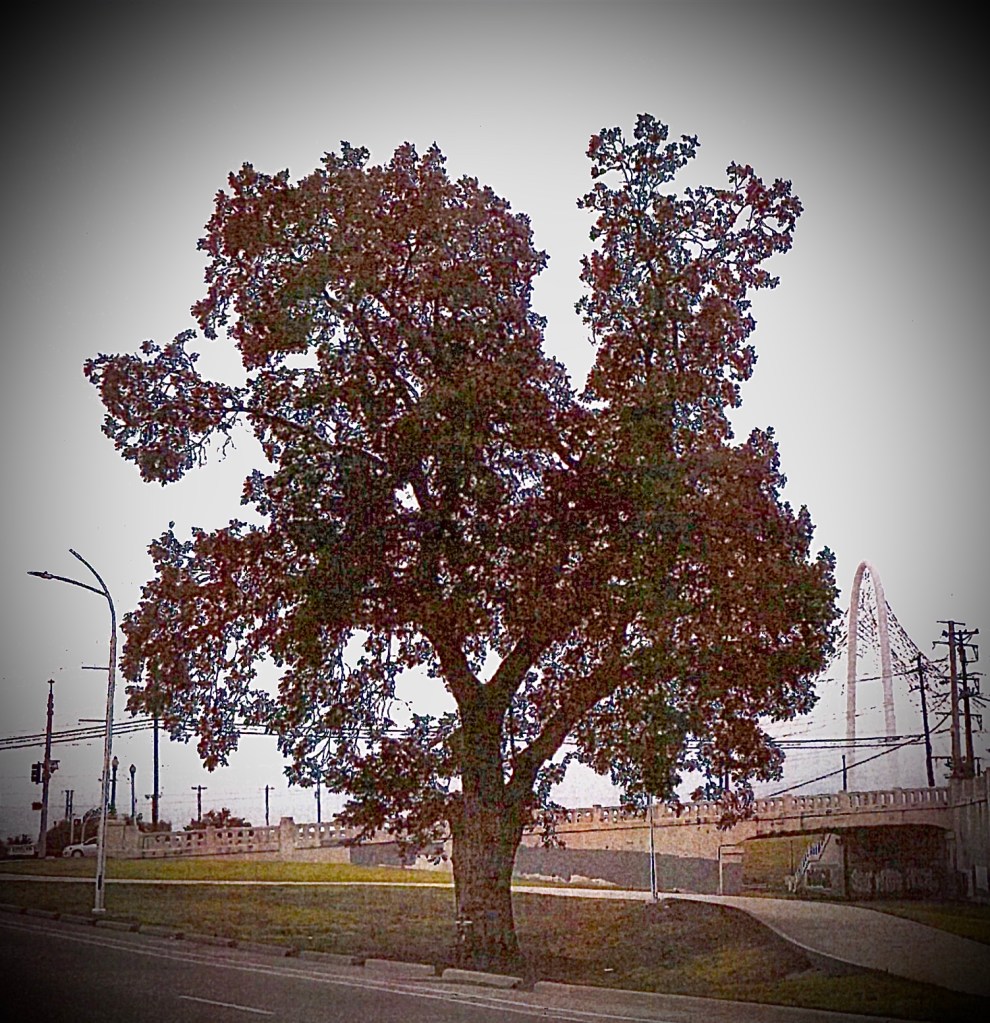
The pecan tree had been an eyesore to the new people who work for the city of Dallas, Dallas County, and the river authority of today. As it was a big, old, ugly monstrosity in their books, they wanted to chop it down and use it for firewood. I informed the agency, working through the city and tree historians, about the history that went with the pecan tree: C.W. Heppner was Noah’s Ark of the Trinity because he saved so many lives. There were also tales mentioned about kids who hid their bicycles up in the branches, at night, when they were stolen…Many stories of this old tree came up. I can recall driving by it the 1970s with my pick up truck and seeing many other old Ford pickups parked underneath selling peaches, apples, pears, and pecan seeds. In 2022 the agency I’m working for got a plaque stating it as a historic tree…they cannot chainsaw the tree in this decade.

So much for barbecue, old pecan limbs, and branches that ole C.W. would cut down from his Trinity River pecan tree!

Dedicated to Katherine Homan

The Summer of 2022…When The Sun Became A Tyrant

By Alexander M. Troup

Dallas, Texas is truly the beginning of an outback country; it is where South and the West come together. The city of Dallas was a dream location once, from the1950s to 1980s; now it’s out of date. Gone are the days when it was a good photo stock image, a place where some sort of wealth was suppose to make you better than the guy next door. A location I had moved to and from over the past 40 years, only to arrive back and call home.  

Dallas is strange place, located on a grid that was laid out by John Neely Bryan in 1842. The winds that come and go blow with a warmth of good feeling or bad omens; there are really no forests or Mountains, valleys or great hills. Even back when Dallas was founded, these landmarks didn’t exist. Today’s landmarks are huge sky scrapers and new valleys for roads which hold thousands of cars. The residential communities are caught up in a large frying pan of concrete and neon lighting. A cowboy is not really the boots and hats figure as he once was, but has evolved into another image: all suited up as sort of football space worker, with an oxygen tank in this kind of heat.

The sun became blistered with sunspots around late June of 2022; that’s when the heat wave began. Sun spot cycles were realized around 1610 by an Astronomer in London by the name of Thomas Harriot. He began to study the phase in which the sun would send out rays, during that era, with his thin glass lens telescope. Around 1843, another astronomer made good observations to say the motion of the sun, every so many years, has such effects which would add to earths warming. This summer the heat was not tapering off here in Dallas and in the rest of Texas as it had in previous sun spot drought years. For 67 days in the summer of 2022, the masses were held prisoners by a tremendous heat wave. The intensity of heat from 105 to 109 degrees, kept many in suspense as too when rain would arrive. 

I am a retiring historian who, most summers, would dig up old bottles from the 19th century. The task is amazing. The rain has been my friend in years past, as it washed away the dirt and dust when a site was exposed. I had to cancel any expectations of digging up old bottles this summer because 2022 had something else in mind. Unfortunately, due to the heat, I decided it was best sit it out.

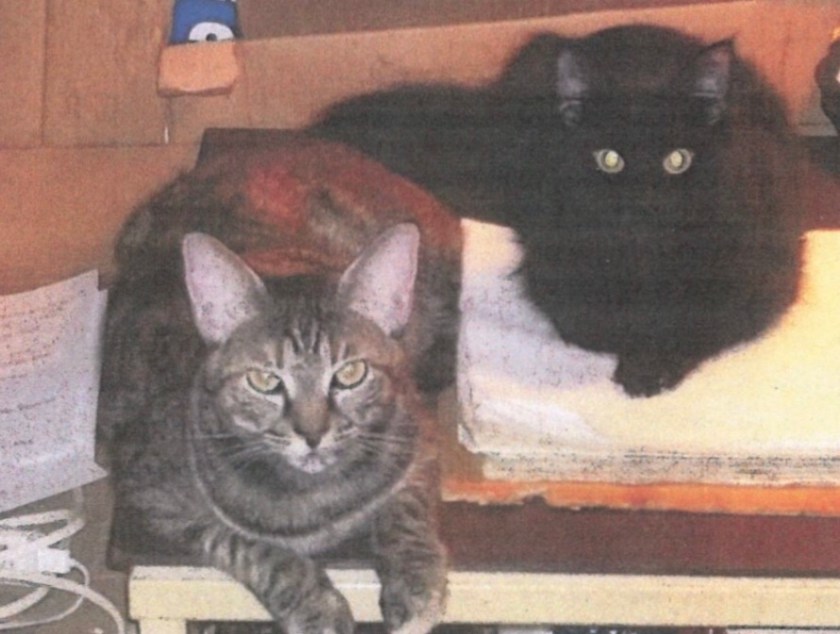
Last March I moved to an old two story home built in 1912, on Live Oak Street. One night this summer my AC unit went out and the temperature in my room rose to around 100 degrees. I have two cats, which I call “kats”, Blackie and Frankie who were hiding under the bed. Their cat box began to smell very pungent. The smell began effecting the building; things got worse when the breaker box in the  back went out. 

Frankie and Blackie

Two days later a letter came in the mail from the landlord saying I needed to pay a fine for $1000 as a pet deposit fee and get a better solution that will absorb the kat waste and urine smell, which I did; the right kind of clump for their litter box was found. This house on Live Oak Street was difficult since the size of the room was smaller than the last place we lived. I gave Blackie and Frankie fresh water each day and a can of tuna at night. Having to find more dream like places in the small room for them, I made spaces with boxes and drawers, so they could hold up in and sleep, or jump and claw. As the 67 days of intense heat was cooking the location, they did adapt quite well. The kats lost some weight but managed to avoid that end of the day flaming heat as the sun set in the west, facing the building, with its burning rays each evening. The problem of the stinky litter was solved, but the relentless heat continued. I would get up early, ride my bike to the store and get back by noon like a vampire.  Later, I bought two fans and would wait until 7pm when the sun went down. 

By August we had no rain and the pavement was hot for days several. People cooked eggs on their sidewalk. My kats would sleep all day and play at night, while I lay there hoping it would rain.

About late August the summer finally cools,  and reports were in that Burning Man, in Nevada, was a very successful outdoor event despite the heat and dry winds. We were seeing rain in our area…finally!

Rain: lots of it, then flooding,…… both kats , Blackie and Frankie, were hiding under the bed waiting for the thunder to stop. I wasn’t sure what to do.

Around August 22, the Trinity river flooded after a massive rain, like it had in the1908 flood.  Waters just touched the old Pecan tree, now a historical landmark. The tree that I helped save, has been there since the river was wild and free, before that legendary flood 114 years ago.  A place where I wonder what is next, as the sun’s rays hit this location each year with much more intensity than it has in previous years. Like the Burning Man event out in the desert, we are here as some sort of statement about holding up and making the most of such hot weather. 

The summers here are really getting out of hand. As there is no updated modern news on how we should adjust for this kind of futuristic transition, I am now back to what was realized in the beginning of my story: The sun has become a tyrant…


About the author: Alexander M. Troup is retired art and history researcher and preservationist on Texas History. Since 1992 he has worked as a researcher for self publishing authors, local newspapers and libraries . He may have read as many as 600,000-700,000 documents which he figured out one night, with 47 archive boxes, as some of that work. At 67, Mr. Troup feels like he is in his 50’s because of the adventures he has lived…I hope more stories are told by him, over time.

The Trip Of A Life Time- The Summer That Could Have Been Idyllic

The summer of 2018 dawned bright with the beginning of a beautiful summer. I had just turned 50. My eldest daughter graduated salutatorian from high school in May and was about to turn 18. As a gift for these momentous occasions, my mother offered to take my family on the trip of a life time. Four years ago, in late June, off we went: a trip that seemed like the beginning of an idyllic summer. Travel with me to the great Northwest, as I traveled 4 summers ago:

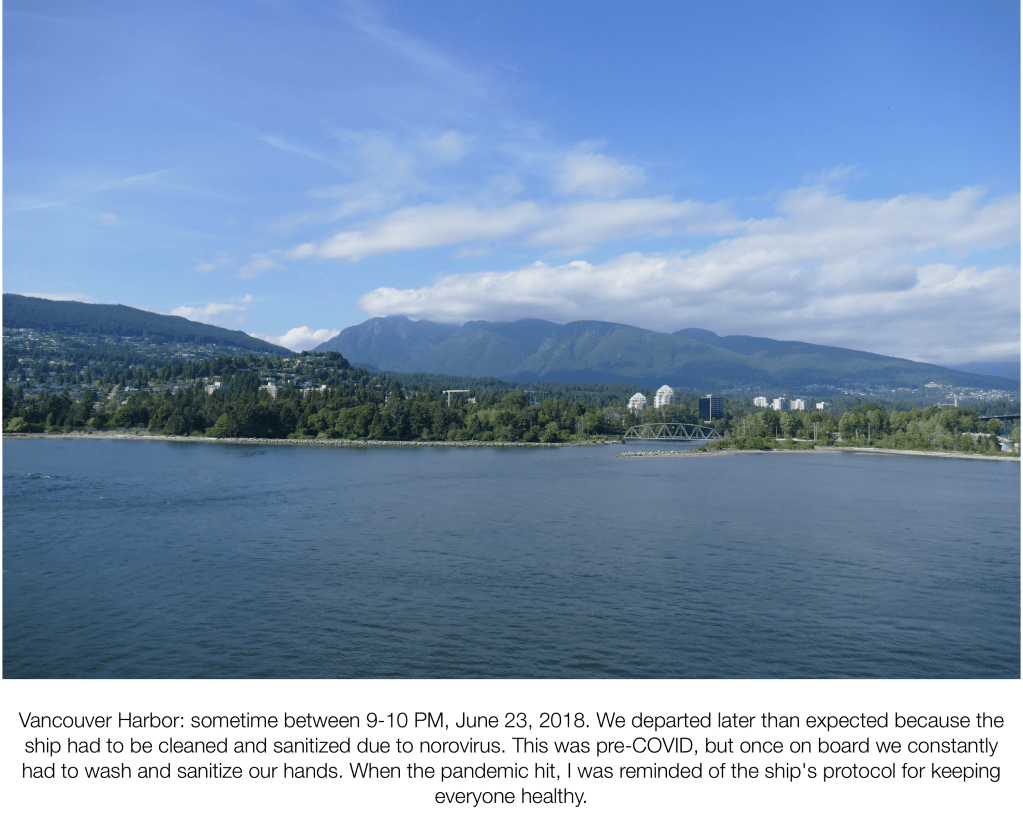
Vancouver, British Columbia

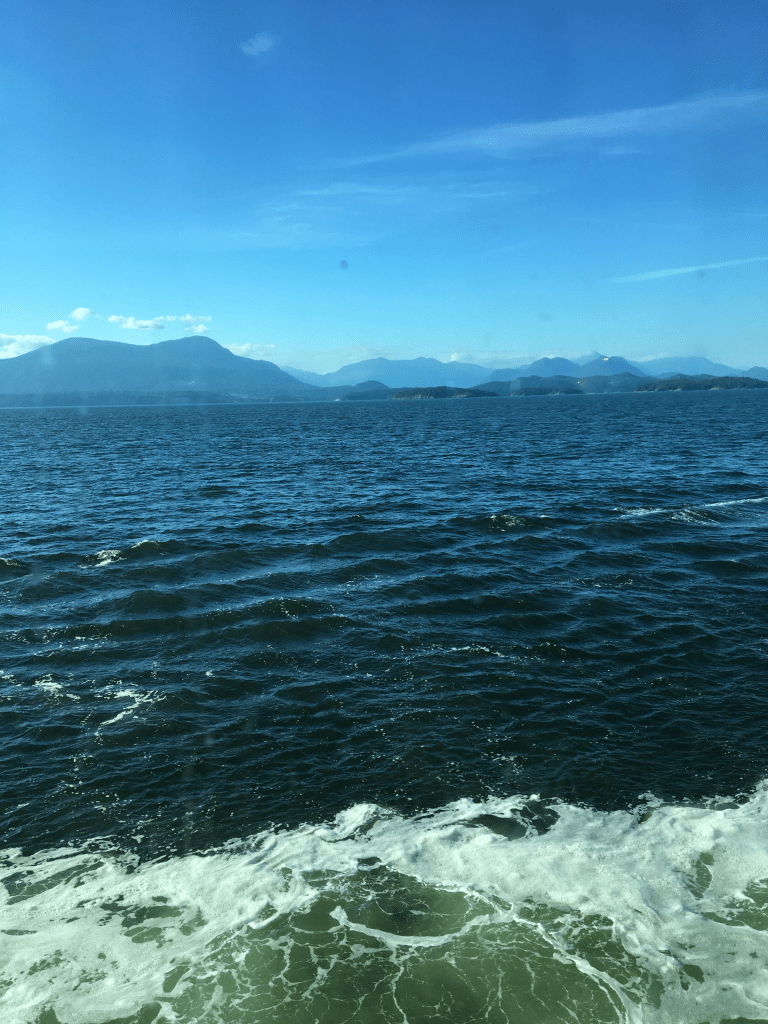
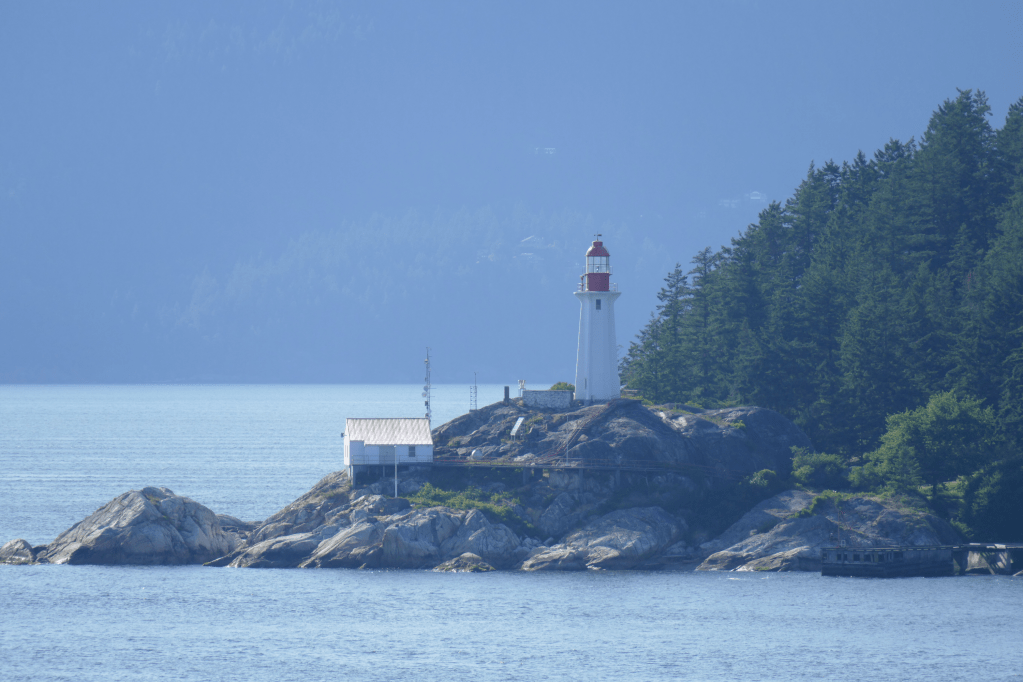
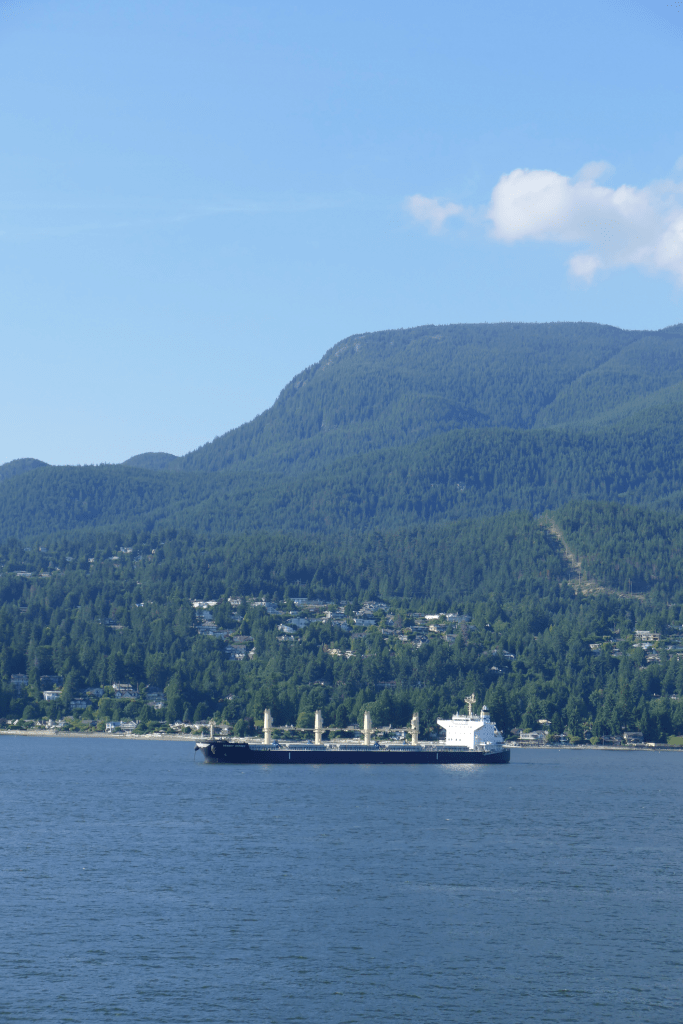
In late June my family joined my mother and her partner in Vancouver; there were seven of us in all. We spent a few days seeing some of the city, before embarking on a cruise to Alaska.

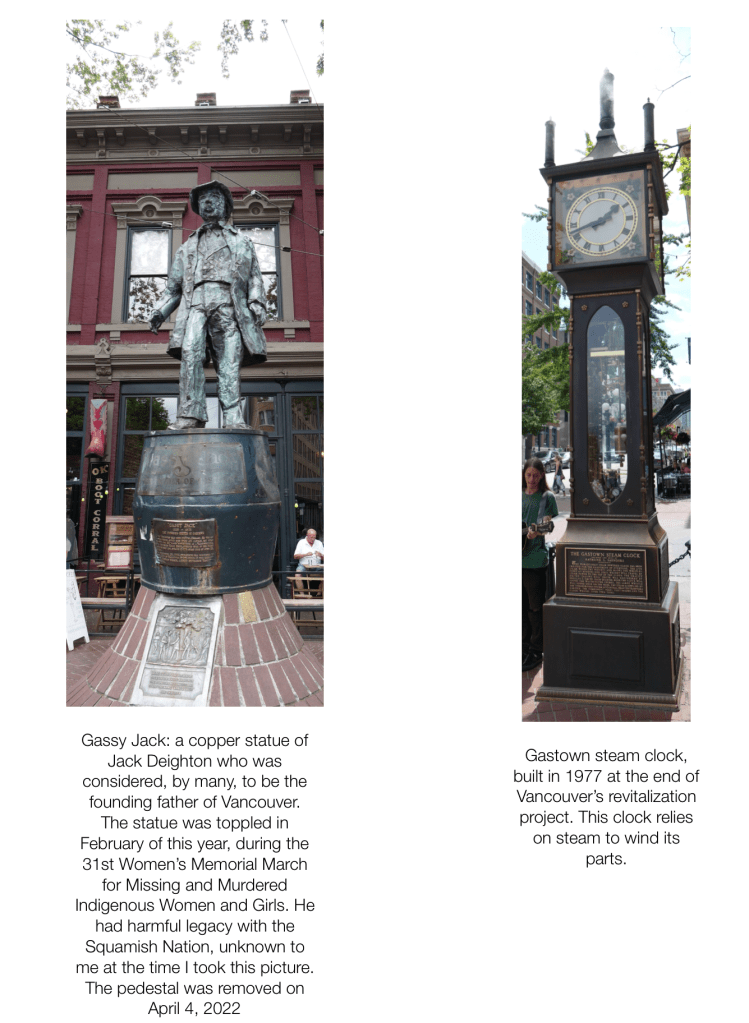
Gastown: Vancouver’s oldest neighborhood and original settlement

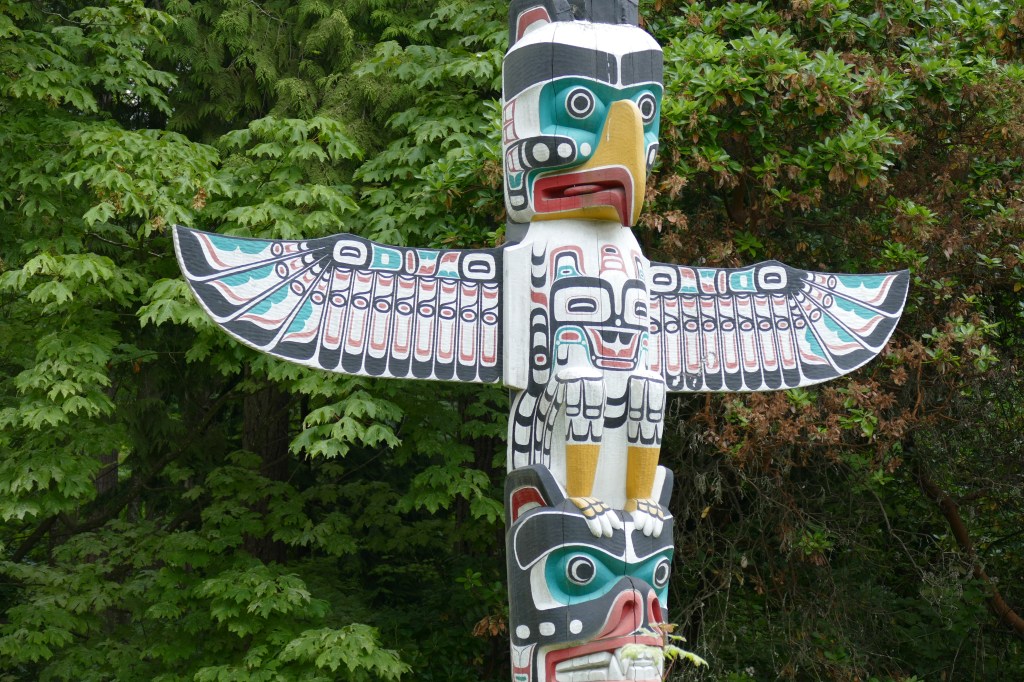
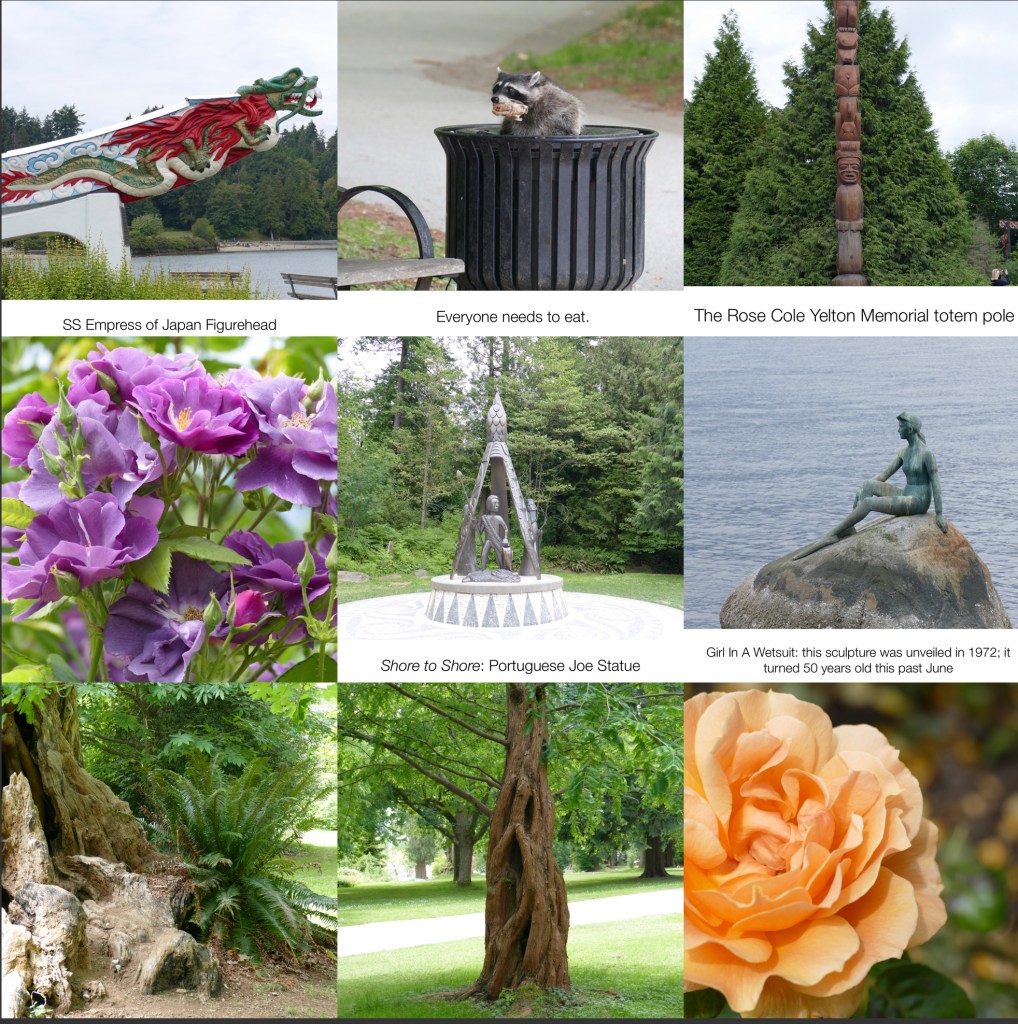
Stanley Park

On Board The Star Princess: the beginning of our Alaska cruise and land tour

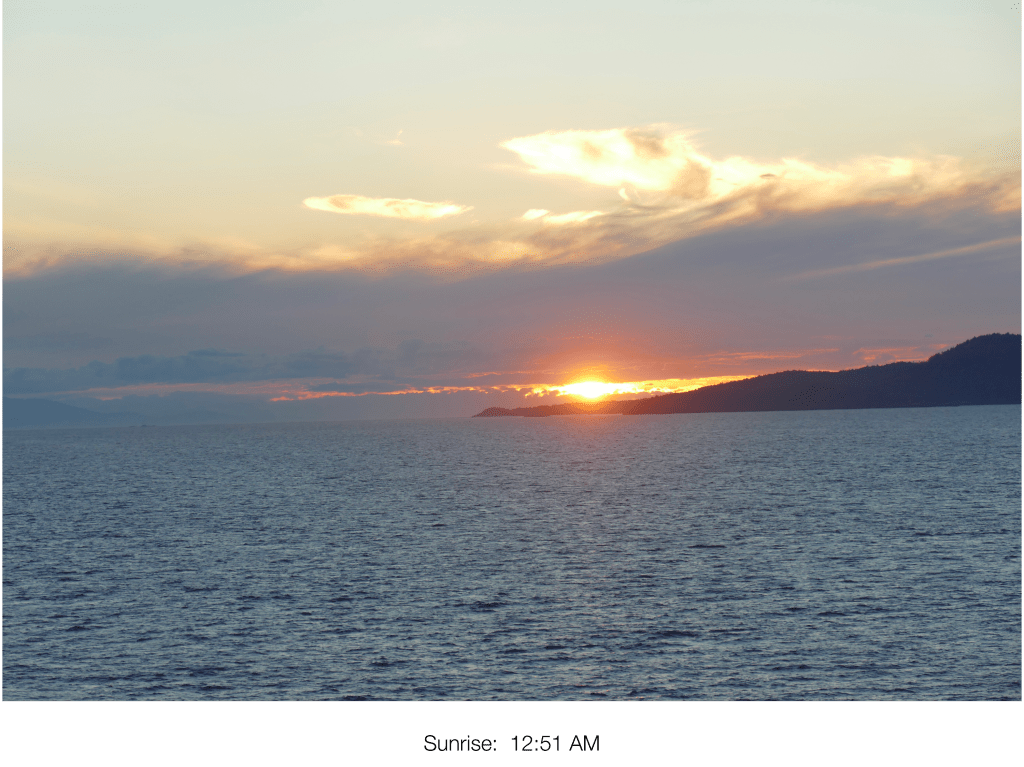
Traveling to The Land of the Midnight Sun


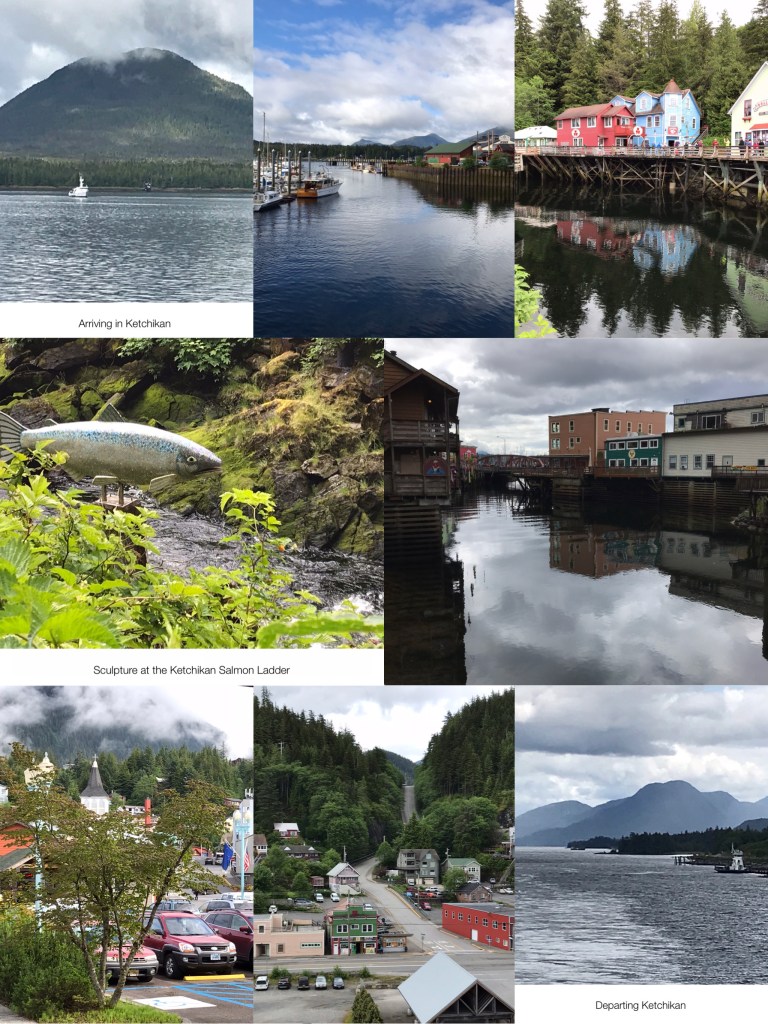
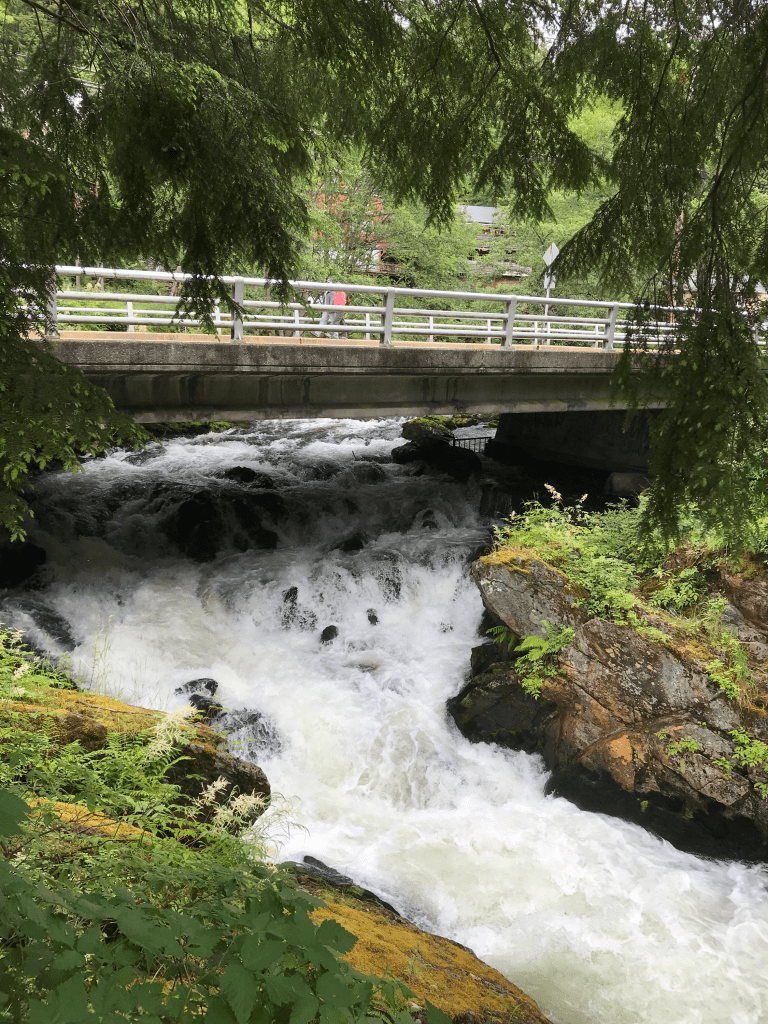
Ketchikan, our first stop, was founded as a salmon cannery site. Of the three ports of call, the time in this city was the shortest. Our time ashore was spent walking around the city, visiting the Totem Heritage Center and seeing the Ketchikan Salmon Ladder and waterfall.

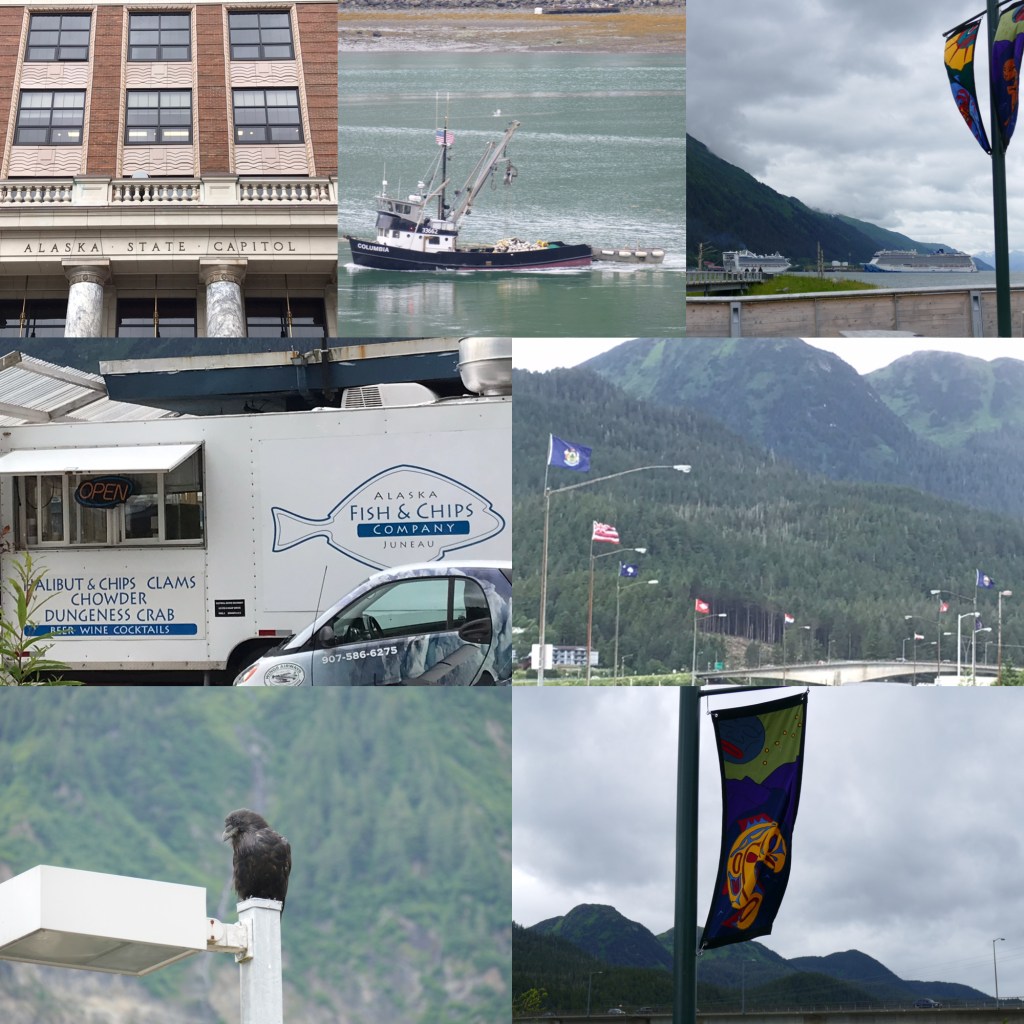
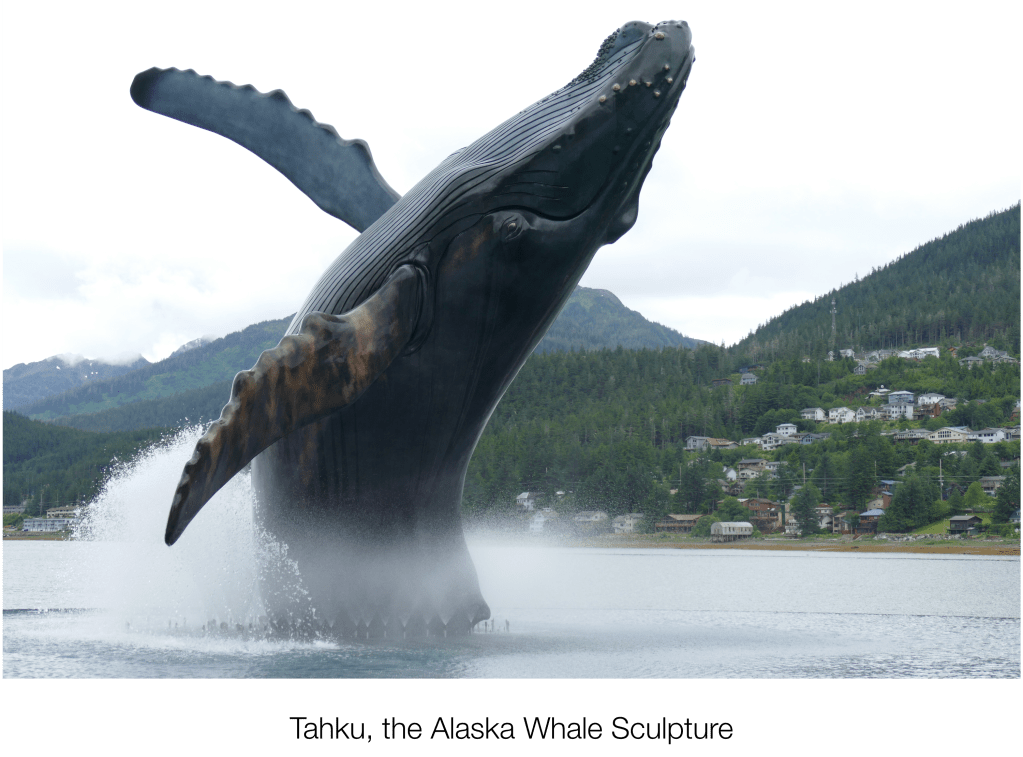
Juneau was the second port of call. We passed the morning hours walking around the capital city of Alaska….Someone, perhaps in the visitors center, told us to go to a waterfront park where there was a sculpture of a whale in an infinity pool; for me that was the pinnacle of our morning.

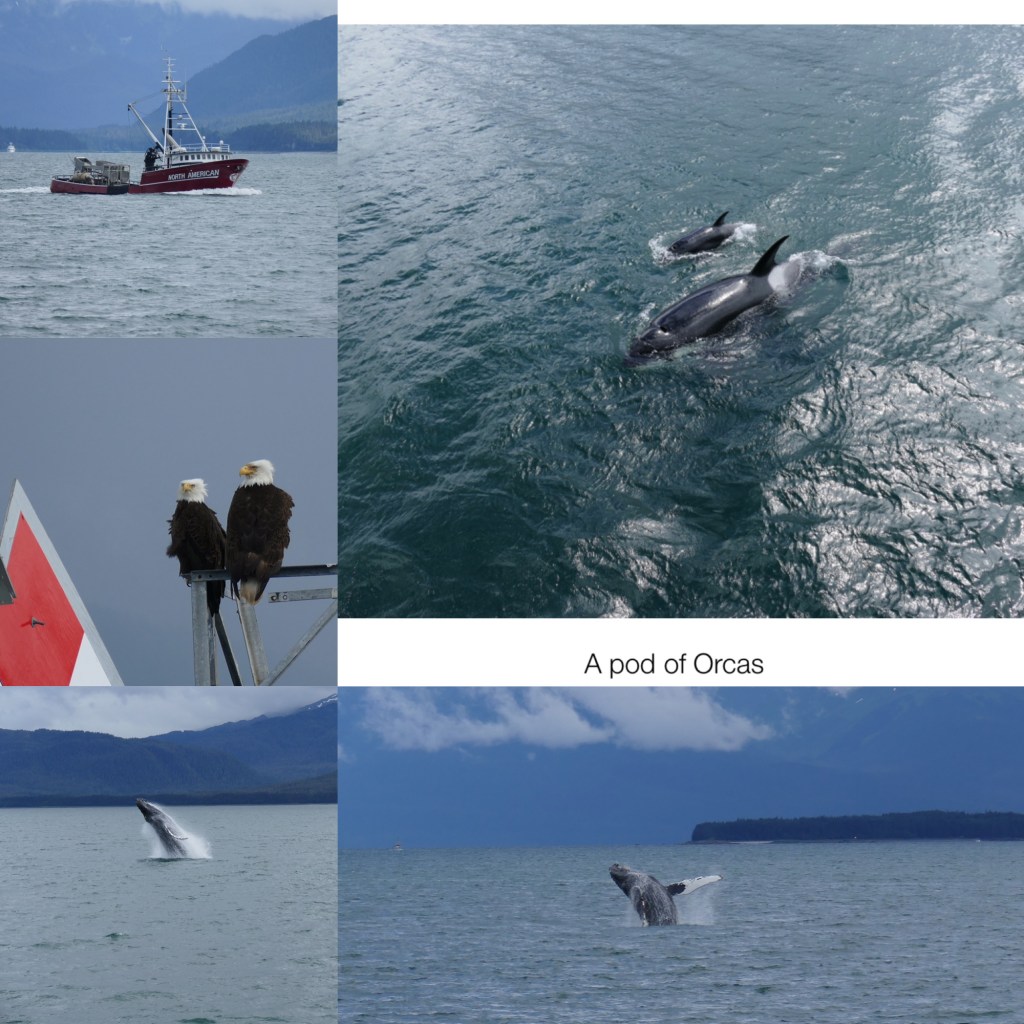
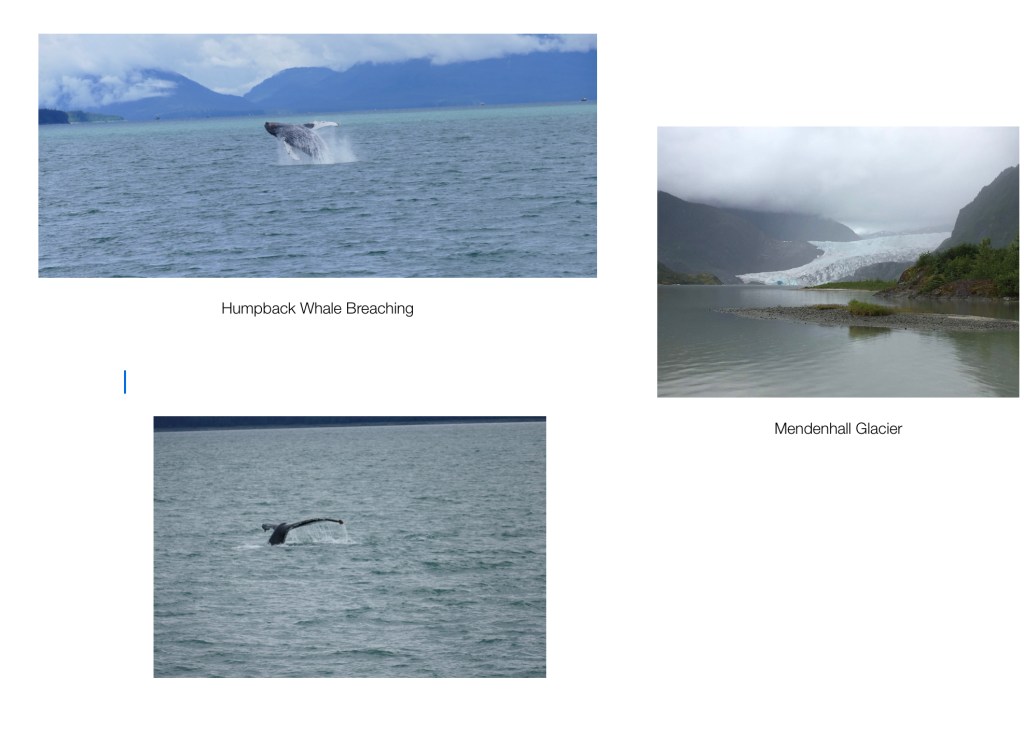
The afternoon was spent on a Whale Watching and Mendenhall Glacier tour:

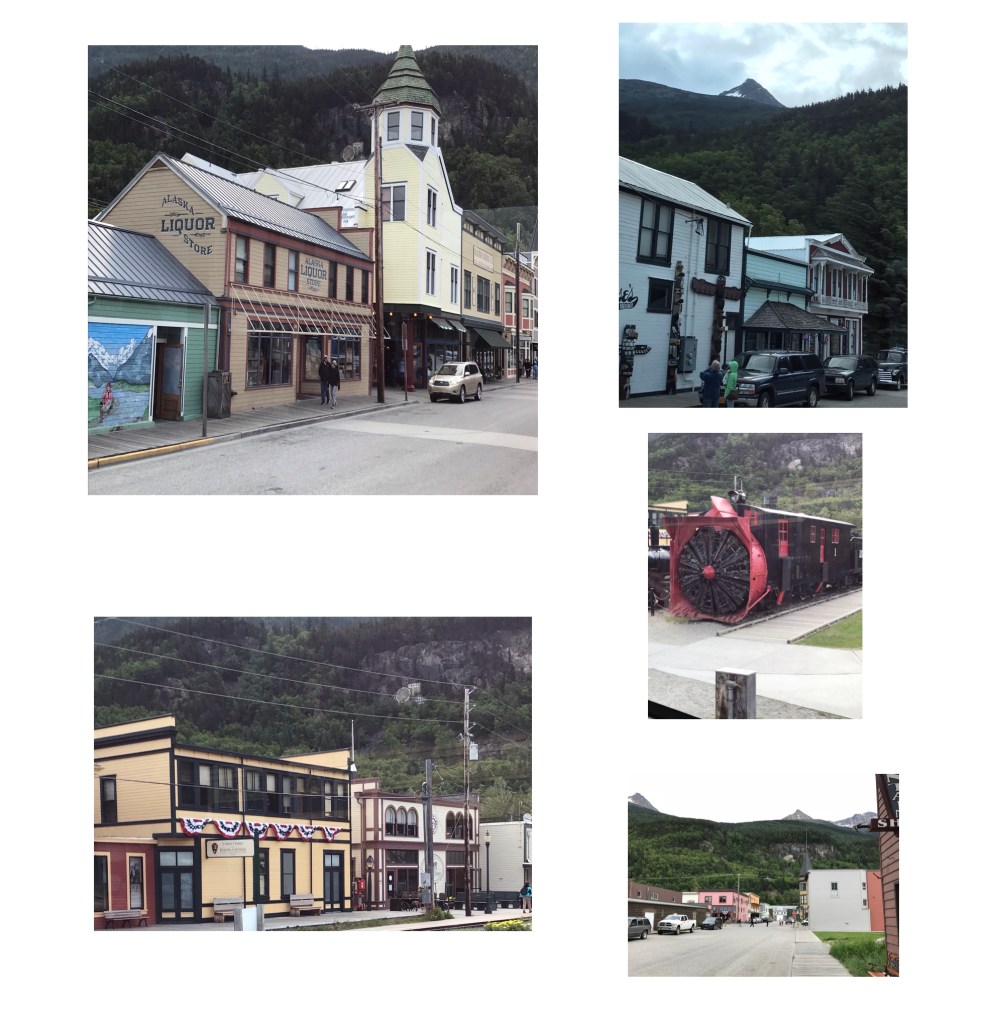
Skagway, our third and final port of call, is known as a town of the gold rush era because it is a gateway to the Klondike gold fields.

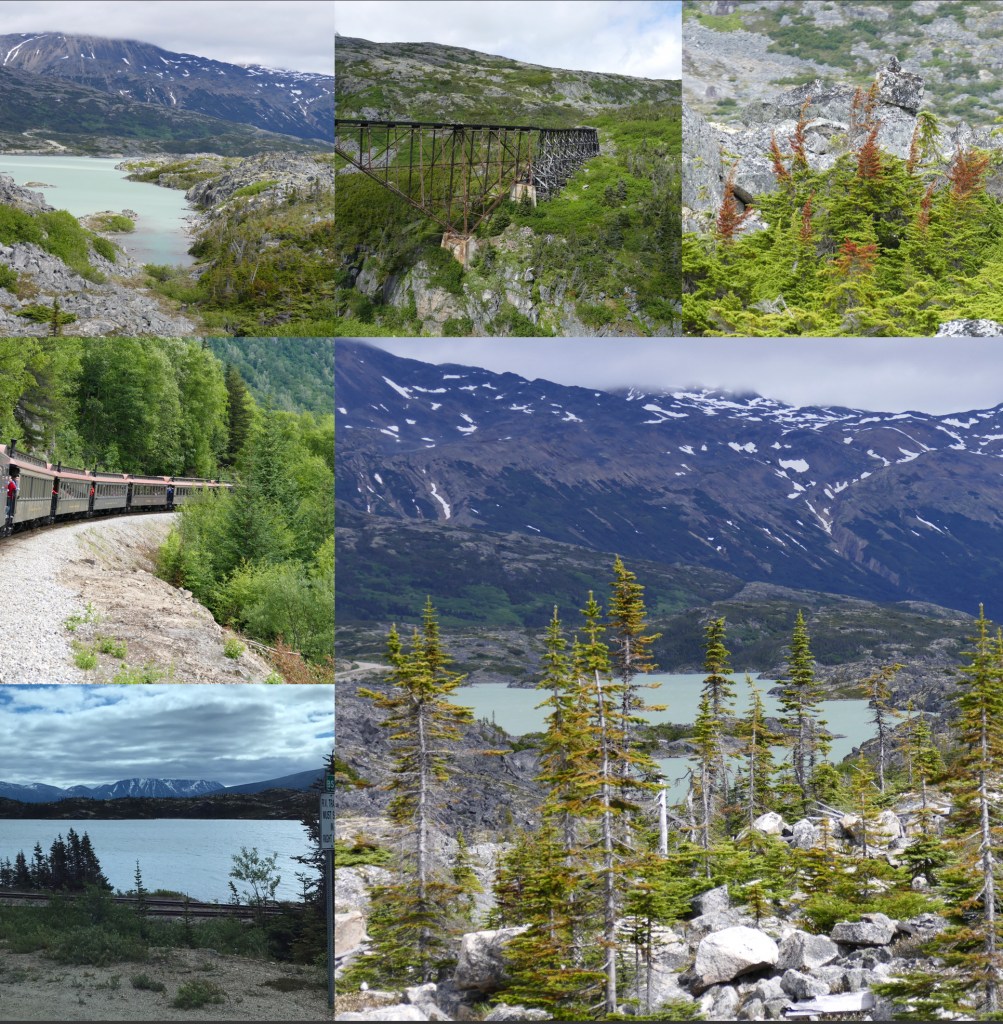
An amazing tour was taken from Skagway, by bus and railway. We had a fabulous tour guide named Bruce Schindler; he came to Skagway one summer, from Washington State, to be a guide on a tour bus and basically stayed. I mention Bruce, not only because he was such a great tour guide, but also because guiding tours was rare for him at the time. We were lucky to have him give us our tour. He had become an artist, creating sculptures and carvings out of mammoth tusks, as well as using the ivory and Yukon gold to make jewelry. Look him up.

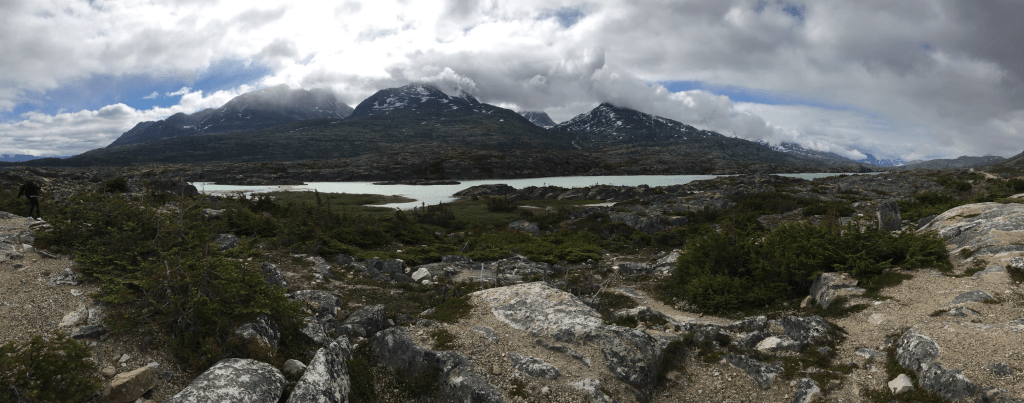
Rail and Bus Tour

The bus took us to salmon bake buffet for lunch at Liarsville Gold Rush Trail Camp and ended at The Red Onion Saloon. I have no pictures of these.

The City of Skagway 

After Skagway, we had one last big adventure aboard the ship:

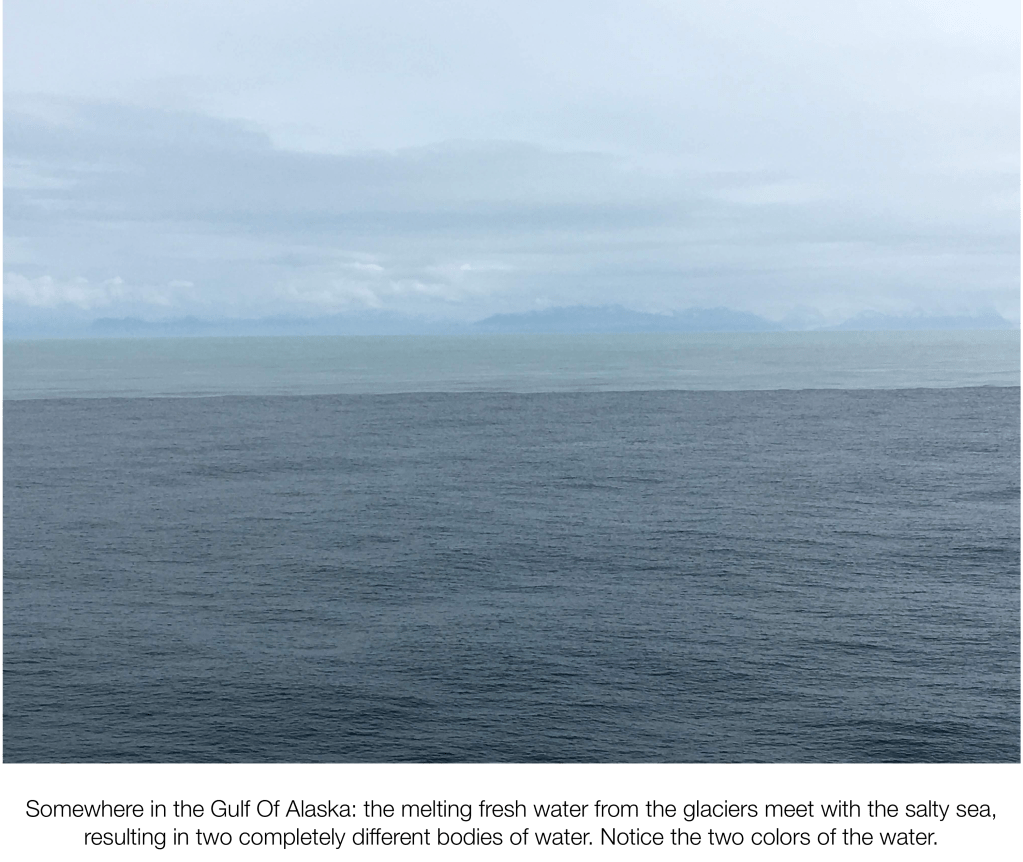
Cruising Glacier Bay National Park and Glacier Fjord

The Cruise ended in Whittier, where we disembarked. The fascinating thing about Whittier is that it was built as a secret facility during  World War II to support the war effort and provide a reliable trade route to the Alaskan Rail Road; the water here is ice-free all year making it an ideal area for a military base.

The Alaskan Land Tour Begins

On The Train

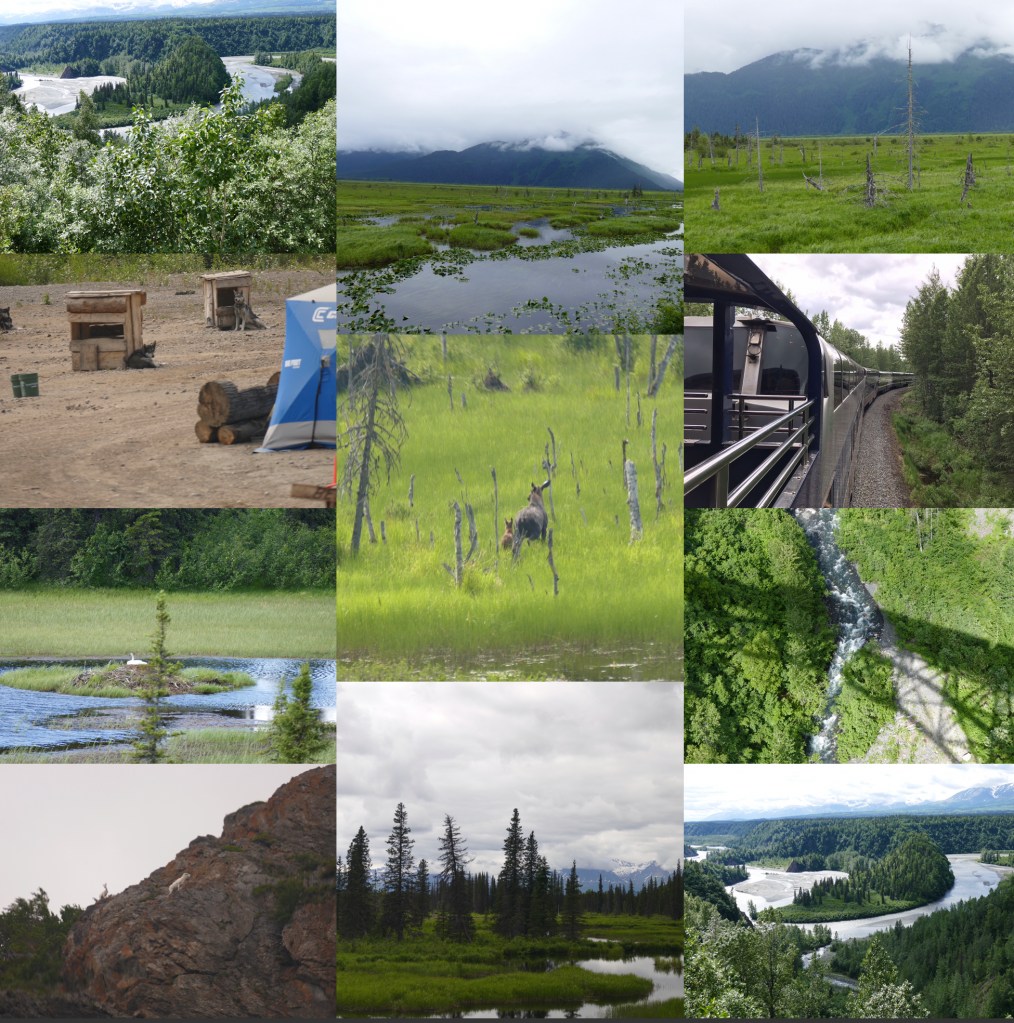
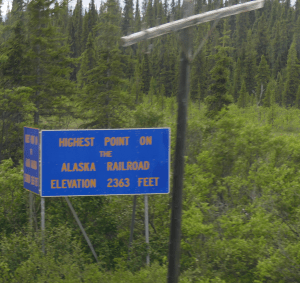
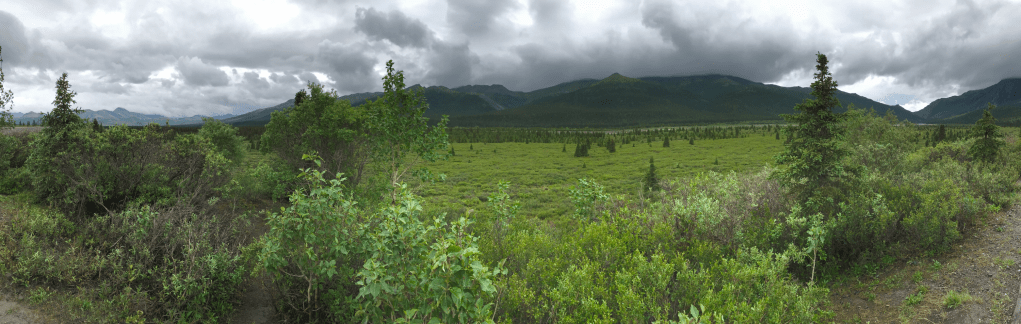
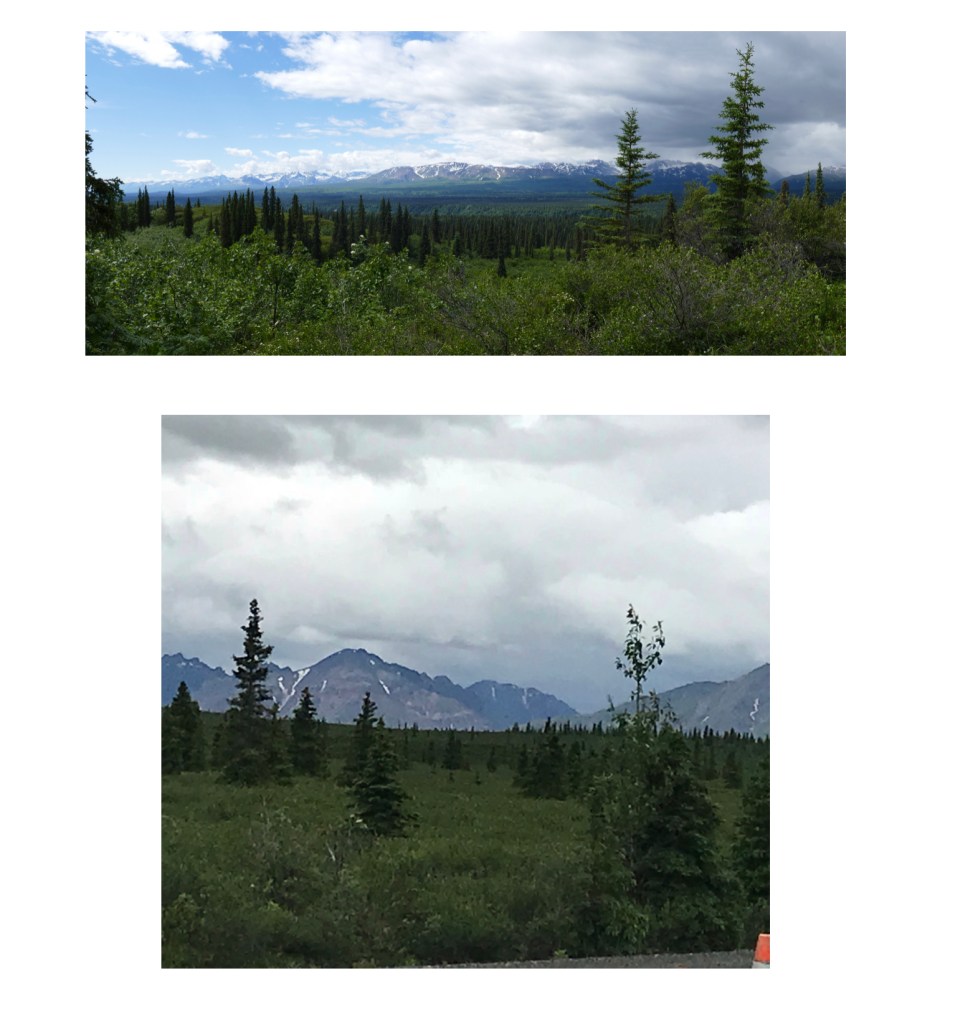
From Whittier, we boarded a train to Denali National Park. The trip on the train took about 10 hours, but we saw beautiful scenery along the way: 

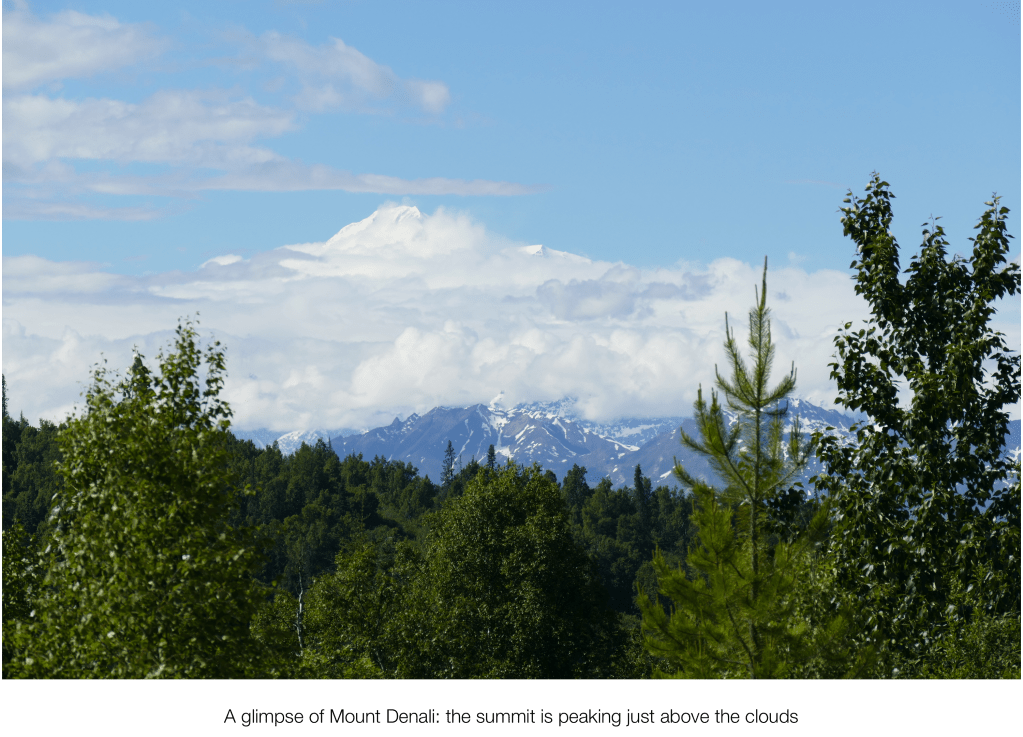
Denali National Park and Preserve 

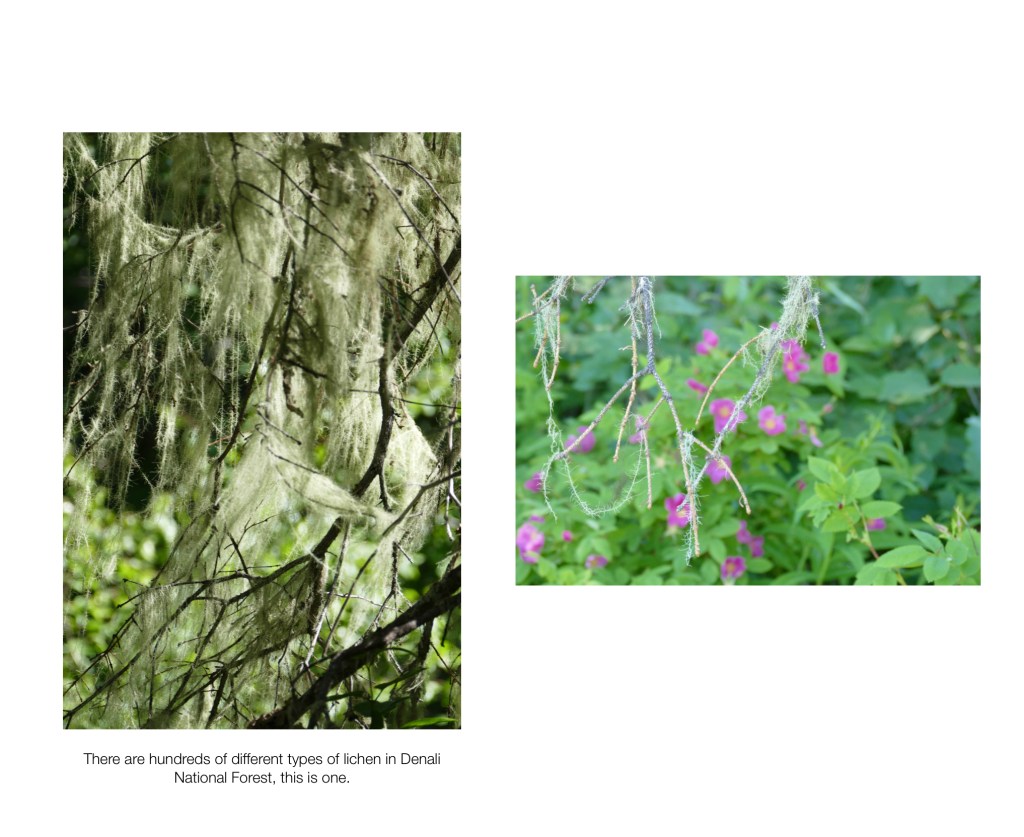
Mosses and Lichen

Moss and lichen grow in abundance in Denali National Forest.  Among other things, lichens provide a good food source for many animals and moss helps control soil erosion.

Some Of The Flora and Fauna in Denali National Forest

The official land tour ended in Anchorage, where an unofficial tour began

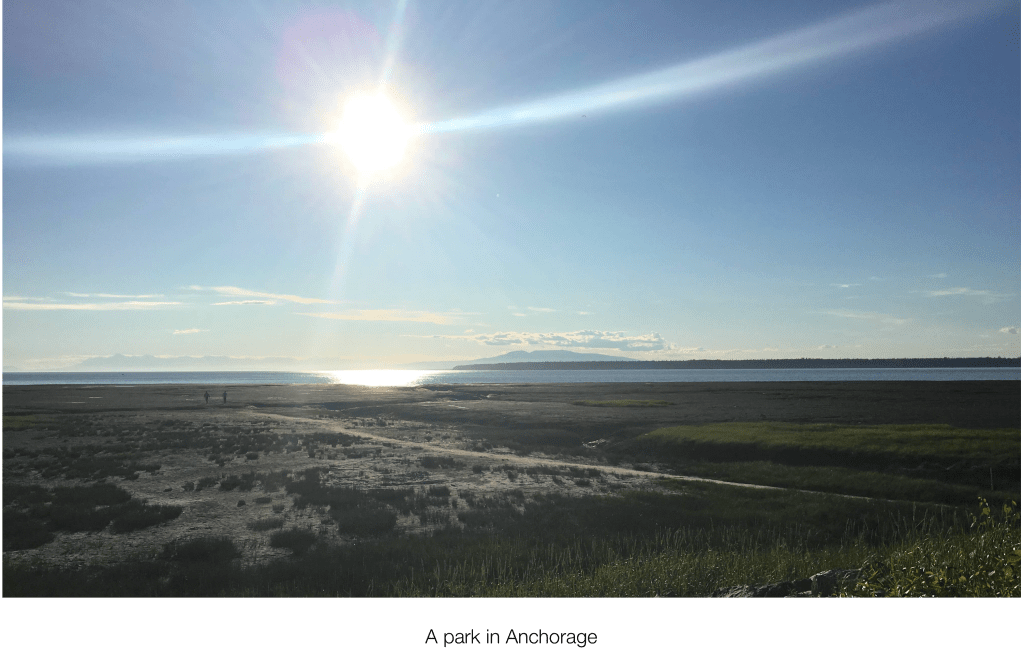
We spent a few days in Anchorage after our excursion with Princess Tours. Like most tourists in a city, we went to a museum, walked around, and ate at extremely good restaurants. 

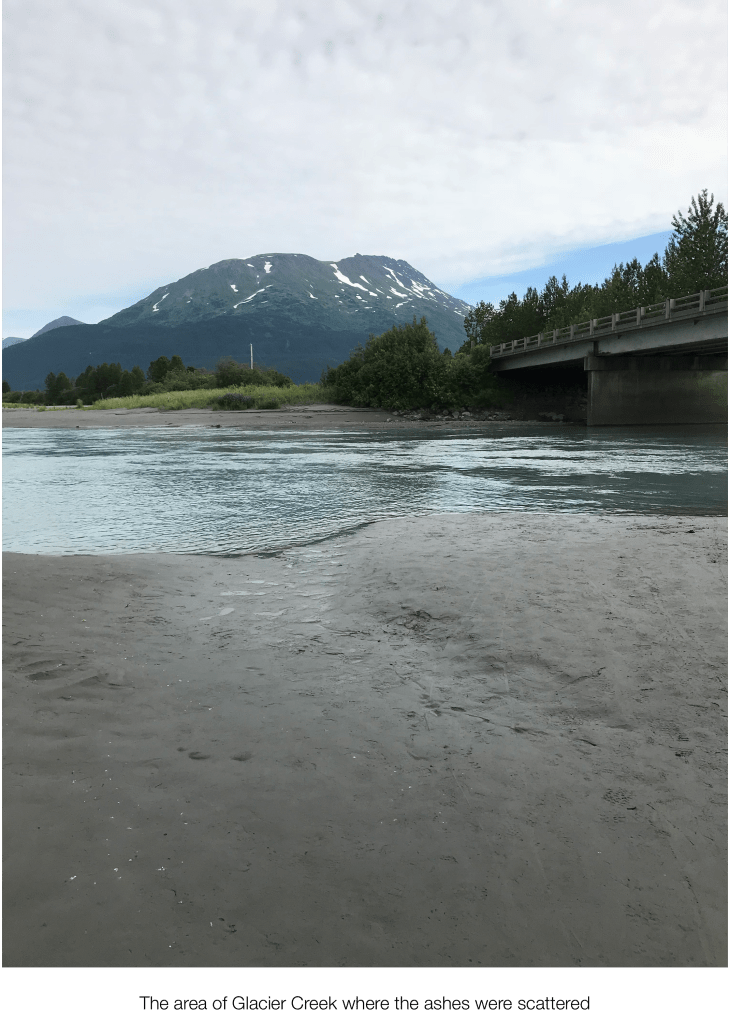
Unlike many visitors, we scattered my father’s ashes in an area south of the city called Girdwood. My father had been an anthropologist, whose work focused on the people and the land above Arctic circle.  We couldn’t make it up as far as the town called Kivalina that was so close to his heart.  A former colleague of my dad’s suggested scattering the ashes in Glacier Creek: we wouldn’t have to walk on mudflats that could be dangerous, but the water would eventually be taken out to the Pacific Ocean by way of the Gulf of Alaska. I had arranged for the remaining half of my fathers ashes to be sent to one of two Anchorage hotels where we stayed. The other portion of my father’s ashes had been scattered seven summers before on a lake in Ontario; the thought was to spread what remained of my father in the water of the two areas he loved most:  Muskoka, Ontario and Alaska.

At 10:00 in the morning, on July 4, 2108 we toasted to my dad. My three children, husband, mother and I sipped bourbon (his favorite drink) out of tiny bottles, while my mother’s partner looked on. 

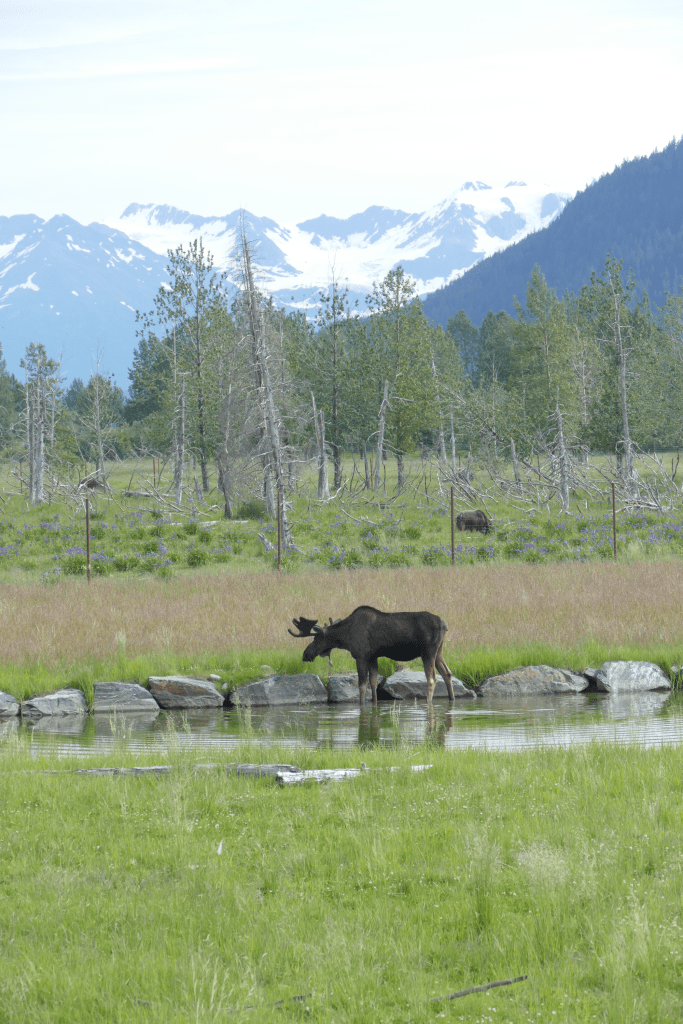
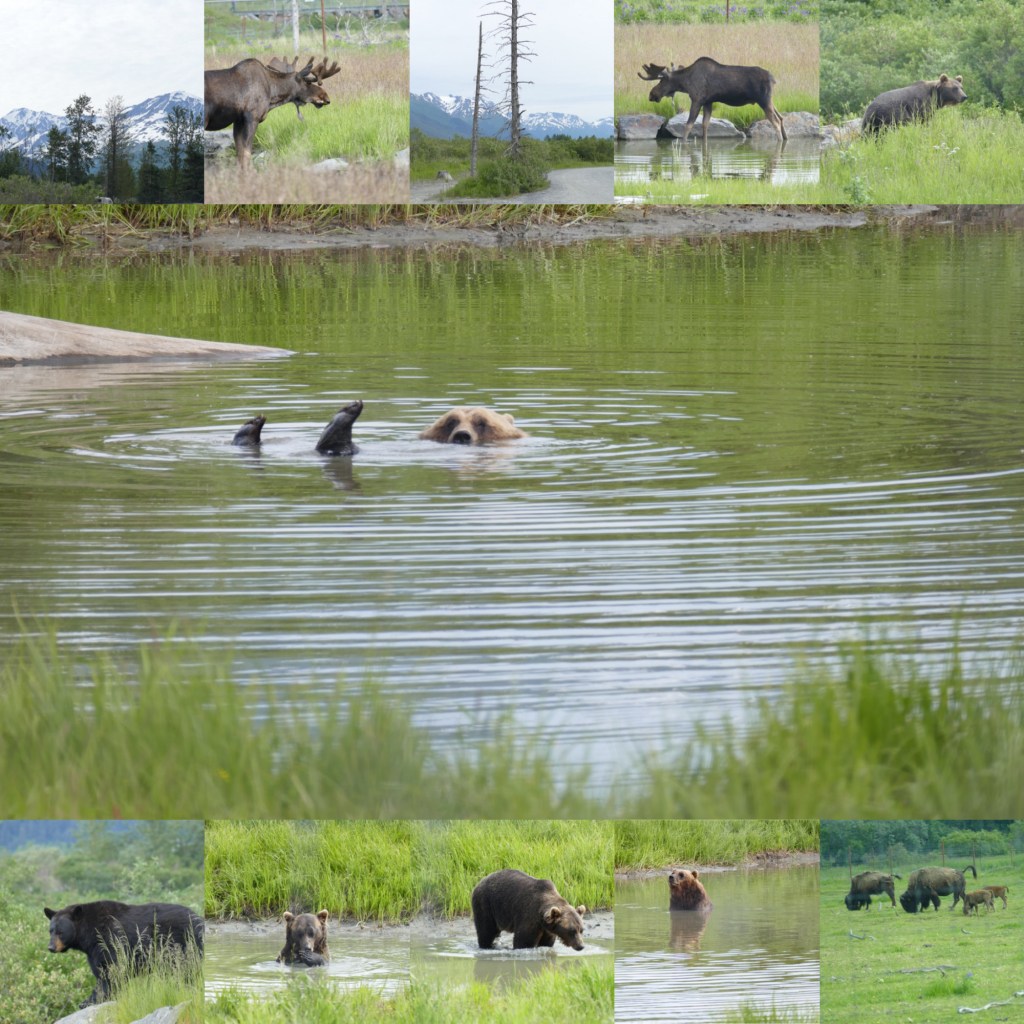
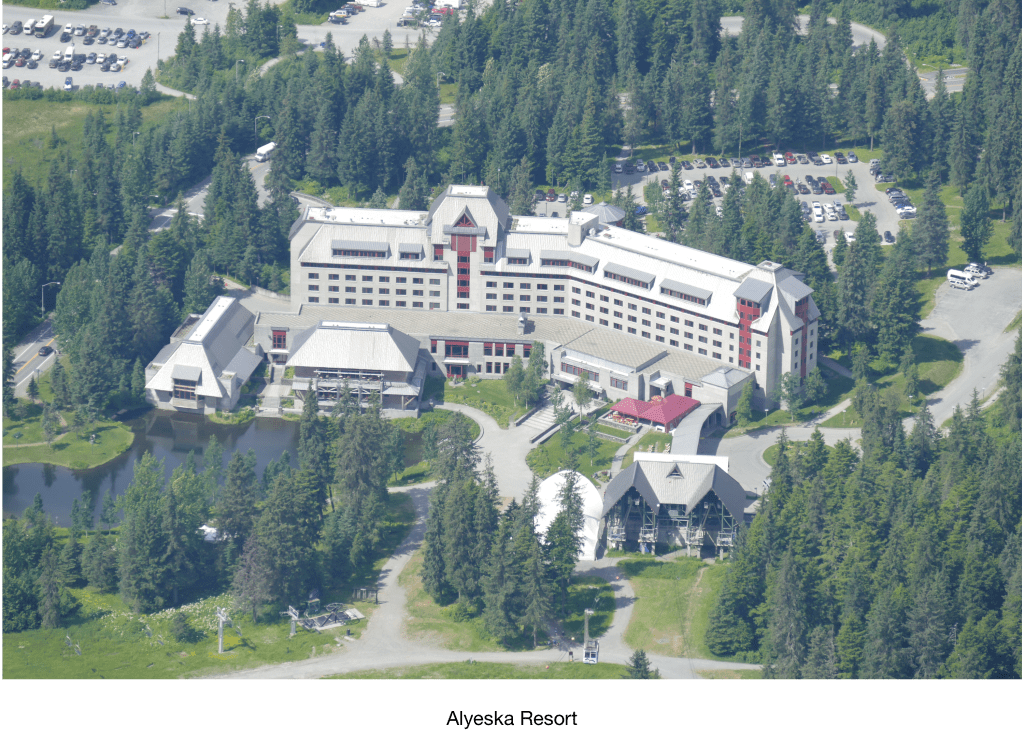
After the ashes were scattered, and we said our goodbyes, there were two more stops on that little road trip: Alaska Wildlife Conservation Center and Alyeska Resort.

Alaska Wildlife Conservation Center

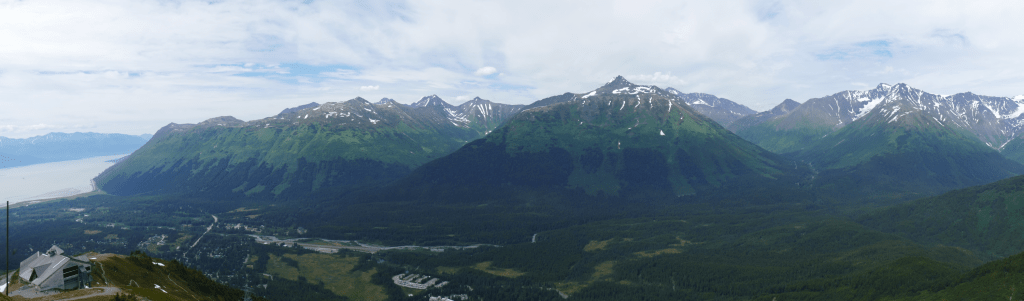
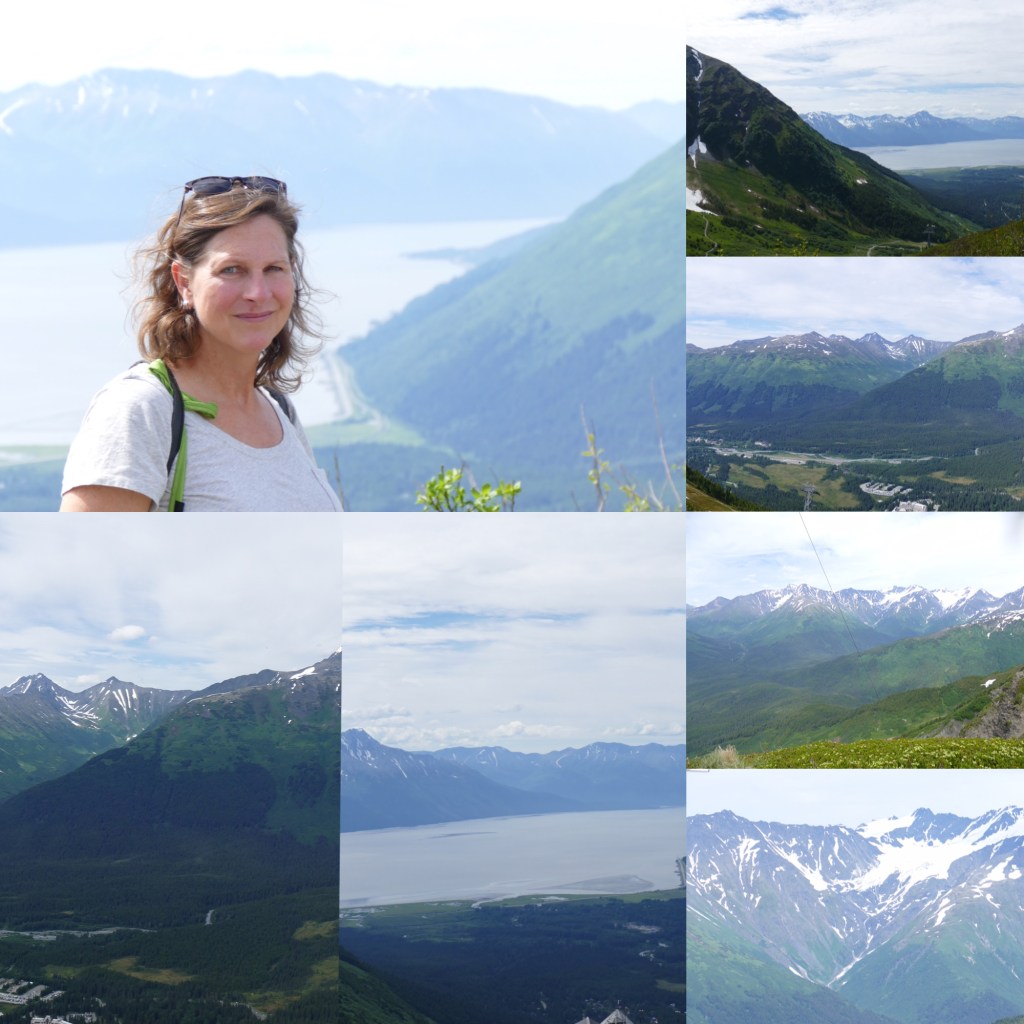
The Views from above Alyeska Resort

Our Final Day In Alaska

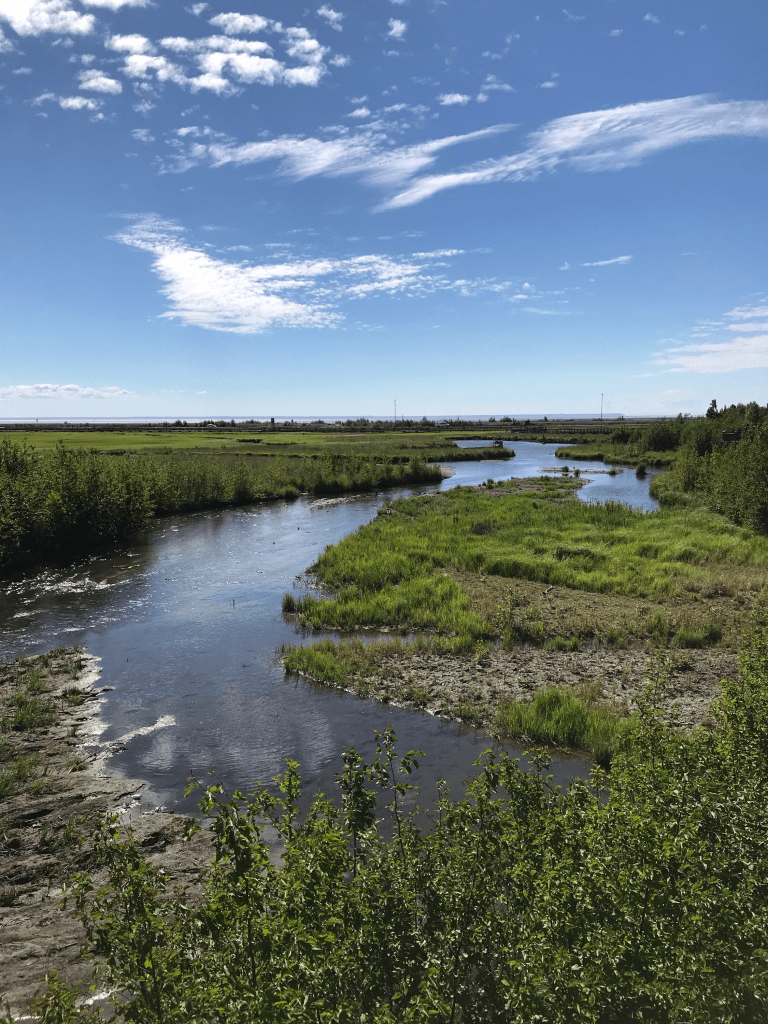
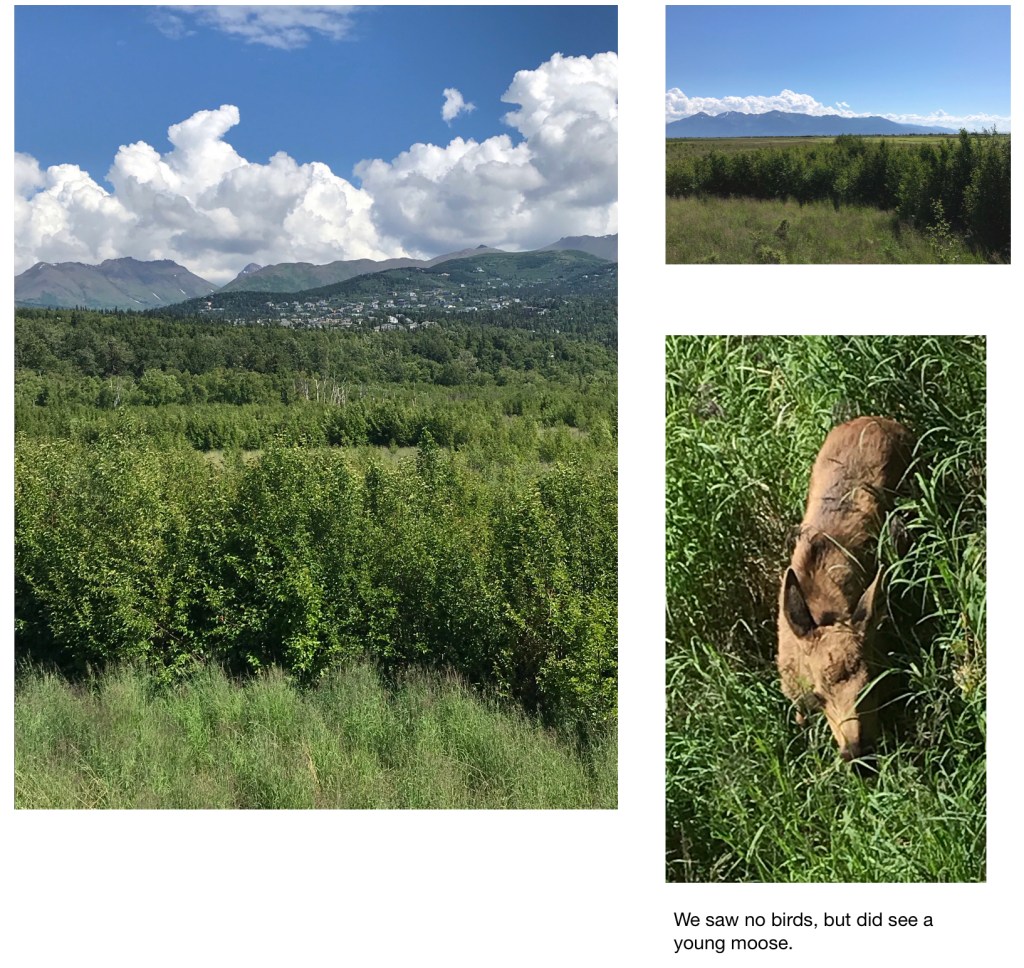
On our last day in Anchorage we had one final destination: Potter Marsh Bird Sanctuary.

My mother took us on the trip of a life time! Truly this was the beginning of an ideal and beautiful summer. Unfortunately beauty can be fleeting. When we arrived in our summer home in Muskoka, about a week after our trip, our lives took us on a different kind of journey; one nobody could have expected…

All Aboard! Self-Compassion and Acceptance with Heart Failure

By Heather Cartwright

My friend Heather wrote this beautiful and moving story about her heart condition called Arrhythmogenic Right Ventricular Cardiomyopathy (ARVC). The account of her journey living with heart failure was originally written and published on Our Heart Hub, https://ourhearthub.ca/. I contacted Heather and she was given permission for me to publish this on Tell Me Your Story.

I have lived over 30 years with Arrhythmogenic Right Ventricular Cardiomyopathy (ARVC), and for the past eight years I have lived with heart failure. ARVC is an inherited heart disease that can cause deadly arrhythmias leading to sudden cardiac arrest.
As the disease progresses, the heart muscle is replaced with fatty and fibrous tissue, causing it to weaken and pump inefficiently. In the worst cases of ARVC, heart transplant is needed.

I have learned that the best way to cope with the anxiety and uncertainty of living with this unpredictable cardiac condition is to treat myself with self-compassion, to accept the realities of my disease, and to live the best life I can.

My journey has taken many twists and turns. It’s like a train trip over rough terrain; down deep gullies, up to the highest peaks, around hair-raising turns, and over precarious bridges. Each section of the track offers its own challenges such as cardiac episodes, ER visits, ablations and device surgeries, PTSD after ICD shocks, and new diagnoses and treatments. Yet my train keeps chugging along, finding safety along the way in quiet stations. In those moments of calm, the views have been lovely and the company fine. I have met fellow passengers on this journey who have enhanced my trip, sharing inspirational stories of their own. I hope my story helps you. Come aboard.

The Beginning of the Journey

I was twenty years old when I collapsed with ventricular tachycardia following a rowing race. I was a collegiate varsity rower at Western University with aspirations of competing at the Olympics. I identified as a strong and skillful athlete, enjoying the thrill of outdoor pursuits like whitewater canoe tripping, cliff jumping, and ski racing. I used exercise for stress reduction, going on long runs to clear my head. In rowing I got the opportunity to push my body to its limits, enduring pain, and elation, at the outer edges of my potential. Suddenly, all that had to stop. When I was diagnosed with ARVC, I was told by my cardiologist that I could never do competitive or endurance sports again.

The particularity of ARVC is the unpredictability of deadly arrythmias. Some patients go years between events, and some may never experience a “hot phase” of recurring and random episodes of ventricular tachycardia, and even cardiac arrest. Whether influenced by stress, caffeine, physical exertion or other unknown factors, the heart can beat wildly and erratically, despite daily medications to keep it in line. The only way to save a patient during an event is to shock them with an ICD, inject them with anti-arrythmia drugs, or defibrillate them in the ER. Just like unplugging and plugging in a computer when it freezes, the reboot gets it back to normal. 

I was devastated. I was in denial of my diagnosis. In response, I often pushed myself and took unnecessary physical risks that landed me in the ER. 

Rough Terrain

During my twenties and thirties, I was angry and resentful at the limitations to exercise, diet, and day-to-day living I faced. I saw it as a betrayal of my body against the wishes of my mind. My dreams of the Olympics were over. I over-ate to numb my pain, lashed out at others, and retreated from intimate relationships in a misguided attempt to keep myself safe. I overworked in my career, trying for some fulfillment I could not find in my personal life. On the train journey of my life, I was in the lowest gully. 

But from the depths, I could see new mountains ahead. It was not my nature to wallow in self-pity, and it was clear that my rebellious self-harm was only hurting me. I decided that big changes were necessary in my lifestyle. So, I quit my corporate job to become a full-time rowing coach at elite US colleges. 

An Upward Climb

I loved coaching. Being on the water in nature, helping students reach their potential, and leading a group towards shared goals gave me purpose. Yet, even as my train was scaling higher peaks, I encountered scary hairpin turns – like the year my ICD delivered therapy 54 times. My type A+ personality had not diminished when I traded a corporate pantsuit for sweatshirts, a cubicle for a coach boat. My electrophysiologist encouraged me to slow down, but I simply changed schools to a more competitive rowing program. 

Finally, my hard charging personality of always pushing myself caught up with me; I collapsed on the dock during rowing practice and was rushed to the nearest hospital where they saved my life. Later, my doctor, with tears in his eyes, pleaded with me to quit coaching. He warned me that my next cardiac episode would be my last. The reality of my situation hit me: no matter what adjustments I make to my work schedule or environment, it was incumbent upon me to change my attitude to save myself. 

After quitting my coaching job and returning home to Toronto, I signed up for a week-long meditative retreat for mindfulness and self-compassion led by psychologist Dr. Christopher Germer and researcher Dr. Kristin Nuff. This retreat challenged every assumption I had about achievement and self-care. I had been brought up to believe that listening to that dark inner critic inside myself was necessary to my success. Initially, I pushed back at their encouragement to be gentle with myself, to forgive my body for its limitations, and to embrace my new reality. They advocated taking a pause and being mindful to provide a safe place for my body and mind to self-soothe and find relief. But it all seemed too soft to really work on a high achieving person like me. 

Yet, as resistant as I was to their practice, I decided to give it a try, even if only to show it would not work. To my surprise, it did. 

Over the years, I have attended many more retreats. I have learned to meditate by using phrases of self-compassion such as “May I be safe, may I be calm, may I live in peace.” I said these words with as much intention as possible. I tried to be open to whatever pain or unpleasantness came up and used these words to soothe myself. When sitting cross-legged on the meditation pillow, I resolved to make friends with my heart. I saw that it was not to blame, but to be forgiven. When words did not comfort me, I simply pressed my warm hands over my heart center. In time, I found myself less angry, more grateful, and more open to accepting the volatility of my condition. 

This new-mind set was helpful when my mother was diagnosed with stage 4 incurable lung cancer. As her primary caregiver, I was with her each day and at all her doctor’s appointments, chemo treatments, and operations. We shared more than just a familiarity of the ins and outs of the hospitals along Toronto’s University Avenue: I had been living with the threat of sudden cardiac death to my mortality since I was 20; my mum was now confronted with the end of her life at age 78. Together, we shared our understanding of the impermanence of life, that nothing is for certain, and that accepting one’s reality of “what is” instead of “what one hopes for” is the most grounded way to cope. We had deep conversations about life and death, and where one goes after they die. We did not have answers for our questions or assuage all of our grief, but just talking about the taboo subject of death lessened our anxiety. My mother died a peaceful death, surrounded by loved ones, comforted by the fact that everyone was fine and it was her time to go. It was a profound experience. 

Unchartered Territory

Just four months after my mom’s death in 2014, I was diagnosed with heart failure. The train was now crossing over a bridge to an unknown land. But I felt confident that I could handle what came next because of my attitude shift. I was learning to love myself and to practice self-compassion in the darkest times. I was accepting my heart condition as it was. And I was no longer so occupied with my fear of death, but instead on living my fullest life. That shift encouraged me to embrace what I could do; to appreciate my friends, family, and loved ones with gratitude; and to live in the moment. 

In short, I have negotiated a peace with my limitations, with death, and with living with ARVC and heart failure. “Negotiated,” because it’s an ongoing process to love myself and accept my condition when setbacks occur. 

One aspect that has been helpful is to know my body. With heightened awareness of my heart rhythms and body feelings, I have an acute sense of when something is “off,” relative to times when I felt better. This gut feeling is so critical. When I feel “off,” I know how to begin again – with self-compassion meditation, healthy food, time in nature, and, most importantly, rest. That way I can enjoy the activities I love, like walking my dog, golfing, fishing, and kayaking. And if things don’t go back to how they once were, I have the mindset to try to accept my “new normal” with loving compassion. 

The Journey Continues

My journey with ARVC and heart failure has been a long one, but I am not alone. On my train I have the best drivers and engineers: the doctors and medical team at the Peter Munk Cardiac Centre always find the smoothest, and safest, routes for me to take. Working in partnership with them, I know I have the support to go the distance. 

And to enjoy the journey along the way, I have filled the passenger cars with my partner Karin, my friends, and my family. No matter the destination, I am determined we will appreciate the trip together. I will do what I can do, for as long as I can do it, for now. 

It’s been one heck of a trip so far.

Run No More

A Running Event at Winterthur

“Will I be able to run anymore?”, I asked the orthopedic surgeon.  He gave me a look and said, “What do you think?”.  I had just been informed that I had (still have) severe arthritis behind each knee cap. Just another ending, I thought.  Another thing to mourn.  I ran for 33 years. I  was not old, just 51, but I knew for years it was just a matter of time before my knees could take so much

Growing up, I was aware that my father ran almost every day.  He typically went out mid day, so I only saw him go out for a jog when I was home.  I was born a swimmer.  Eventually I followed my fathers lead and began to run. I started in college. On my first or second  day of my freshman year in college I was asked if I ran. I said, “No, but I probably could”.  We formed a running group.  A few days a week we would all run together.  Thus, began my love of running.

Me, running with my youngest daughter (not pictured) in Girls on the Run, December 2017. I had not been running for two months due to tearing my ulnar collateral ligament in early October.

Over the years I was in many races: sprint  triathlons, 5ks,  10ks, half marathons….

The run, in the picture to the left, was a month post surgery. If you look closely at my right hand you can see that I am still wearing this wrap.

When my eldest child was in high school, I had the pleasure of watching her run cross-country and track.  As I watched other runners, I came to realize that some people are born runners and some are self-made runners. The born runners seemed  to have perfect form, a long stride and run with little effort. The self made runners were those people who have taken up running not  because they were born to run, but because they wanted to run. I was a self-made runner.

My favorite photo from my daughter’s first year running track.


As I approached my 30th year of running, I began to question why I called myself a runner.  I did not have great form and I always ran middle of the pack when I raced. Once, I read something about how you know you are a runner.  Many of the things it said hit home, but this line summed it up for me: ” your are just not yourself when you don’t run”.  

Running  became a part of who I was. I was proud when someone said “you look like a runner”. People asked why I ran.  “It puts so much stress on your body”, they’d say.  Everyone knows that running puts stress on your joints. But running is so much more than that.   It helped me to think. It helped me to sleep soundly. It helped me to see the world around me.  I could lace up my shoes and run out the front door.  Most importantly, running helped me get through many of my darkest times: the times that I felt I could not breathe, running helped me to breathe again

2018 dawned bright with promise. My eldest was accepted at the college of her dreams. My mom took us on a cruise to Alaska to celebrate  my daughter turning 18, her graduation and my 50th birthday. I was training for my first half marathon in several years. When we arrived back from Alaska and were settling in for a relaxing summer, our world came tumbling down. Still I ran.

Participation medal from a 5k i went in with my youngest child.

I ran through fall and winter with a heart so heavy I felt like I would implode. I practiced yoga several days a week and used that space to cry on my mat. I ran another half marathon in the spring of 2019, little did I know it would be my last. My running was slower, often I would walk up the hills. My knees did not hurt too much. On I ran.  

A year had passed after our life caved in. We were in full crises mode. In the summer of 2019, I ran next to the jasmine scented hills of  California. 

Running at dawn in Agora Hills, CA


I  jogged through the wood laden roads of Muskoka Ontario. 

Muskoka Ontario


That summer, in Ontario, I taught myself how to water run properly. I still cried on my yoga mat.  By then, my knees were making an audible sound; when I went into warrior II pose, those practicing yoga beside me could also hear my knees rubbing together.

The fall came. I had been slowly working through the pain in my soul. By October my knees were hurting, so I took a break from running.  Visiting my daughter in Boston that month, I had plans to do some elaborate walks while she was in class. My first day there, after having breakfast with my eldest, I intended to go on a five mile walk.  I started out walking, through neighborhoods I did not know, when my knee went out. All I could do was drop to the sidewalk.  I did not run.

I was not able to run to an old age like I wanted. Maybe when I when I became emotionally at peace with everything that was going on in my present, as well as the trauma of my past,  I no longer needed my knees to carry me. My running shoes have turned into walking shoes. I go to a pool almost every day. I swim and I run the only way I can: in the water.