A Love Affair with Roses

By Marcia

I don’t remember when I planted my first rose bush. In 1976, I started a garden at our first home in Pennsylvania. My husband and I planted rhododendrons, a weeping cherry tree and a magnolia tree, and I attempted to create a “rock garden”. The garden was a disaster. I was new to gardening and had more enthusiasm than knowledge. I re-purposed the large rocks from the rock garden into a border for my next gardening attempt: a strawberry patch. I don’t remember growing roses at that house.

We built our second home in 1986 on a 20-acre rural property outside of Indiana, Pennsylvania. As my interest in gardening grew and I dug more holes in the yard and planted more beds, my husband delighted me by adding a six-foot chain link fence, around a quarter acre of our yard’ because the deer liked my gardening efforts, too. 

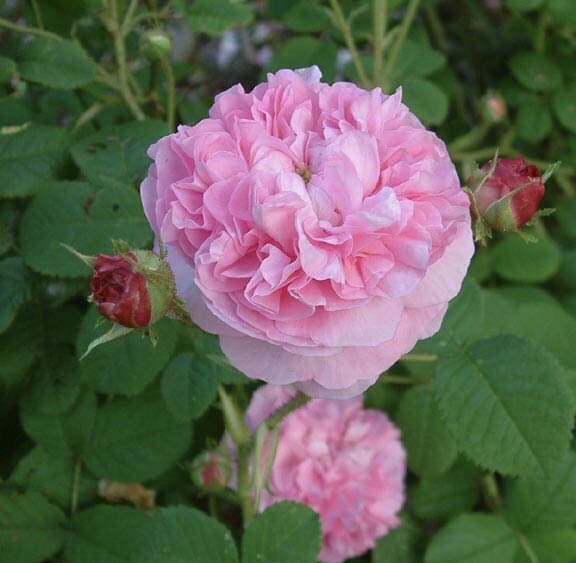
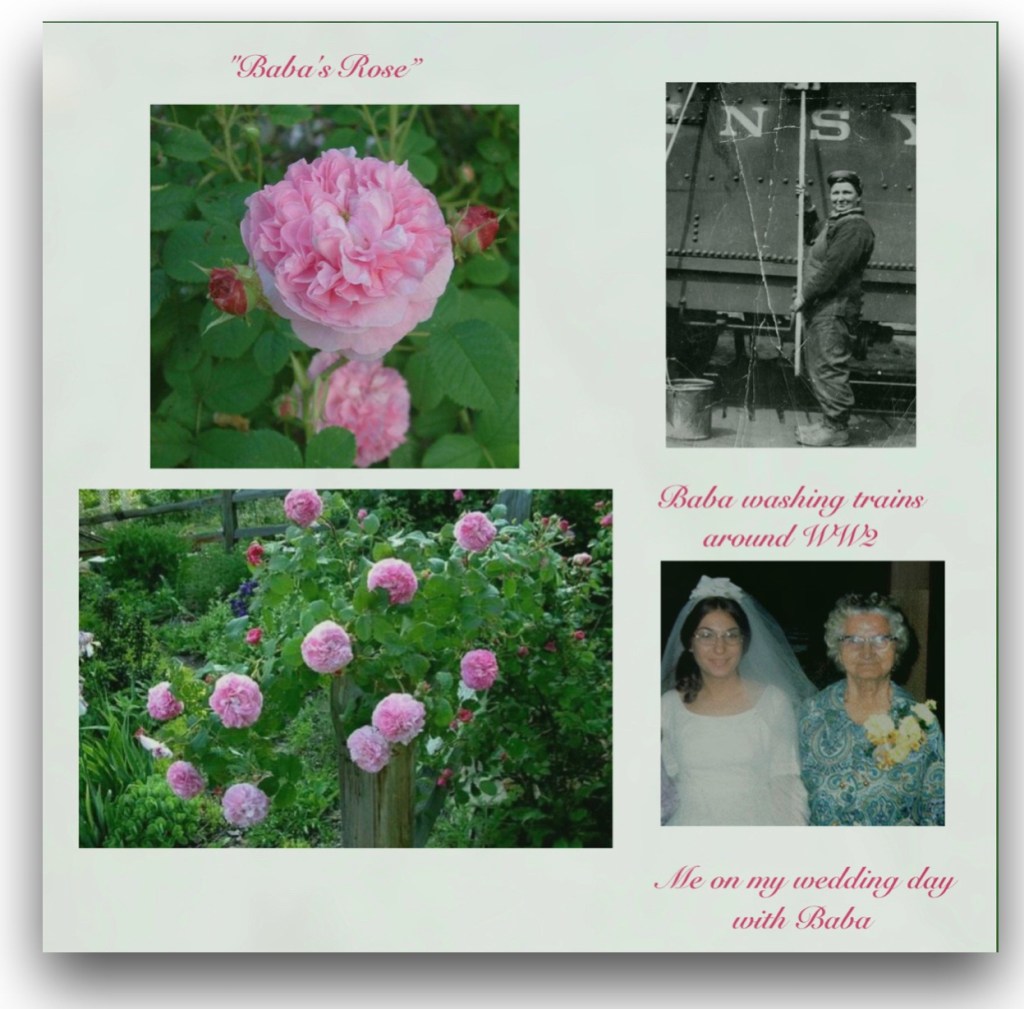
Baba, my Ukrainian-born grandmother, had a bubble-gum pink rose growing in her garden. Both my mother and my aunt had Baba’s roses growing in their yards and my mother gave me a start of that rose. If it wasn’t the first rose I planted in my garden, it was among my favorites for its beautiful, full blooms and its heady rose fragrance. That unnamed rose set me on a path that gave me years of joy and pleasure. 

By 2001, my husband and I had been married for 30 years. He pursued his hobbies on weekends and free time. Our sons were adults and away from home. I guess the time and my emotions were ripe for me to embrace a new pastime, a new ‘lover.’ 

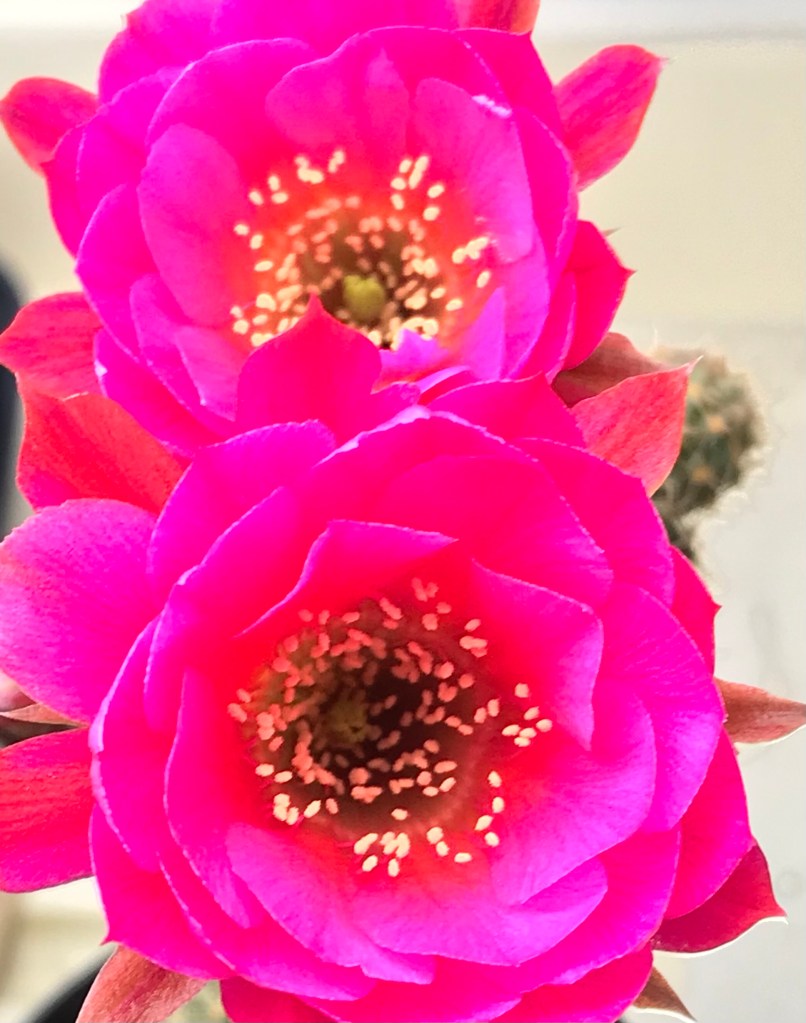
I love roses—their large, colorful flowers and sweet scents. I adore the history of the old garden roses. Some have been grown for hundreds of years. While less lovable, I accepted their thorny canes as one might overlook the less-than-ideal mannerisms in a new love interest. 

In my fence-protected garden, I planted dozens of rose shrubs—one of my lists included the names of 80 roses I bought and planted over the years! I enjoyed walking in the garden and smelling the roses. I didn’t bring too many bouquets into our house—I almost couldn’t bear cutting the blooms from the plants. Reading postings on Internet garden forums, many with photos of beautiful roses grown in others’ gardens, became addictive and fueled my desire to buy more roses. Not only could I read about the plant, eventually they could be ordered via the Internet! How easy was that?! I was obsessed!

It is likely that Baba’s rose was an old garden rose. Most Heirloom roses bloom once a year, usually in late spring and early summer. What is lost by growing a once-a-year blooming rose plant is made up many times by the abundance of the flowers covering the plants and usually a very strong rose fragrance. The scent is what I loved the most about them, however the flowers were very photogenic as well, doubling my pleasure in growing them. 

I grew the “Apothecary’s Rose,” a rose that had been grown in medieval gardens and used by herbalists for various remedies and perfumes. I added a deep pink rose, “La Belle Sultane,” who enchanted me with her frilly yellow stamens against the dark petals. She was named for a French woman Aimée Dubucq de Rivery who was captured by pirates in 1776 at the age of 13 and became a cherished concubine and mother of “Sultan Abdul Hamid the First of the mighty Turkish Empire.” Another rose, “Maiden’s Blush,” was originally named “Cuisse de Nymphe” (translation: “Passionate Nymph’s Thigh”) by the French. Perhaps the English found the original name too vulgar. There are similar stories about the names of some of the other roses I grew. And, of course, I grew Baba’s Rose.

Some fellow rose enthusiasts widely promoted alfalfa tea as a fertilizer for roses. A gardener could make this magic concoction herself. Using a 55-gallon plastic garbage can filled with water, marinate alfalfa cubes in the can over a period of days or weeks. The resulting elixir was extremely pungent (I would say it smelled worse than a neglected livestock barn). Wearing rubber gloves, unless I wanted my hands to smell for days, I used water from the soaked and rotting alfalfa to water my rose plants. I don’t know whether or not it helped the roses. As one might do unpleasant tasks for a lover, it was one ritual practiced during my rose love affair.

While the roses themselves brought me joy, my garden also provided the perfect place to practice a new hobby: photography. With a digital camera, I was able to take photos of my beautiful blooms and the fauna (insects) that enjoyed my roses. That was so much fun and added another dimension to my gardening pastime .

Then in 2003, a deadly scourge entered my little piece of paradise: rose rosette disease (RRD). It didn’t affect people or animals, just my beloved roses. I learned about the disease on gardening forums and the Internet. Sadly, there was no cure for the disease. RRD is caused by a tiny mite that infects the rose with a virus. Symptoms of the disease include deformed stems and flowers, an excessive number of thorns on the canes, and an abnormal number of stems growing from the rose stems. The mite can spread the disease to other roses and eventually kill them. Looking at a rose bush with RRD, it is clear there is something wrong with the plant. The advice was, and still is, to dig out and destroy any rose bush showing signs of the disease.

Each time I found a rose bush showing the infection, the grief I felt was similar to what someone might feel when discovering a loved pet was ill and nothing could be done to heal it; this may sound stupid…after all, it is just a plant! But at that time it was so much more to me. I spent hours in the garden and there was little I could do to help and protect my ‘loves’ from this disease. I was sad and angry when removing those diseased roses. After discovering the disease in my garden, I bought fewer new roses bushes and started adding companion plants to my garden beds. My love affair with roses was on shaky ground.

There were other dalliances with plants that weren’t roses: fragrant peonies (that flopped when it rained which ruined the huge blooms); iris (the iris borer decimated many of my plants); colorful daylilies (vigorous plants that needed divided often—like wrestling with an octopus and requiring the strength of Hercules); clematis with huge flowers but no fragrance (the rabbits liked them almost as much as I did); and flowering perennials, shrubs, and trees. I also had a flirtation with growing plants from seed and participated in a pagan rite by sowing them on the winter solstice (which made the sowing seem a little magical—like a celebration of the “birth of the sun”). The romance was never as strong or as long as my love affair with roses. 

Over time, my garden became too large for me to care for. I began referring to it as my chaotic garden because it was so sprawling, untidy, and unkempt. I continued to find joy in the explosion of flowers during the spring and summer months.

It has been over twenty years since I began my love affair with roses. We moved from Pennsylvania to a much smaller property in the sunny south. I said good-bye to my loves and look back with fond memories. My days of having a huge rose garden are over. My hope is to always grow a few fragrant rose bushes to love and enjoy wherever I call home.

I Remember

In memory of the victims of PAN AM Flight 103

The fall of my Junior year in college, I left my college in New Jersey to study with Syracuse University in London. I had applied to the Syracuse program because I needed a change from my college, which had begun feeling small.

I wanted to spend a year in London, but was afraid of feeling homesick. I fully intended to meet friends from my hometown and travel during winter break. The Syracuse program gave me the opportunity to extend my stay to a year if I was happy. About two weeks in to my semester in London I decided to stay for the full year.

I loved my time in London. Words can’t describe what a wonderful and exciting experience it was for all of us who studied there. We were young, practically still children, full of hopes and dreams.

34 years ago today the dreams were taken from 35 of my fellow students. The tragedy of Pan Am flight 103 changed all who it touched. For those people who were connected to the disaster over Lockerbie, Scotland: I remember.

Pictures flow through my mind…

Traveling for the first few days of winter break with my roommate, Deirdre

Leaving London 

Traveling to  Amsterdam, Cologne, Munster, Brugge and Brussels

Arriving at the Brussels train station where Deirdre and I would part ways:

She to a family she knew in Belgium, 

I back to London to meet with friends for Christmas.

Liz, at the train station saying “There has been an accident on one of the planes”

Me stupidly saying “was anyone hurt?”

Being told, “Everyone is dead.”

Darkness fell,

Walking from the Syracuse center after laying flowers on the steps…

Being approached by another student “Sarah, thank God…I did not know your last name, there was another Sarah from our program on flight 103.”

Slowly finding out who I had known:

Ken Bissett, who sat next to me on the flight to London and was supposed to return for spring semester…

Miriam Wolf with her vibrant hair and welcoming personality.

The others: Pamela, from Bowden; Turhan; the Cocker twins…

Feeling guilty that I had not been on the plane.

Lighting candles all over Europe, in remembrance for those that had died.

Moving through the dark. Finding light. Letting go of the guilt.

Authors note: I wrote this 4 years ago, on the 30th anniversary of this tragedy, and published it last year as the first story on this blog.

The Twilight Years

unedited

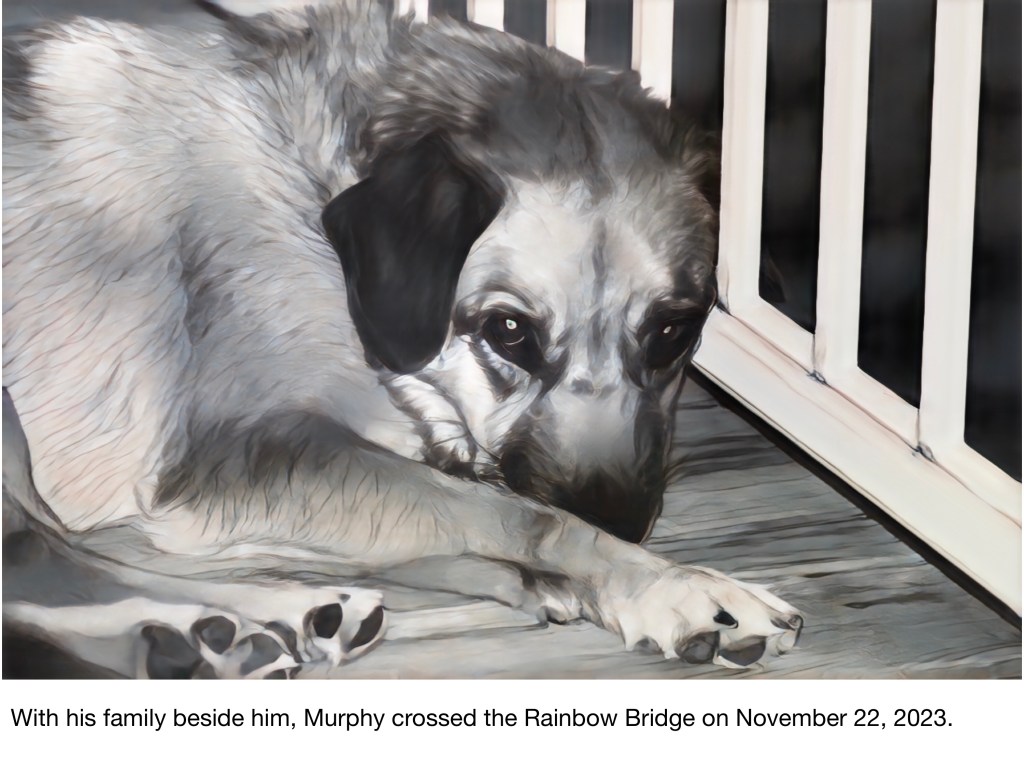
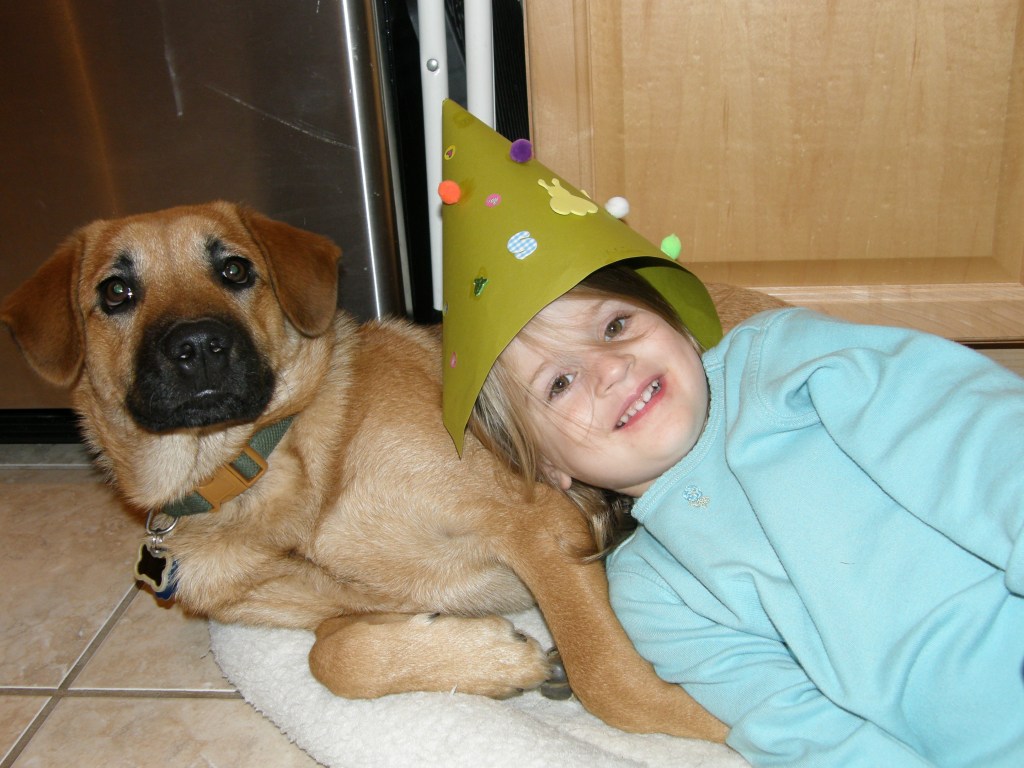
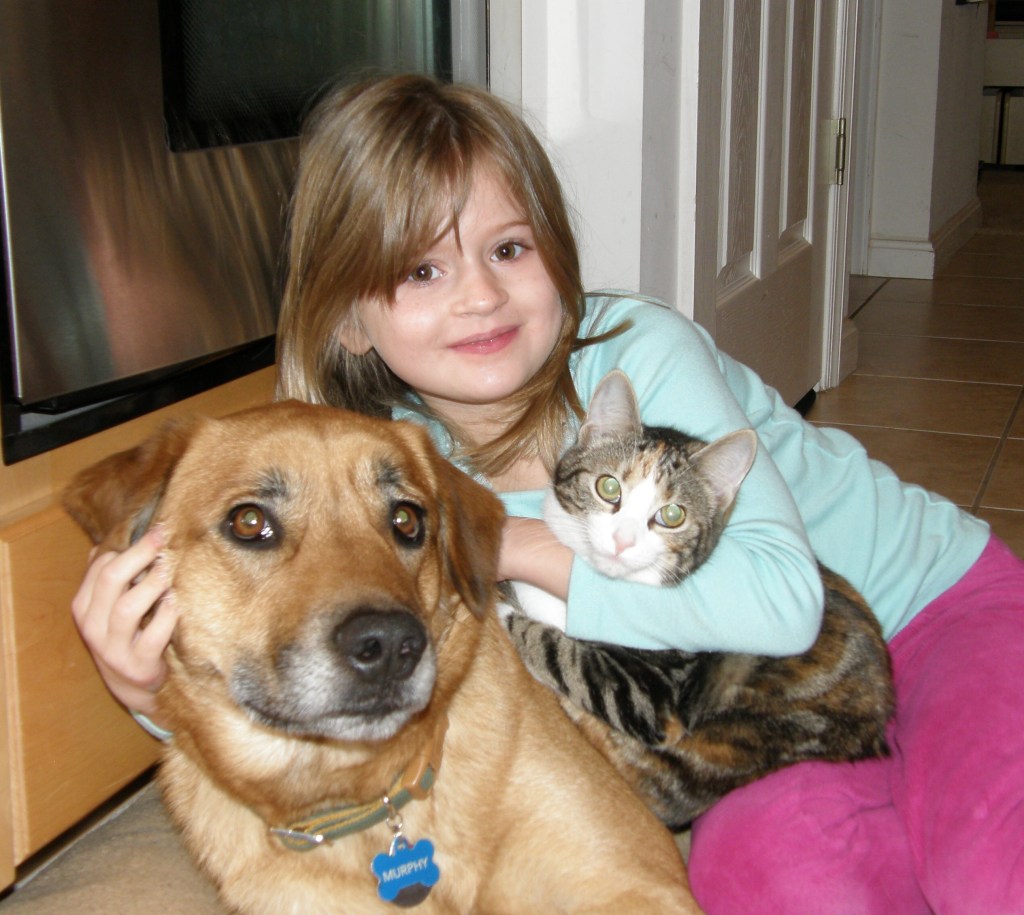
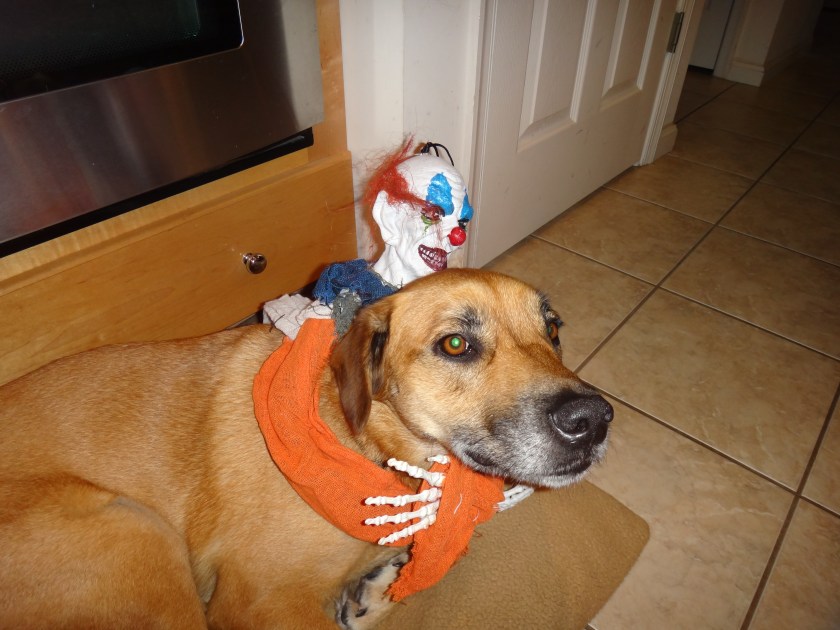
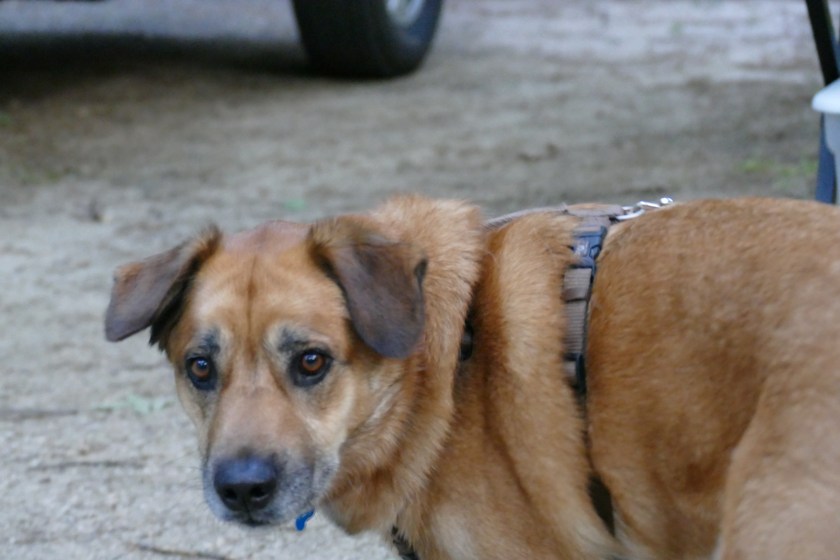
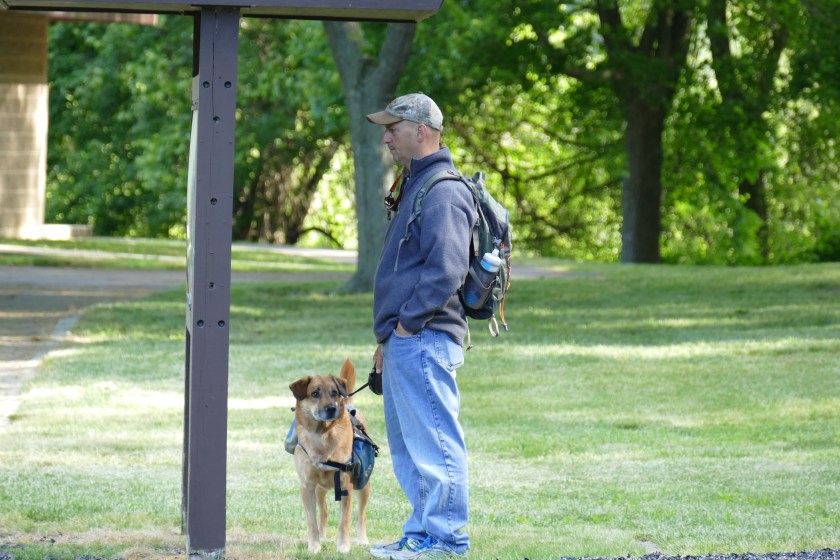
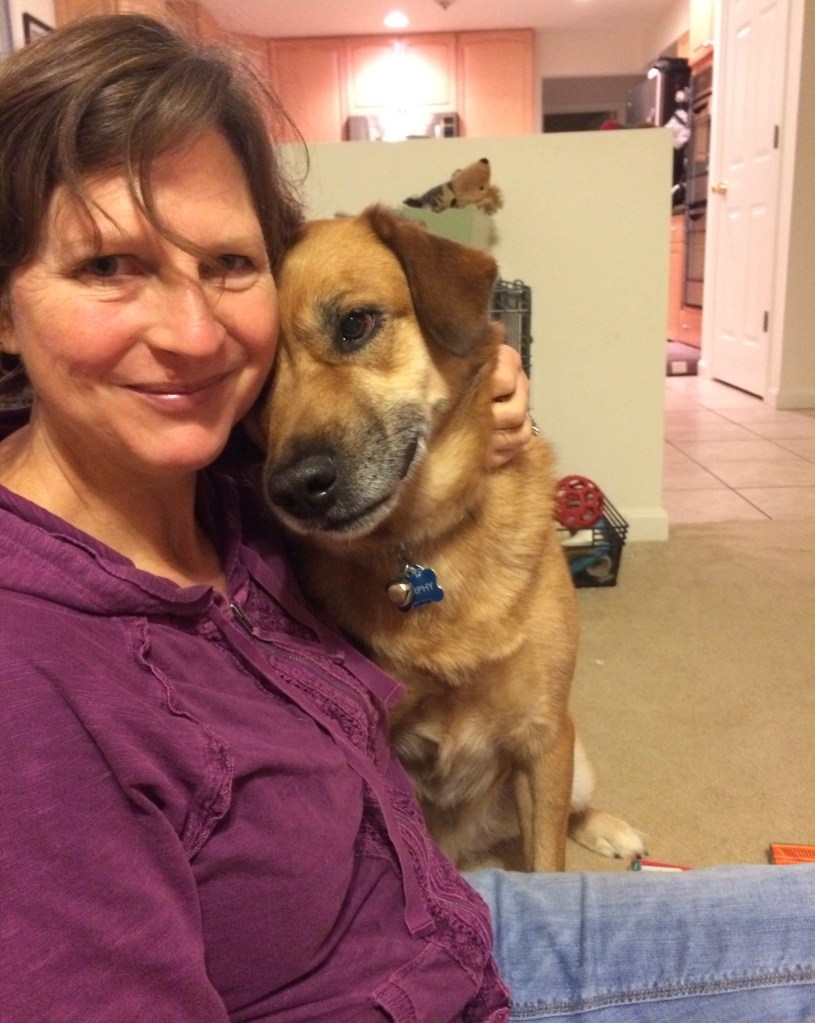
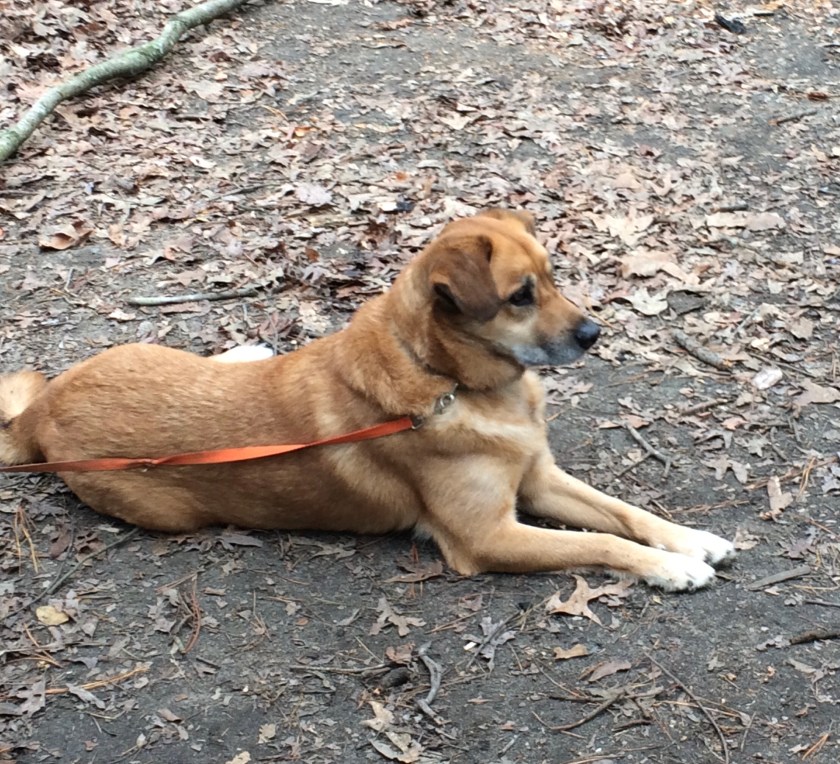
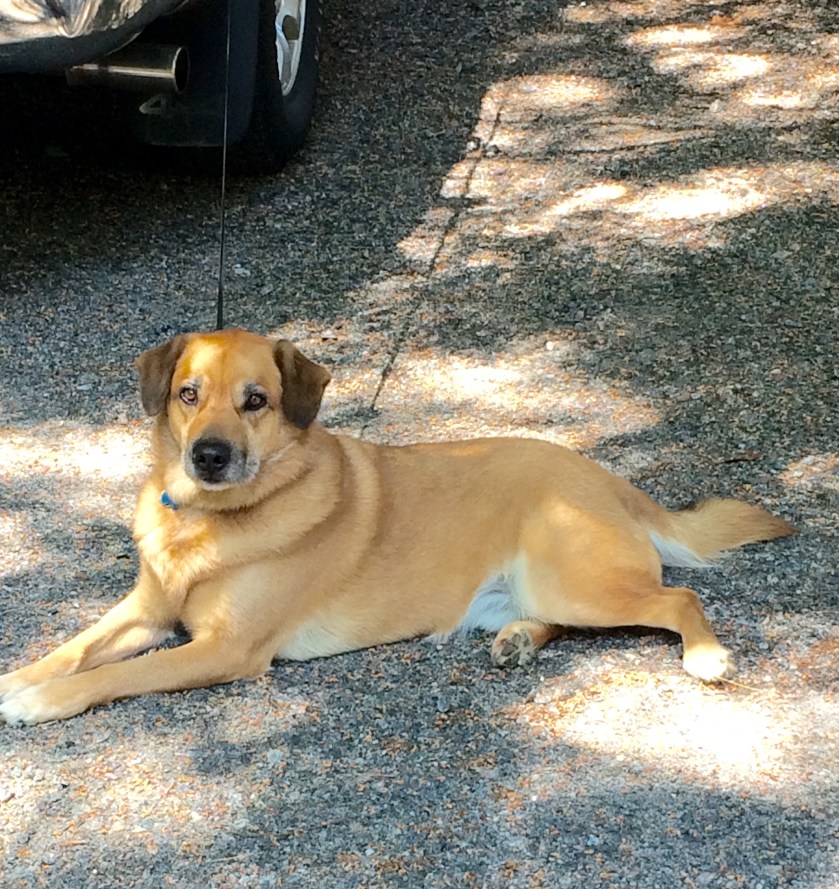
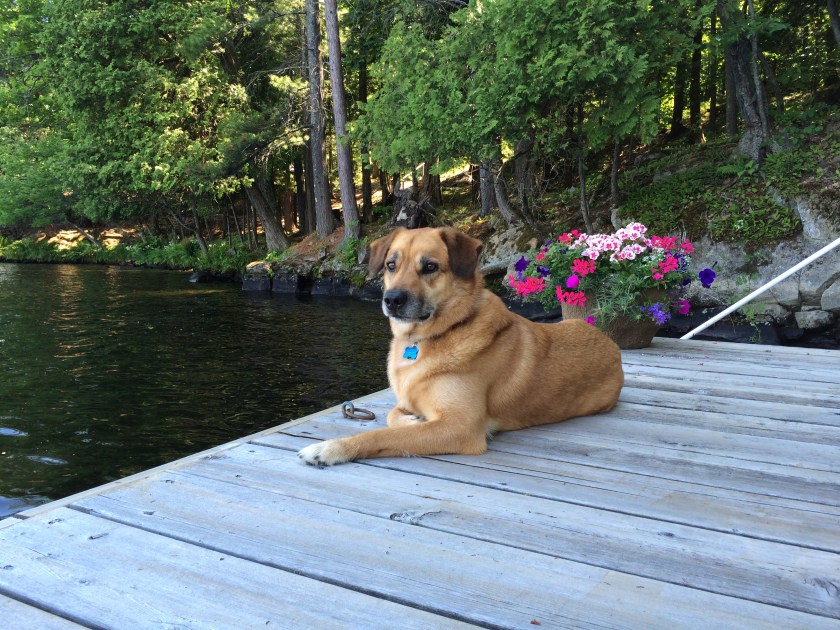
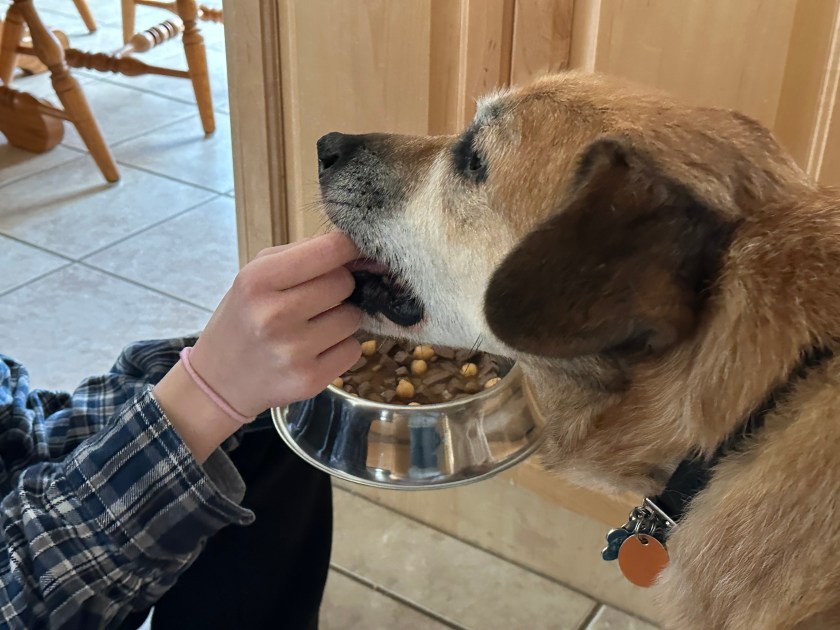
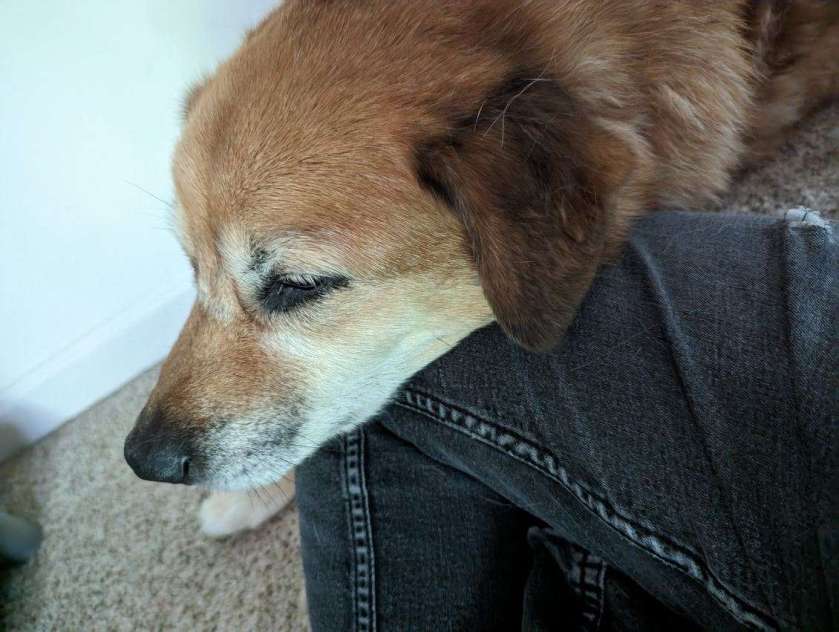
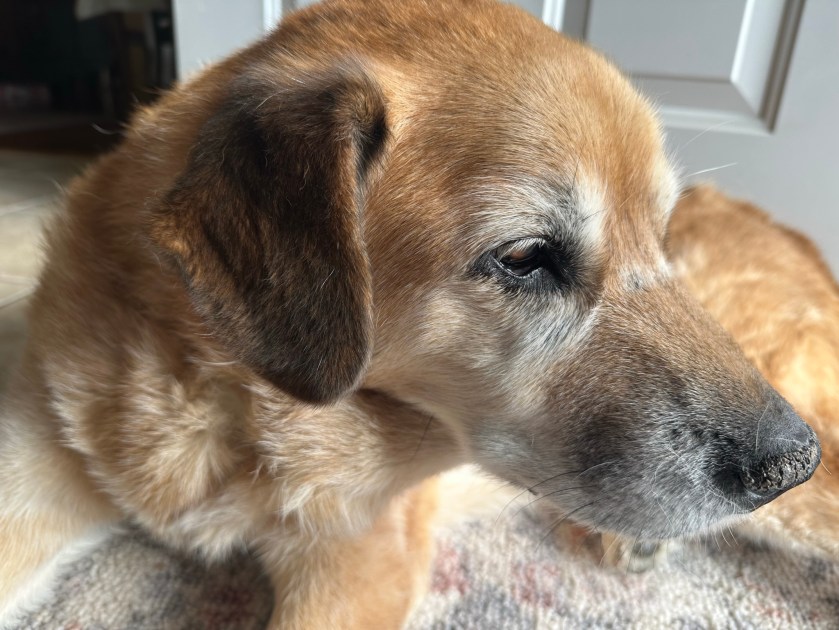
On July 4, 2023 I traveled north and slightly west. Through mountains and valleys I went. As I drove, I noticed the gentle blue Cornflowers, elegant Queen Anne’s Lace and some jaunty yellow flowers that I cannot name. Behind me, our dog sat on the floor of my husband’s truck. Every once in awhile, I would glance over my right shoulder to see how Murphy, my trusty companion, was getting along. The day was hard on him (and me somewhat) as I had to lift him in and out of the vehicle.

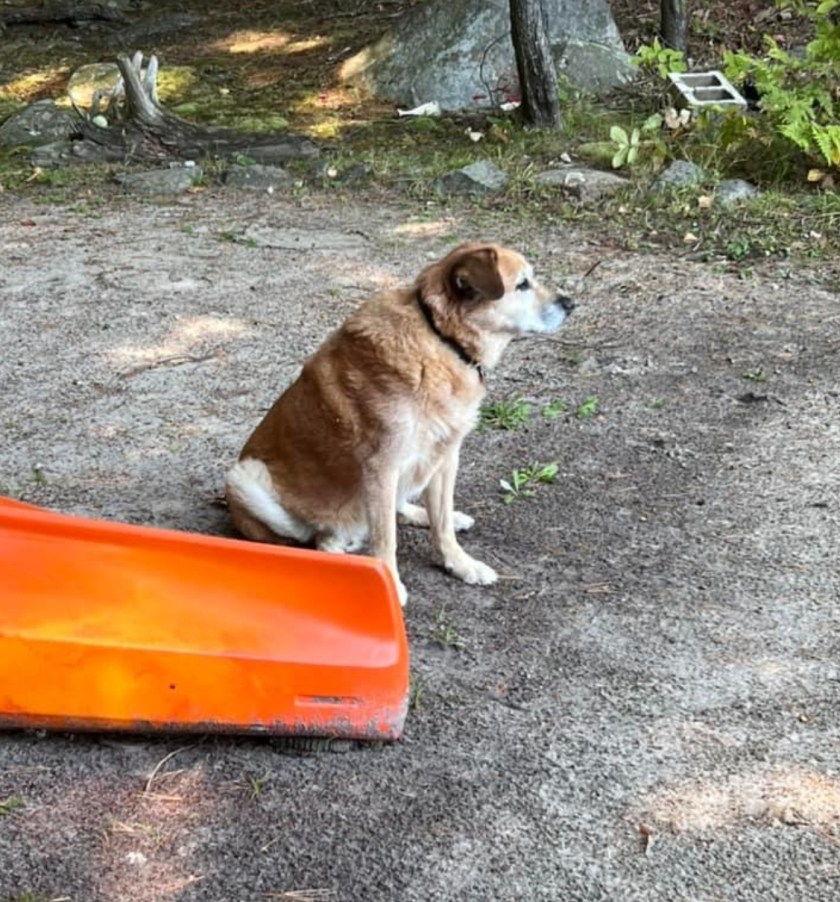
I hadn’t traveled any great distance with Murphy since the summer of 2019; that year he was able to jump in and out of my mini van with very little effort. In mid June of this year he turned 14, but his brain told him he was younger. Every time we were at a rest stop on our way to Muskoka, instead of waiting to let me help him in and out of the truck, he tried to jump and do it himself; this made it difficult for both of us. Neither of us thought we would be taking this trip together; my husband was supposed to drive up to our summer home with him ten days after I arrived. At the very last minute, with my car packed, my daughter and I ready to go, I was asked to stay home for a few days. My husband took my vehicle, with all my things, and headed north. Murphy and I were left behind. When I departed 4 days later, our beloved mutt came with me.

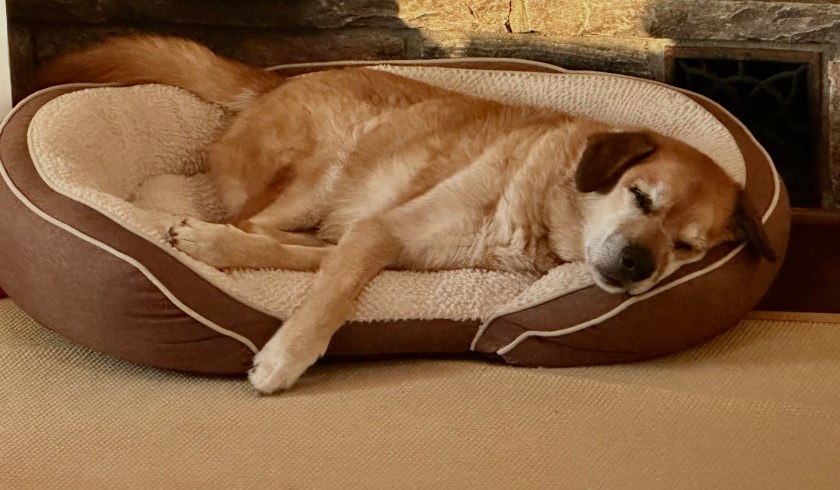
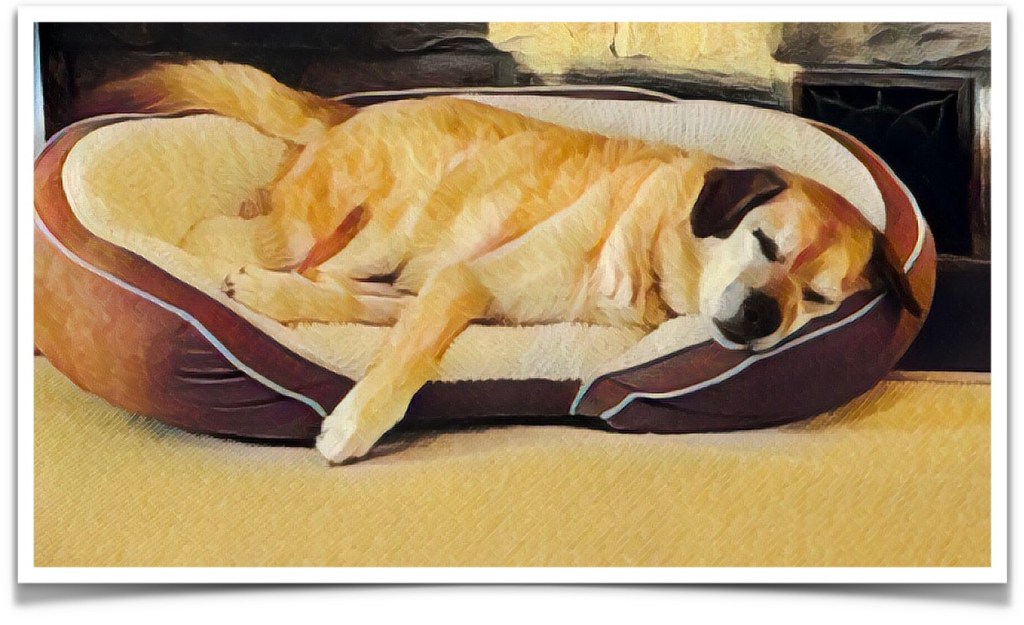
For the most part, Murphy slept the whole way to our cottage, except when we stopped for bathroom and water breaks. On the last mile of our journey, as we turned onto the road that leads to our cottage, he sat up. Murphy knew exactly where we were, even after almost four years.

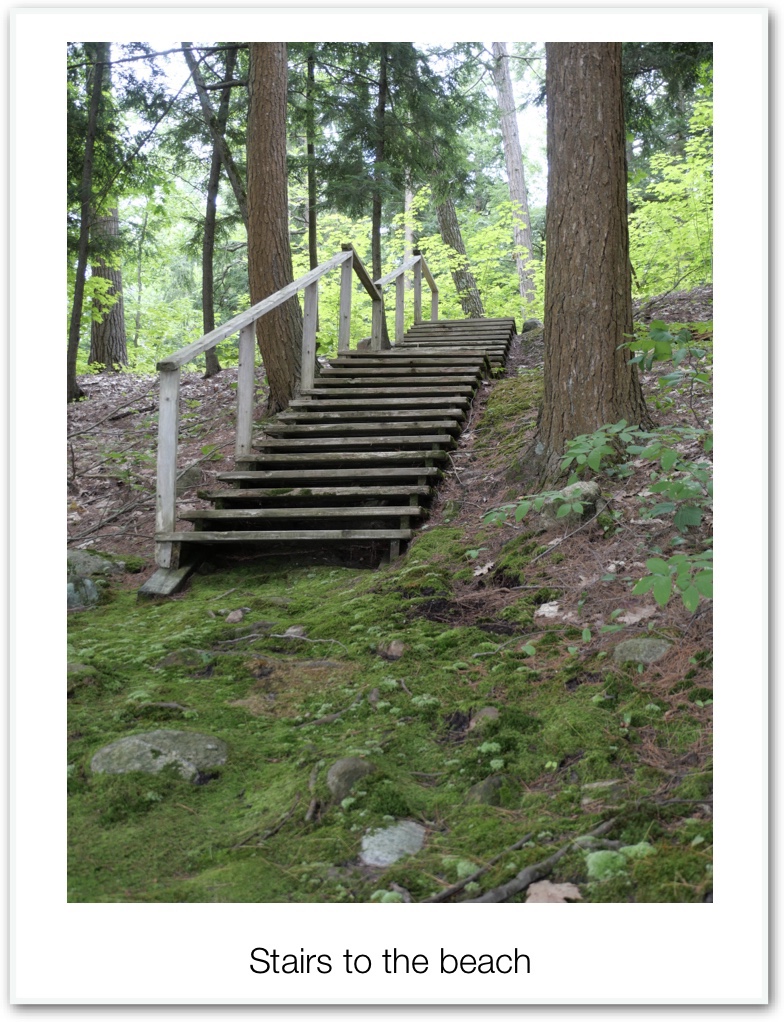
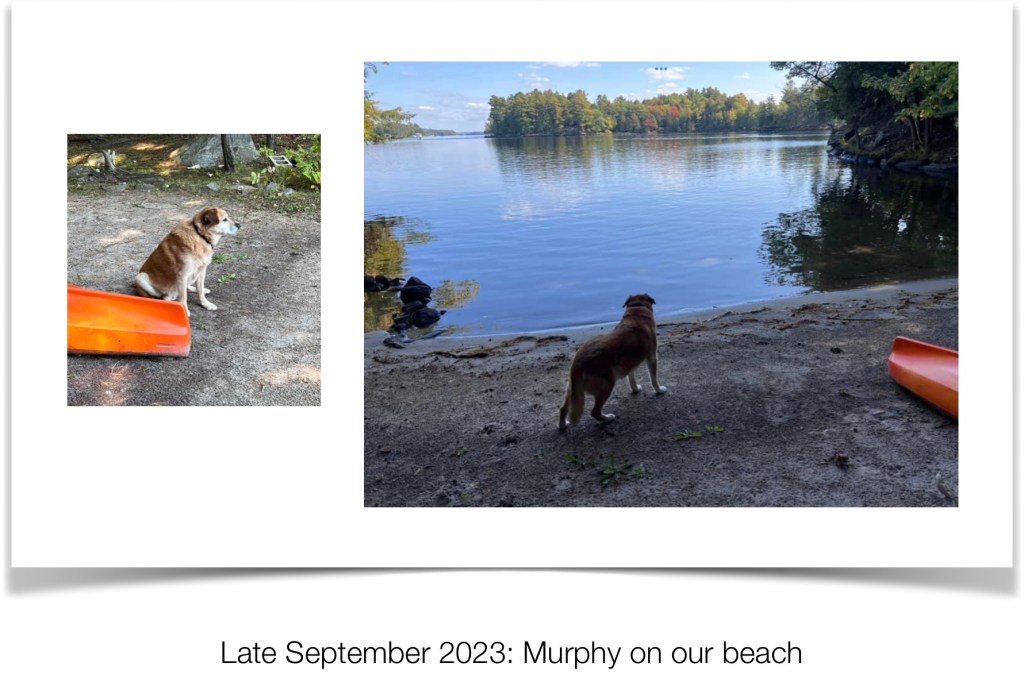
When we arrived in the late evening on July 4th, 2023, the sun was still high in the sky. After unloading and having a bite to eat, I took Murphy on a short walk toward the beach. I thought it would be good for both of us to stretch our legs after the long journey. To get to the beach, there are fairly steep stairs on both sides of a hill.

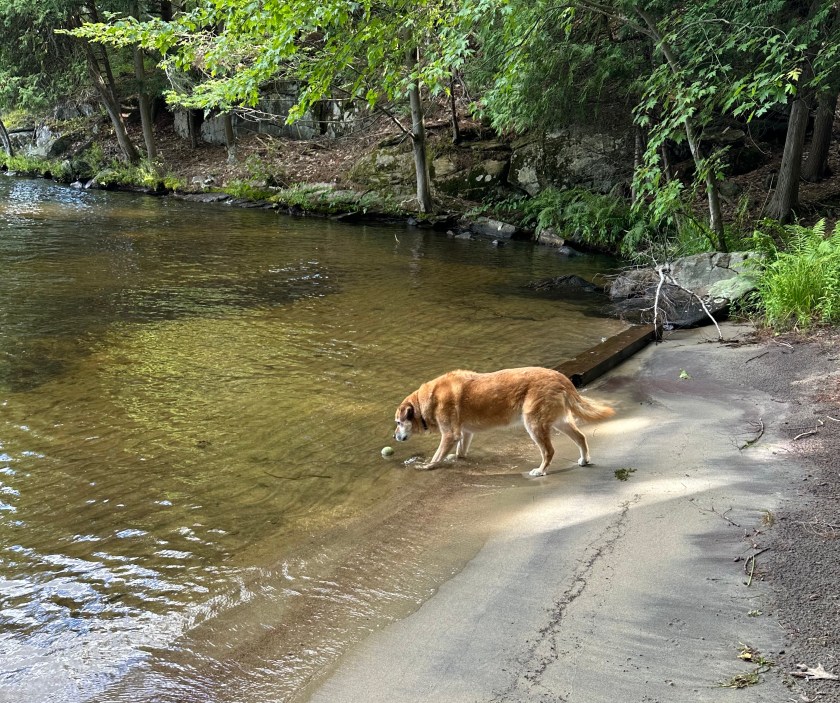
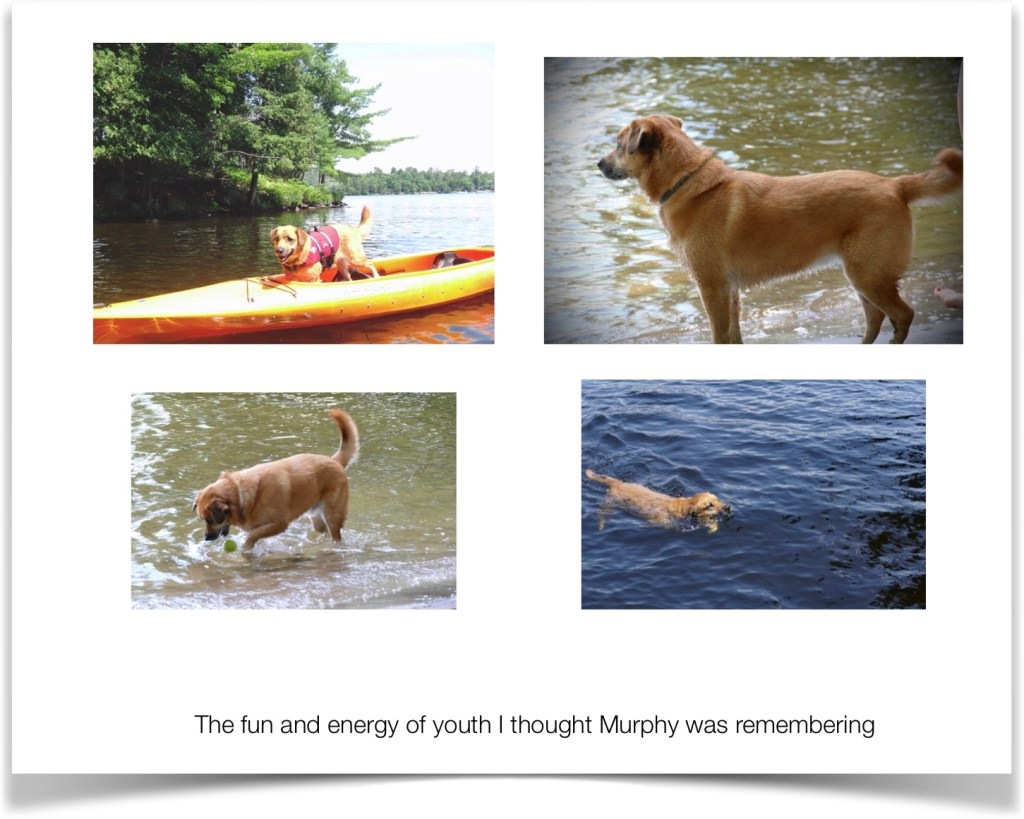
As we walked, with the moss like a cushion under our feet, I intended to turn back before we reached the steps. However, Murphy (on his long leash), had other ideas and started toward the stairs. Before I knew it, he tried to climb the first step and fell. Again, I thought my companion remembered the boundless energy he used to have: when he would go up and over the hill to the beach. In the little sandy bay our dog would play fetch with a tennis ball, then burry it in the sand. Sometimes he would chase the ducks or join my husband in a kayak.

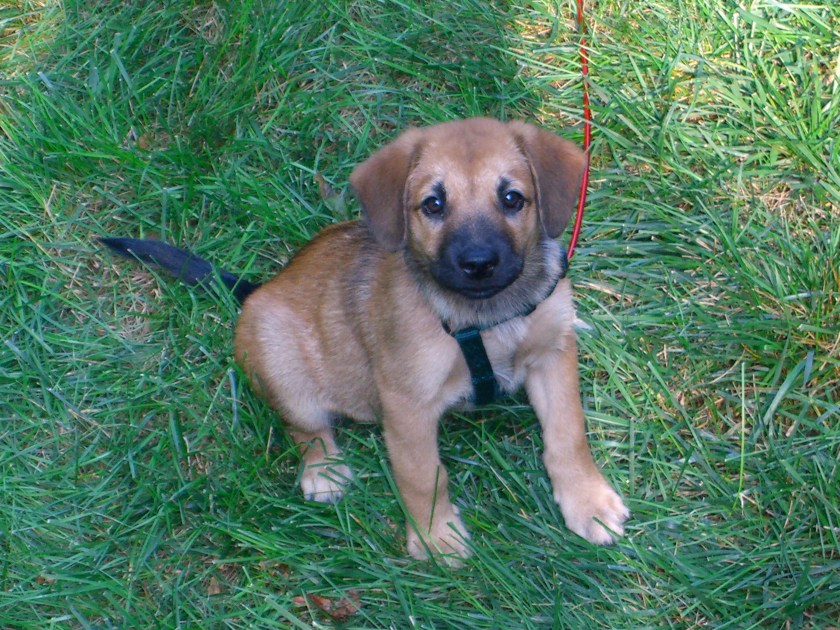
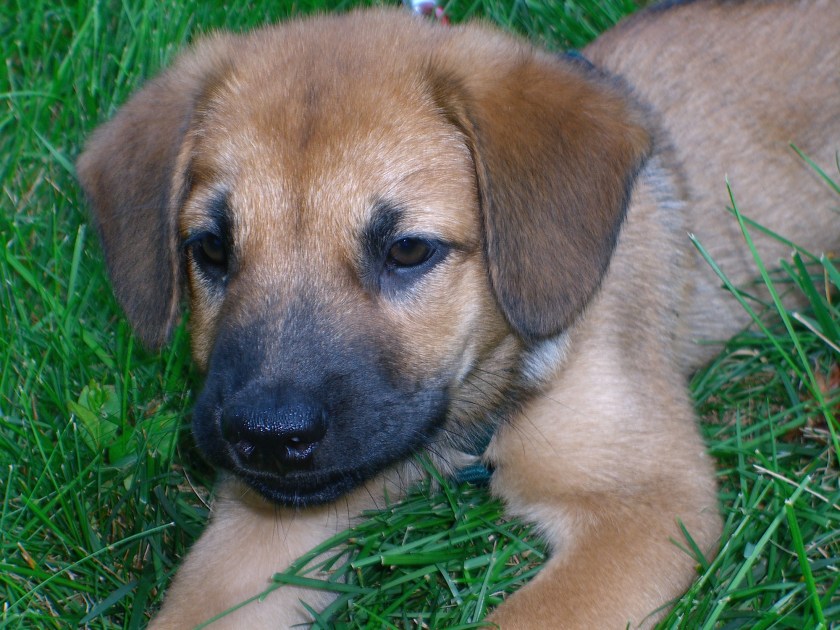
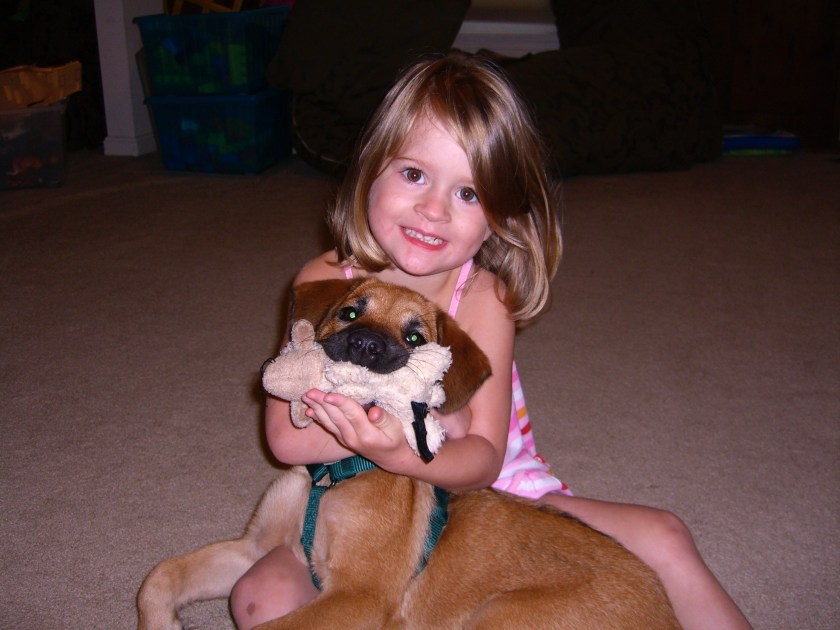
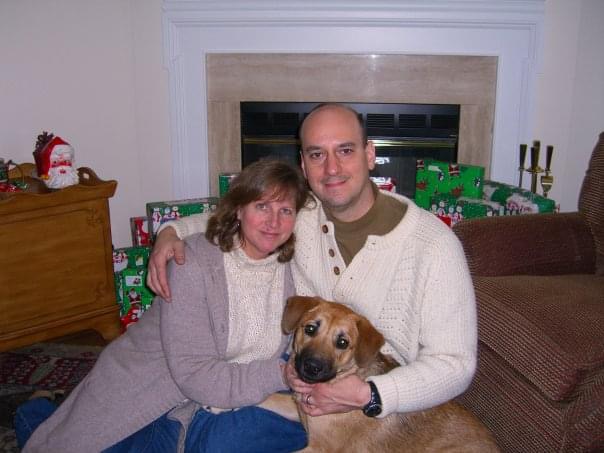
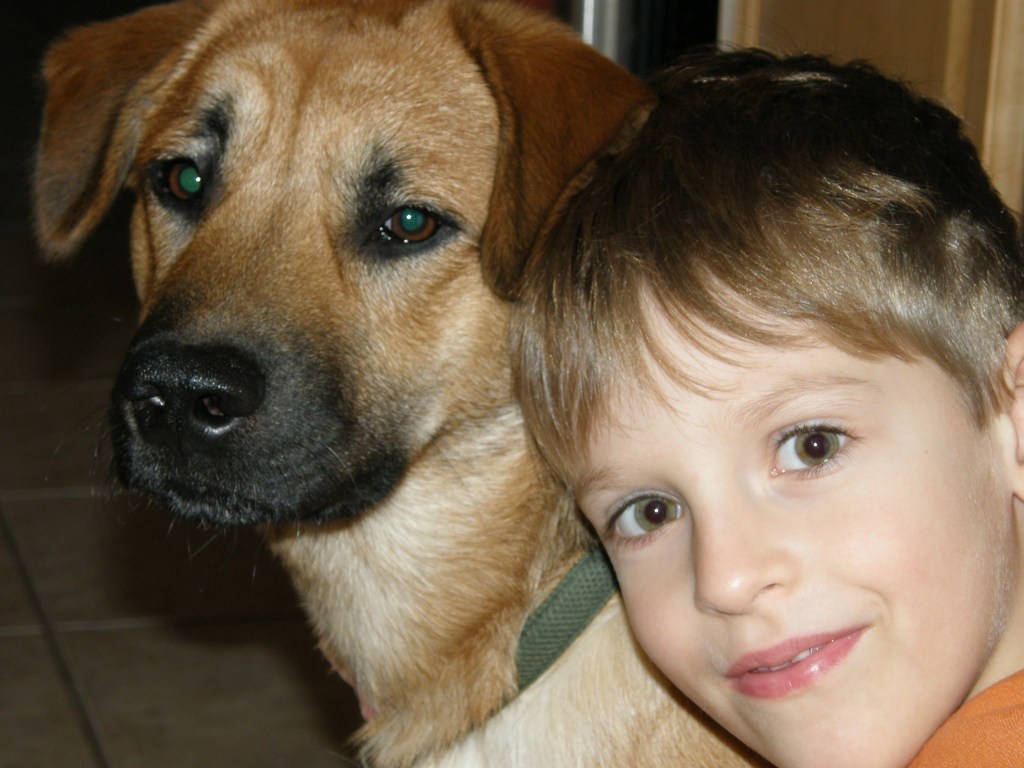
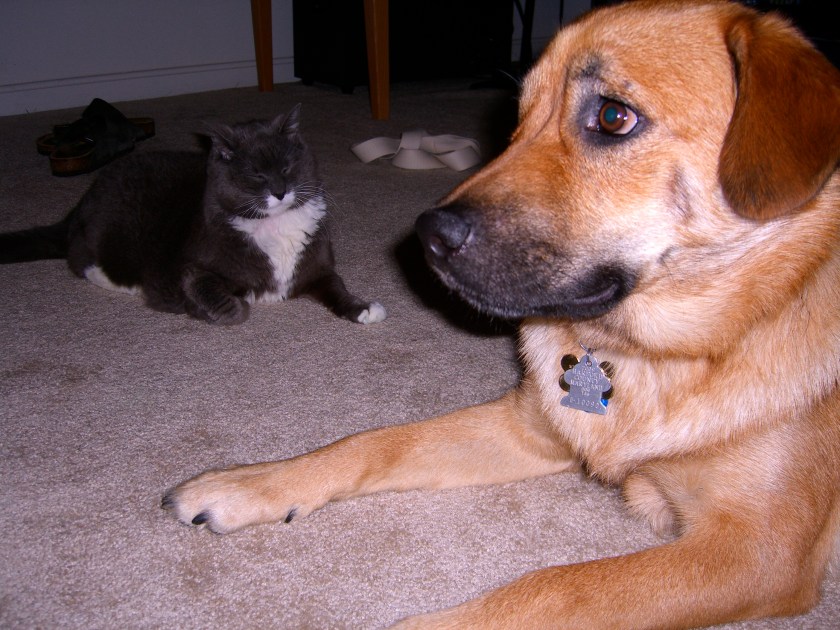
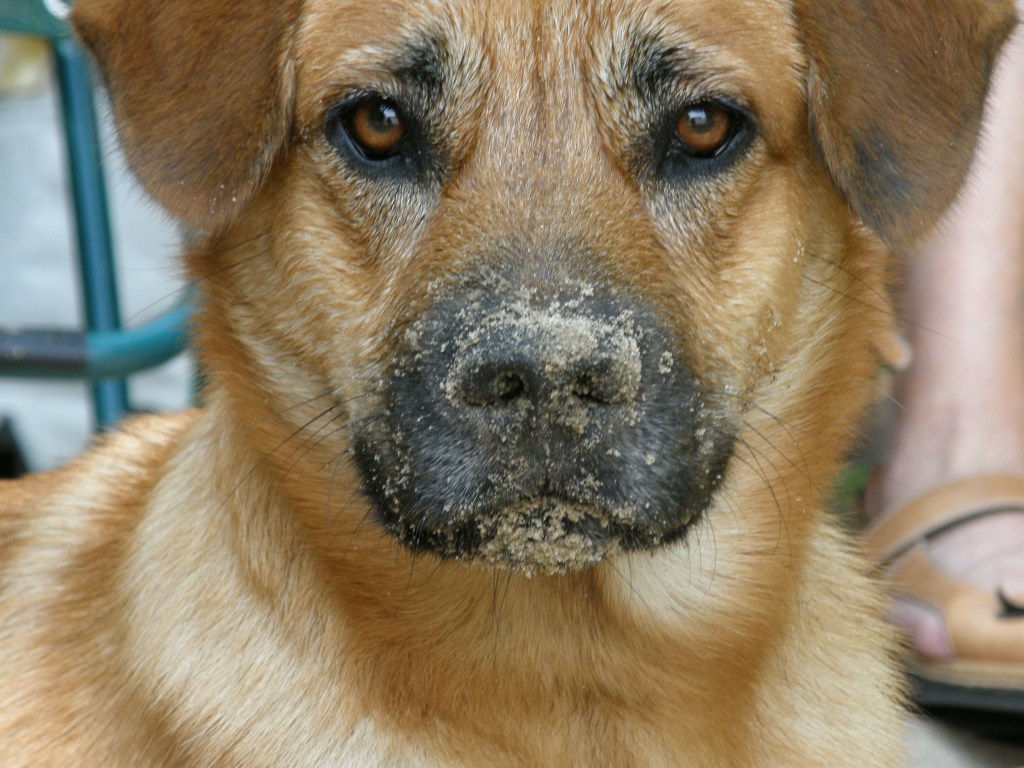
We have had Murphy since he was a puppy. He was adopted at the end of the summer of 2009. For nine years he joined us on our trips to Canada. For several of those summers, Murphy and I would walk two miles together almost every morning.

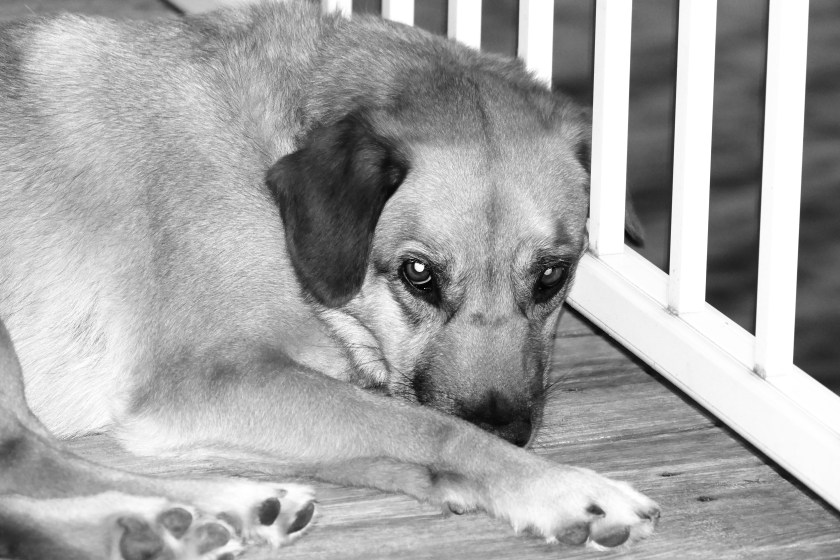
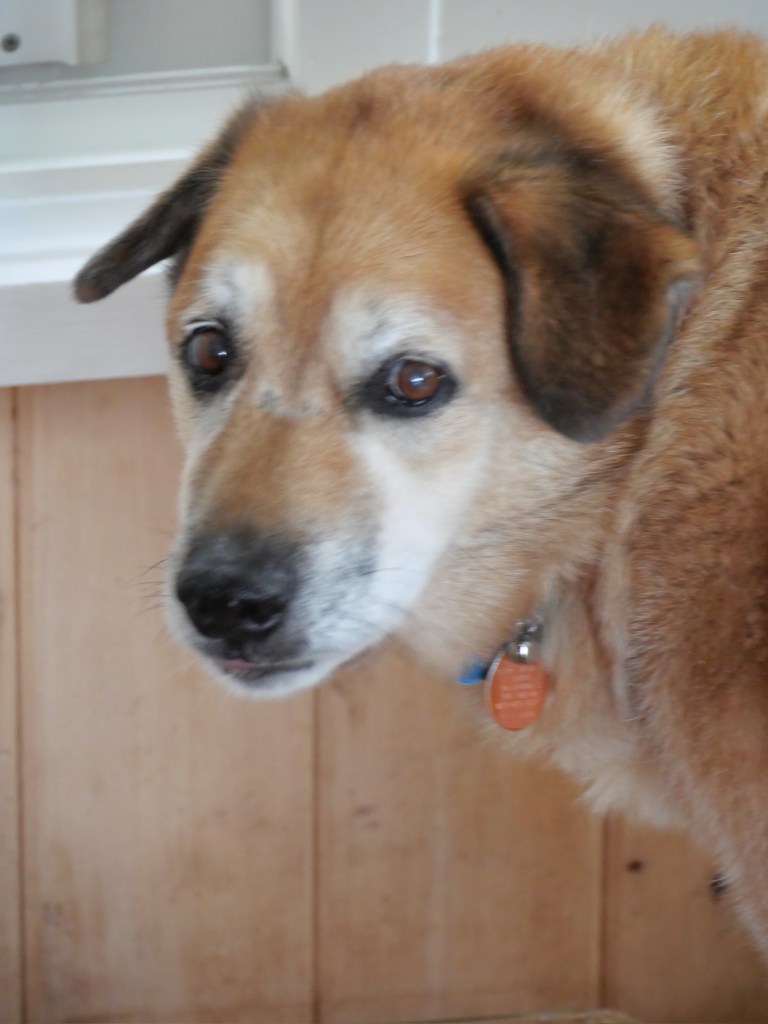
However, life and our routine changed: in the summer of 2020 none of our family was able to set foot in Canada due to COVID. Then in the summers of 2021 and 2022, my husband chose not to join us at the cottage and Murphy stayed at home with him. Over a year ago, when I was in Muskoka, my trusty companion started walking slower; at the age of 13 he had entered his twilight years. Perhaps he had passed into his dotage before this, but I hadn’t noticed.

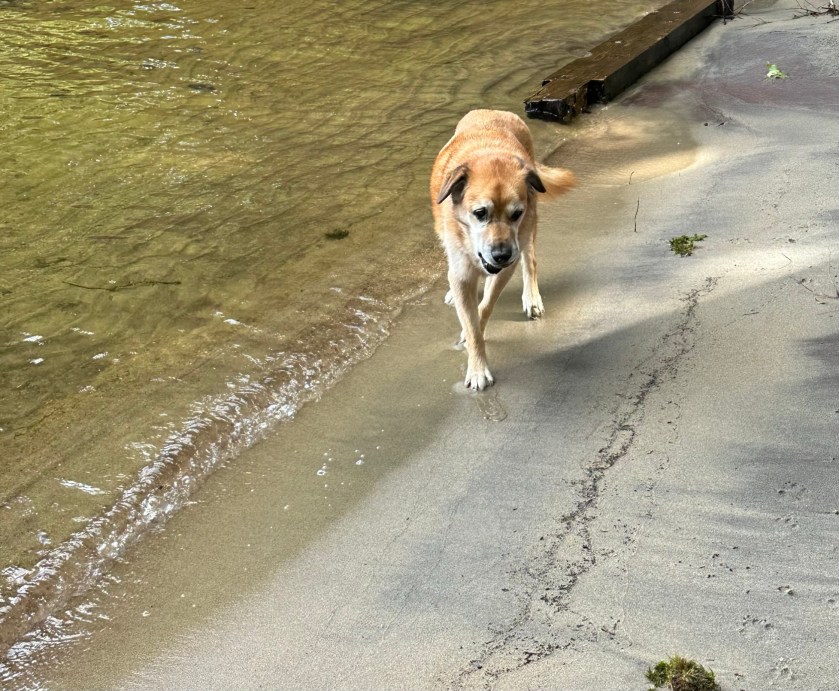
This past July, my husband departed our cottage about a week after I arrived. Murphy was left with my 17 year old and I until my spouse came back at the end of the month. This unexpected time with Murphy was special and important for both my daughter and me. Walks with our dog were shortened to several small strolls every day. We had to practice patience and remember he wasn’t young anymore. Our mutt’s steps were slow and painful, but he kept moving. In Murphy, I saw a reflection of what I might feel like in 25 years: slower movement, achy joints, and the desire to do something that physically I would no longer be able to do…

With the regular short walks every day, Murphy and I finally went on a successful walk to and from the beach. We didn’t stay long, but he played for a few minutes before we trekked back up and over the hill. Just over a week later, my husband took him home.

Murphy’s story doesn’t end here, but it raises the question: how do we know when it is time?

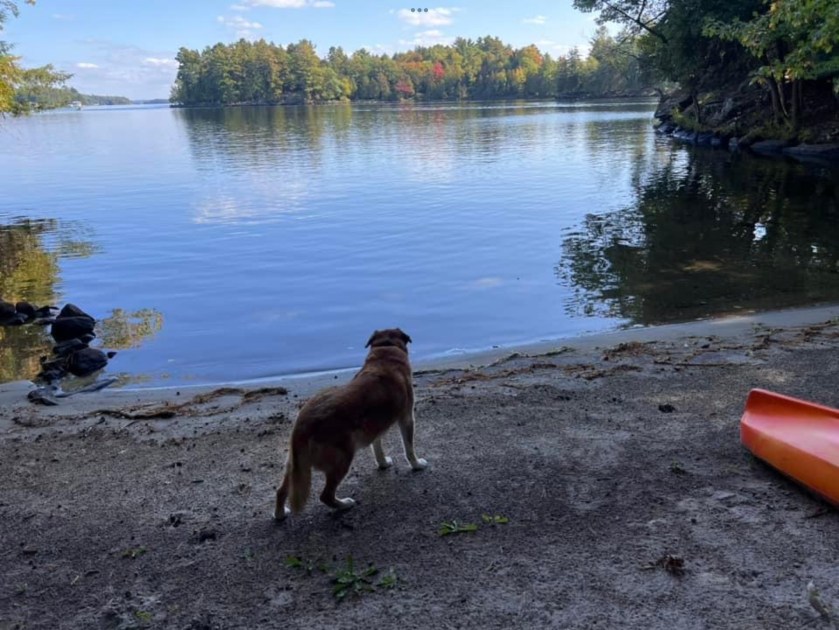
As summer turned to fall, my husband and I traveled up to the cottage to experience autumn in Muskoka for the first time. Murphy came with us. He has become too much responsibility for a busy high school senior to take care of; if something happened to our precious canine while we were away, it wouldn’t be fair to burden our daughter with this…. Although this was our first time seeing the changing of the leaves in Ontario, Murphy has probably experienced his last moments there.

We have been home from our short trip north for about three weeks now. The leaves on the trees are showing the bright yellows, deep reds and the brilliant burnt oranges of Autumn. As the leaves start to fall, I see Murphy stumbling often on our daily strolls, choosing the smooth side of the curb to walk on, rather than the grass. Each step Murphy takes looks excruciating. Every day, for the last week, I’ve asked myself: “When the trees are bare, will our old dog still be with us or will his rest come with the quiet of winter?”. Only time will tell.

No Ice, No Water

Unedited

https://open.spotify.com/track/6iblnklMzUKIXAtjk5lzIy?si=IS0XH8amSRSNxvTVa6VPmw

While I was growing up, every evening my siblings, parents and I would meet in the family room for cocktails. We kids would have soda. My mother probably had a glass of white wine and my dad often had whiskey. Cocktail hour was a time for us to come together and talk. Dinner was still being prepared and we didn’t rush through it, like one might at a meal; it was nice. There were times that I would miss these gatherings because of my swim team practice, but that was only for a brief period of my childhood.

My father drank his whiskey “neat”: no ice, no water; almost anyone who knew my dad was aware of this. He held his liquor well. If he had a few drinks too many, you couldn’t tell; the man was as smooth as his drink.

When my siblings and I grew up, and moved out of the house, my parents would come together at the end of their busy work days and continue the tradition of cocktail hour. One night during such an occasion, the pleasant evening my parents were having took a turn and my father ended his life. Just like that: no warning, no note. My mother was left trying to make sense of what made my dad snap. He ended his life in front of her eyes.

The fall that my father died, I had just started to run again. Running was my therapy; time for me to process what had happened. At the time, I didn’t run with music. One song kept playing through my mind; it was “Whiskey Lullaby”. The circumstances of the man in the song were very different than my father’s, but it was these four lines that stuck in my mind:

I ran with these words playing through my head. The run would eventually end with tears in my eyes and a lump in my throat.

That fateful night he put the whiskey to his lips and pulled the trigger; he no longer had the strength to go on. Dad didn’t think, but only acted, leaving trauma in his wake. Unlike the woman in the song, my mother had the incredible strength to get up off her knees…

For me, the “her” in the song was my father’s life: he had suffered so much and he was tired.

Music sometimes resonates with you for a certain reason. “Whiskey Lullaby” filled me with sadness; it evoked an image I didn’t want to see. When my father died, I couldn’t listen to contemporary music of any kind. For a few years following my father’s death, the music from my youth were the songs I chose to listen to; these tunes filled me with the sound from a time when my family would sit around talking, sharing our day, while my dad drank his whiskey: “no ice, no water”.

Authors note: We are nearing the end of September, which is National Suicide Prevention Month. Suicide can happen any day of the year and any month; awareness should be always be present. Remember to support those around you. Know the the risk factors and warning signs of suicide (https://afsp.org/risk-factors-and-warning-signs). There is also a National Suicide Prevention Lifeline, the number is 9-8-8. Please ask for help, if you need it. Learn to recognize the warning signs that might lead to suicide. Unfortunately, my father didn’t ask for help and we hadn’t recognized the signs that told us he was in distress.

The Summer Of The Loons: The Beginning

Part 4 of An Unexpected Journey

Unedited 

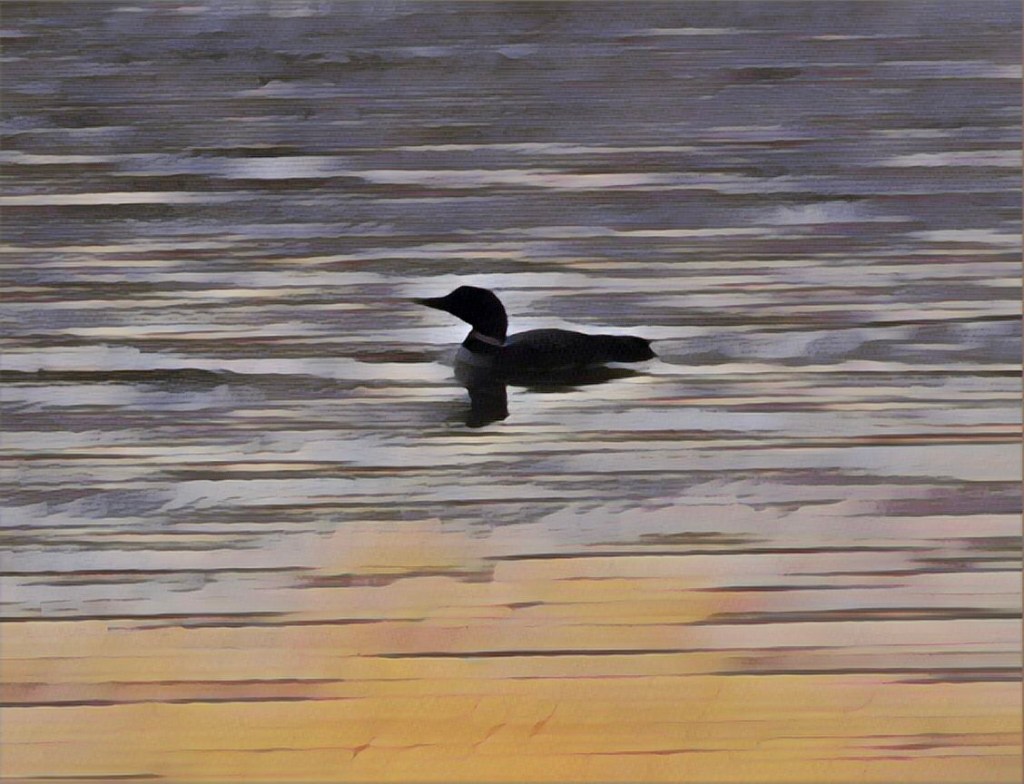
I hear the loons calling again this summer; that lonesome, haunting cry that only this bird can make. Have you heard it? In the summer of 2019, I heard the mournful wail of the waterfowl at all hours of the day and night; it was strange. I remember this so clearly, it sounded as if the loons were echoing the sadness inside my soul…

Play this video to hear the loon call three times.

Four years ago, at the end of June, my husband and I took our son (Bay) to a residential treatment program in Los Angeles. The weekend was a quick trip out and back from the east coast. We left early on a Saturday morning and came home the next day. Arriving home, exhausted, we had new information. We would need to be out in LA more than we had thought: being physically present was extremely important. Family therapy could be on Zoom, if need be, but it would be beneficial if at least one parent was in person as many weekends as possible. Saturday mornings, in treatment, there was group therapy: first the parents of the residents would meet; then everyone who was in attendance that day would gather for a “multi-family” group. After the second session of “group”, we would have lunch and visit with our child for a few hours. Until the afternoon that we dropped off Bay, we weren’t truly aware that the whole family needed to participate in the healing process.

My youngest daughter was due at camp in Ontario, Canada the weekend after we dropped off Bay. The camp is a little over an hour away from where we spend time each summer. Early in the week, my husband and daughter packed up the truck and drove north and west to our cottage. Saturday June 29th, my husband dropped our 13 year old off for a fun-filled month away from us. The next week I was at home with our dog and two cats. During this time, I looked for the cheapest round-trip flights from Toronto to Los Angeles, booked accommodations, cleaned house, and took some time each morning to run or swim. I was bone tired.

Almost a week later, I loaded the minivan with my bags, said goodbye to our cats and put our dog, Murphy, in the back of the mini van. Driving on only a few hours of sleep, I surprisingly made it to our summer home without incident. That evening, all through the night, and the days following the loons were calling; it seemed they never stopped the their haunting cry…

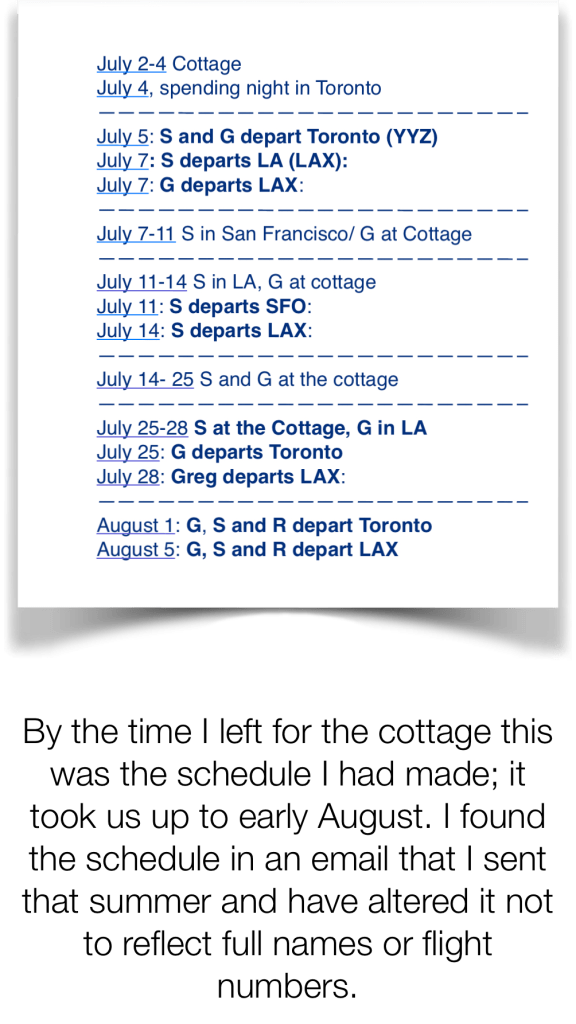
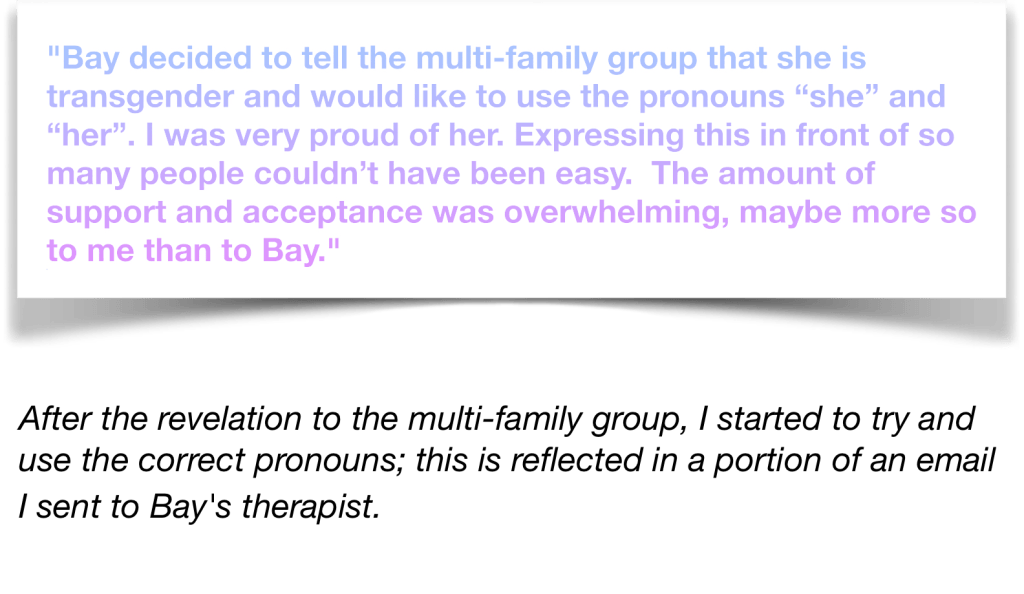
On July 4th, we left the mournful sound of the loons at the lake. We had an early flight, from Toronto to Los Angeles, the next morning. July 5th, several hours after we left Toronto, we arrived in LA; family therapy was to take place in the afternoon. Once we arrived at the residence, we sat in the counselor’s office with our son. By the end of our family session, we were no longer sitting with our son, but with our daughter; the pronouns Bay was using were “she” and “her”.  We knew back in April that Bay experienced gender dysphoria, not because he communicated this to us, but instead told a doctor in the emergency room; it was written on his discharge paperwork. Until that day in LA, we didn’t really know what that term meant for our child. Gender dysphoria is distress at the gender that was assigned at birth. People who have gender dysphoria are often depressed with suicidal ideation. We were grateful our teenager was able to explain that he was actually a female and share with us the start of his gender exploration. In our minds, Bay was still our son. The pronouns hadn’t changed for us yet ( as reflected in this segment of my story). 

Our middle child wanted to”come out” to his sisters and grandparents in his own way. So, for the time being, my husband and I were keeping a secret from most of our family members. We also learned that Bay was trying to decide on a new name. I told him that when he chose another name I would mess up. The correct pronouns would come with time, when I got in the habit of using them. There were tears all around, but this was our child and we would love and accept him for whomever he was. 

The next day, Saturday, was family visitation. We went to the parent group in the morning; it was extremely helpful to hear what other parents were going through with their children. I am not sure how much I contributed. That summer I could barely get out my words without crying. Bay didn’t want to do much with us on Saturday afternoon. He said he was “annoyed and sick of us”. We were sure he enjoyed his past isolation at home, so connecting with his parents was low on the list. My husband and I felt saddened as we watched the other families and their dynamics; everyone had something they seemed to share: music, games, etc. Bay wanted to do nothing. In the past, Bay enjoyed playing games with us. He was no longer interested. That Saturday, our child really just seemed to wish we would leave. From over 2000 miles, I heard the call of the loon echoing in my mind. 

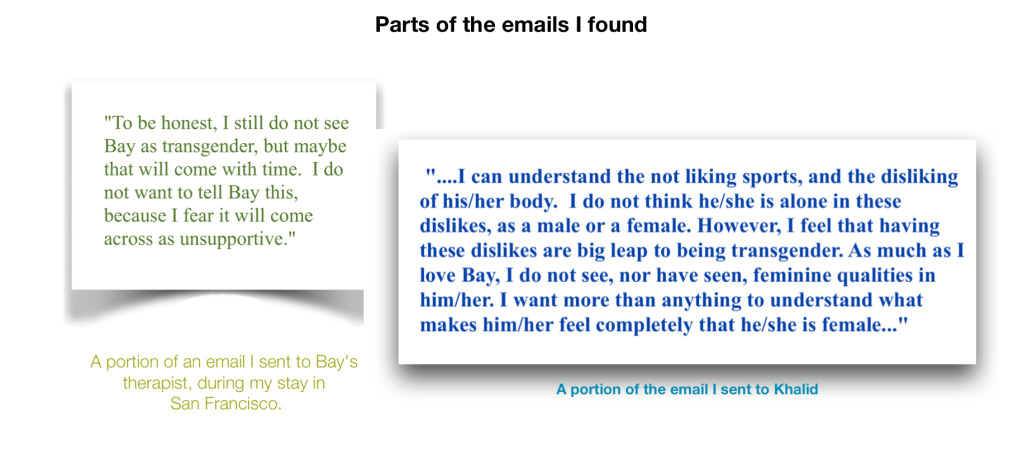
On Sunday, my husband went back to Canada; I flew to San Francisco to stay with my sister and her family. During my time in Northern California, I was still emailing and talking on the phone to therapists at the treatment center. I recently found two emails I sent that week.

One of these email’s was to Bay’s therapist. Another was to a clinician at the center who’s background work is in gender and sexuality (this man was the reason Bay was here); to protect the counselor’s privacy, I will call him “Khalid”. During the time I was in San Francisco, my sister, a therapist, was a great comfort and I did confide in her. Also, one of my closest friend’s had come to stay at my sibling’s house, to spend time with me. I told her about Bay’s exploration of gender. While I was in the City by the Bay, I was given the space to talk about what was happening in my life or not say anything at all. I chose to share. The loon’s mourning call was softer but still lingering within me.

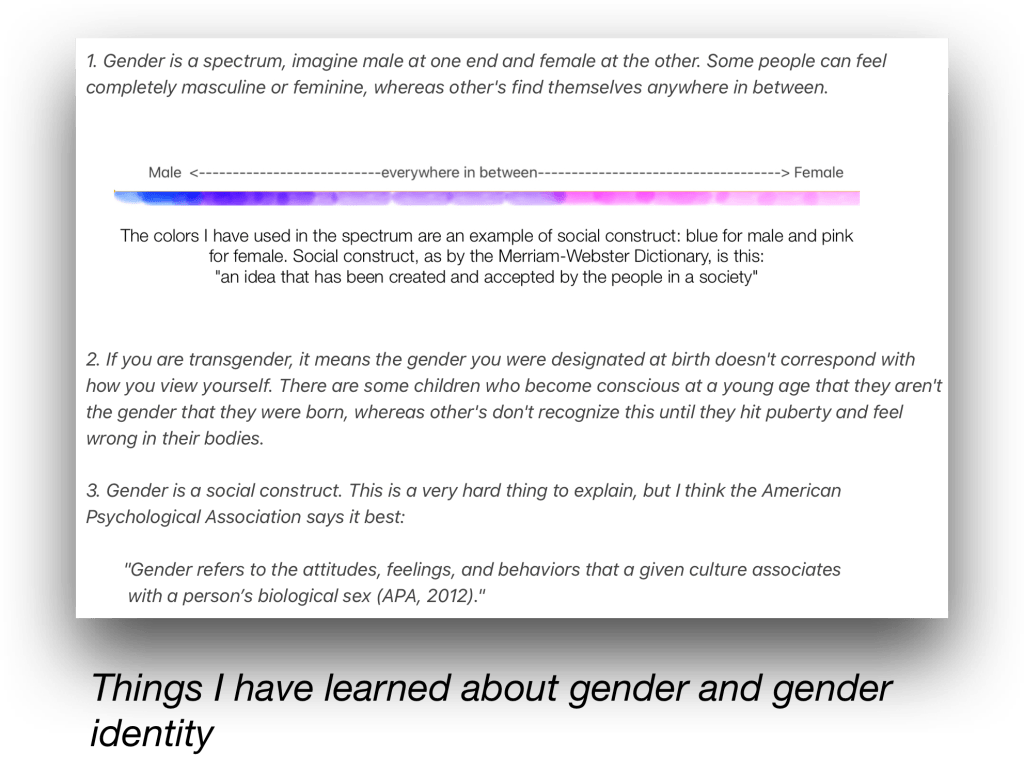
By late Thursday morning, I was headed back to LA. I met with Khalid on Friday morning. My learning curve about gender identity went way up that day; some of the things I’ve learned have taken place over the last four years.

When I said to Khalid in my email ” I don’t see any feminine qualities in him/her….” I was viewing Bay through the gender standards that society has impressed upon us. 

Late Friday afternoon I had family therapy. Saturday morning was spent at Bay’s residence going to groups, having lunch and visiting. The morning of July 13, Bay came out to to the multi family group; the amount of support and acceptance the people gave her stopped the reverberations of the loons that were so far away.

Sunday morning I left Sunny California and flew to Toronto. I was utterly exhausted, and felt sure that it must be draining to be in therapy and working the healing process everyday. Perhaps this is the idea of intensive therapy: you let negative thoughts and habits flow out of you and try to fill your mind with a more positive ways of thinking and coping.

After six hours on the plane (in addition to all the time before and after the flight), I was finally in my minivan heading north, toward our summer home. I felt the loons circling  my thoughts. I was weeping when friend reached out by text (I was using Siri to read and answer). He asked: “How is your son?”. I answered: “I no longer have a son.”. At that moment I realized I was in mourning. My child hadn’t died, but I was grieving the loss of a “son” and an idea of what I thought my life was like…I arrived late in the evening to our cottage. As I lay trying to sleep, I heard the mournful sound of the loon beckoning me to join it’s cry.

To see Part 1 and 2 and 3 of An Unexpected Journey, follow the links:                                                                            

Part 1: https://tell-me-your-story.org/2022/08/26/the-beginning-an-unexpected-journey-part-2-of-the-summer-that-could-have-been-idyllic/.                                                                                                                           

Part 2: https://tell-me-your-story.org/2023/02/01/on-thin-ice/

Part 3: https://tell-me-your-story.org/2023/07/13/standing-at-the-edge-of-the-world/

Other related stories:

https://tell-me-your-story.org/2022/07/23/the-trip-of-a-life-time-the-summer-that-could-have-been-idyllic/

https://tell-me-your-story.org/2023/06/08/the-last-place-i-wanted-to-go-2/                                                     

The Last Place I Wanted To Go…

Author’s Note: Last year I wrote this story to show that not every story needs to be written. There are other ways to tell a tale. This is a story mostly in pictures. I’m publishing it again as a prelude to Part 3 of An Unexpected Journey, which I hope to write by the end of June.

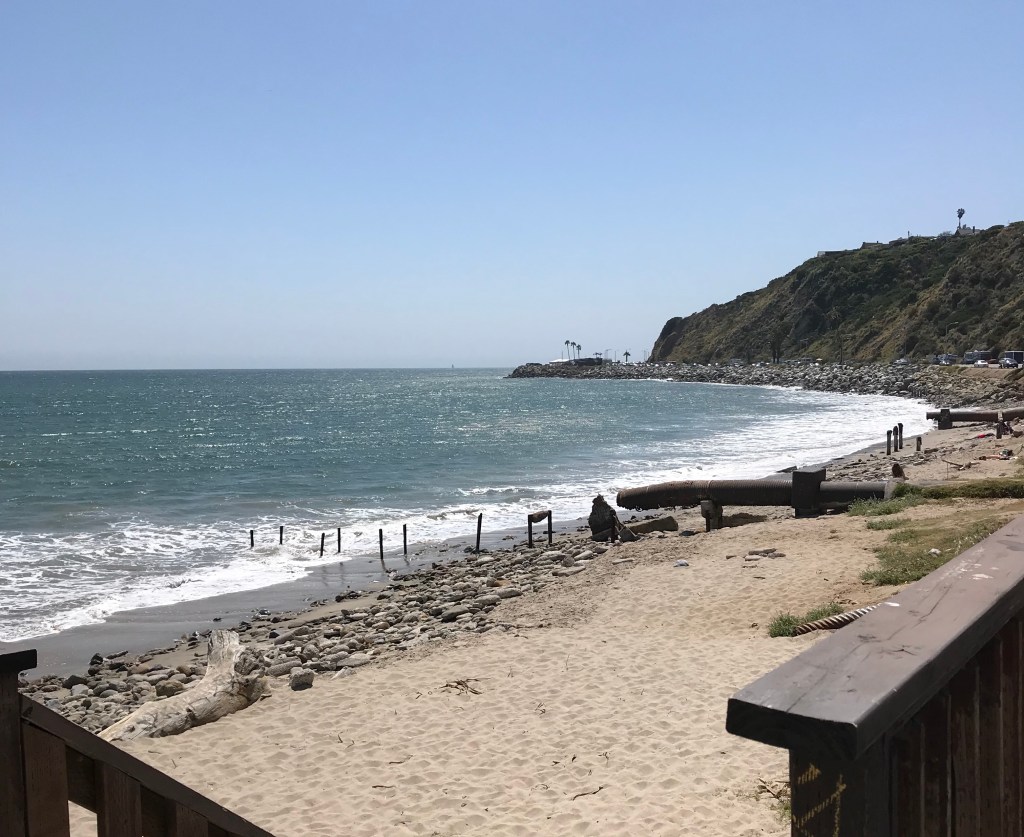
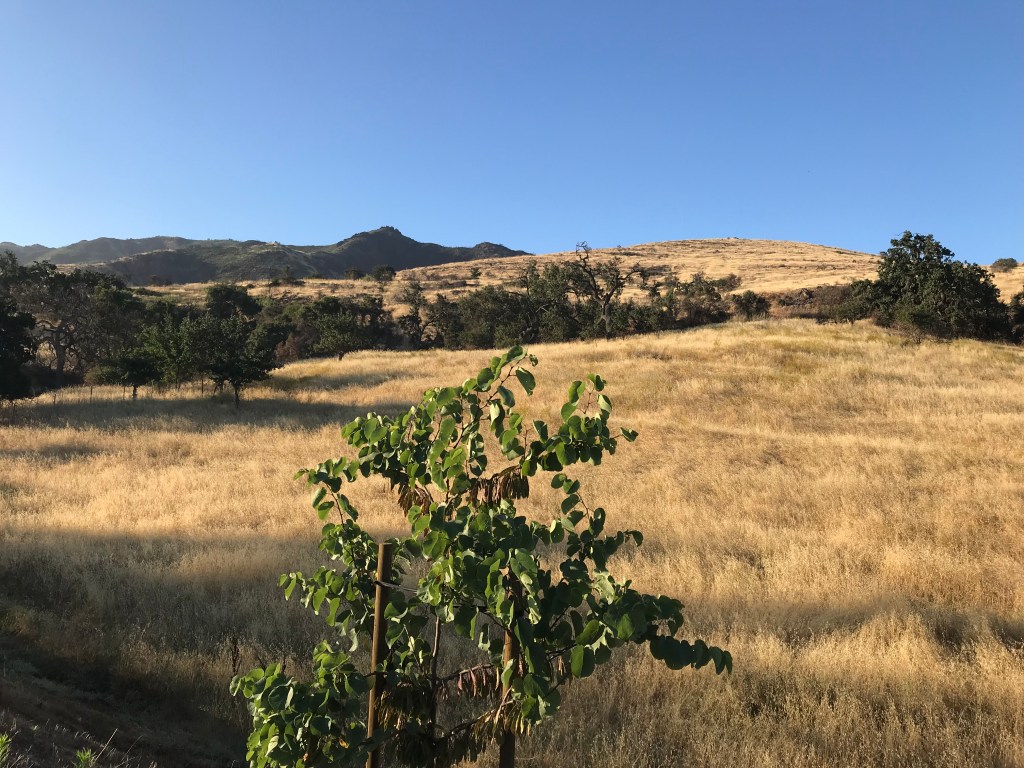
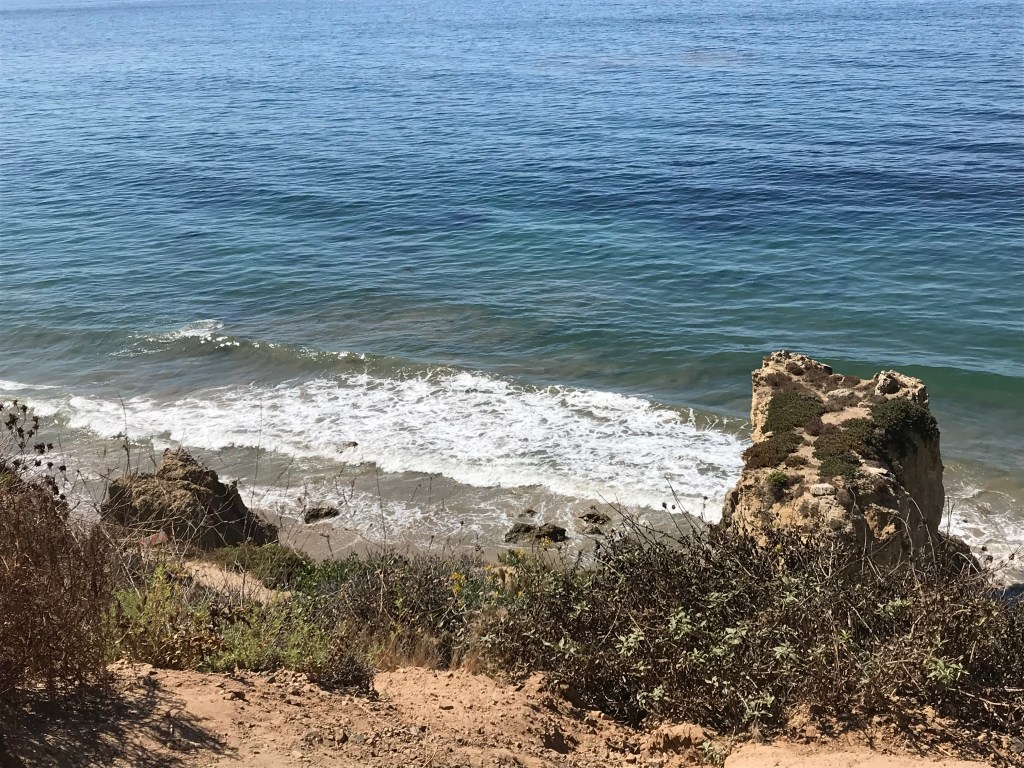
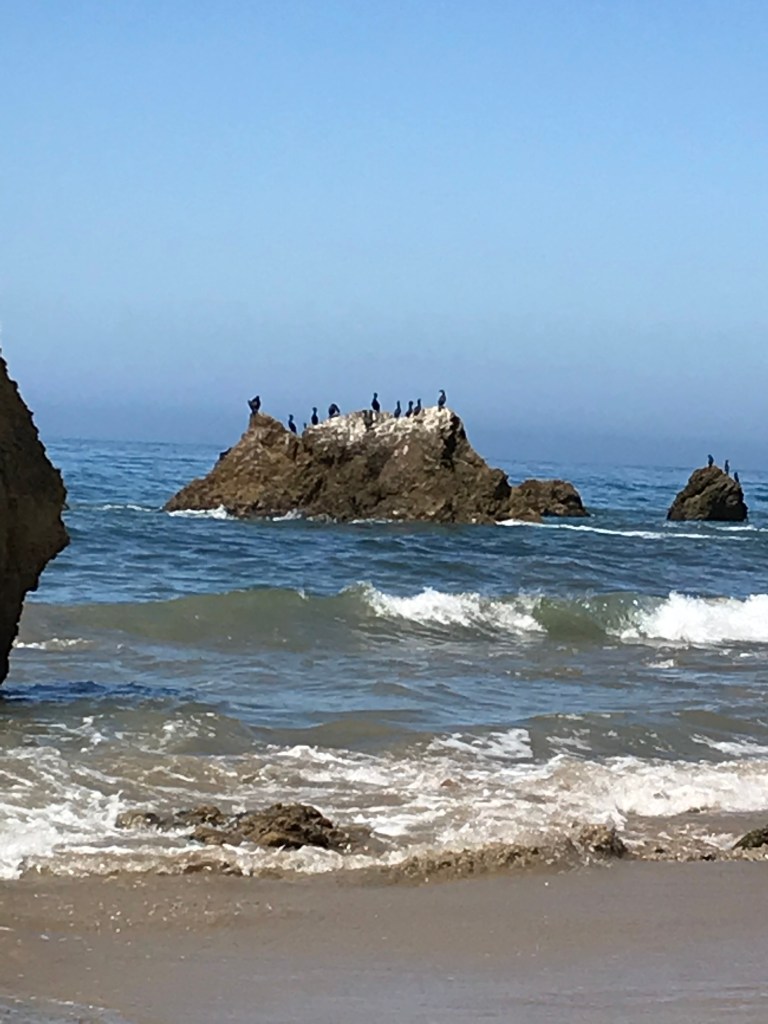
Four years ago, I would have told you that Los Angeles was one of the places I desired to travel to least. In May of 2019, we made a decision that would forever change our lives. The decision took us to LA more times than I could have ever imagined; this is a pictorial story of my time spent in southern California:

June 2019


July 2019: This picture was taken on one of my two trips to LA in July.

Agora Hills: the first area we stayed

August 2019: These pictures were taken on one of my two trips to LA in August.This trip was for my husband children and myself. During this time we tried to add some levity to a very difficult time

August Sunset: driving the Pacific Coast Highway after a long flight
Santa Monica Pier
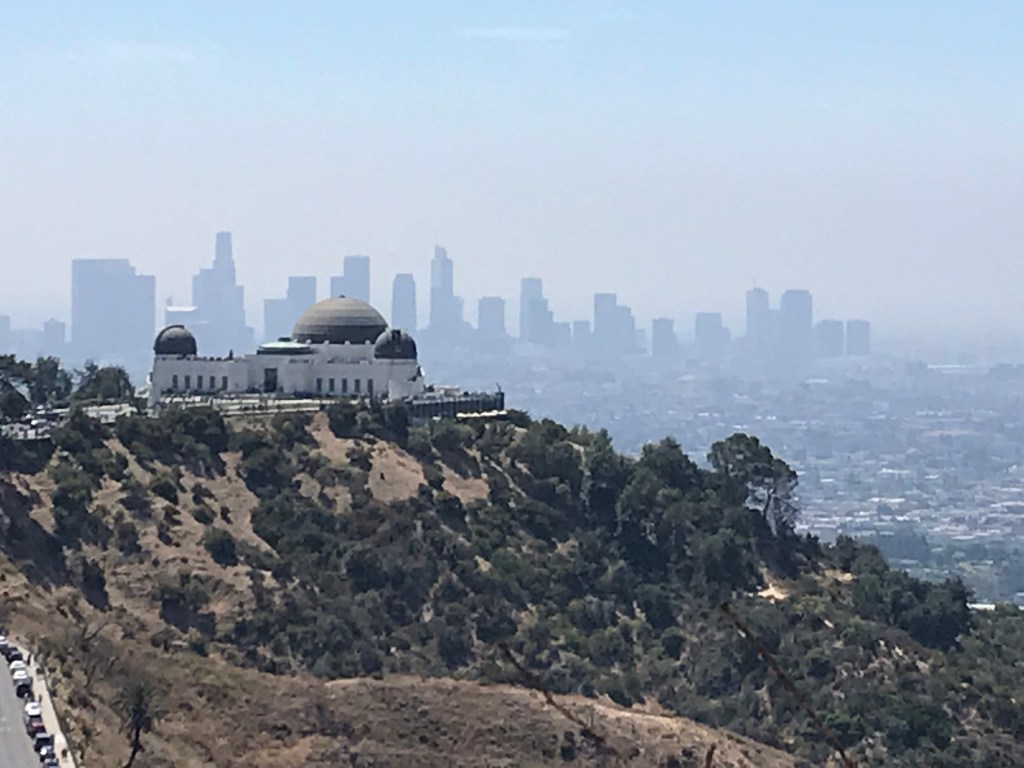
A valiant attempt in the blistering sun: a hike on the Griffith Park Trails to the Hollywood sign.
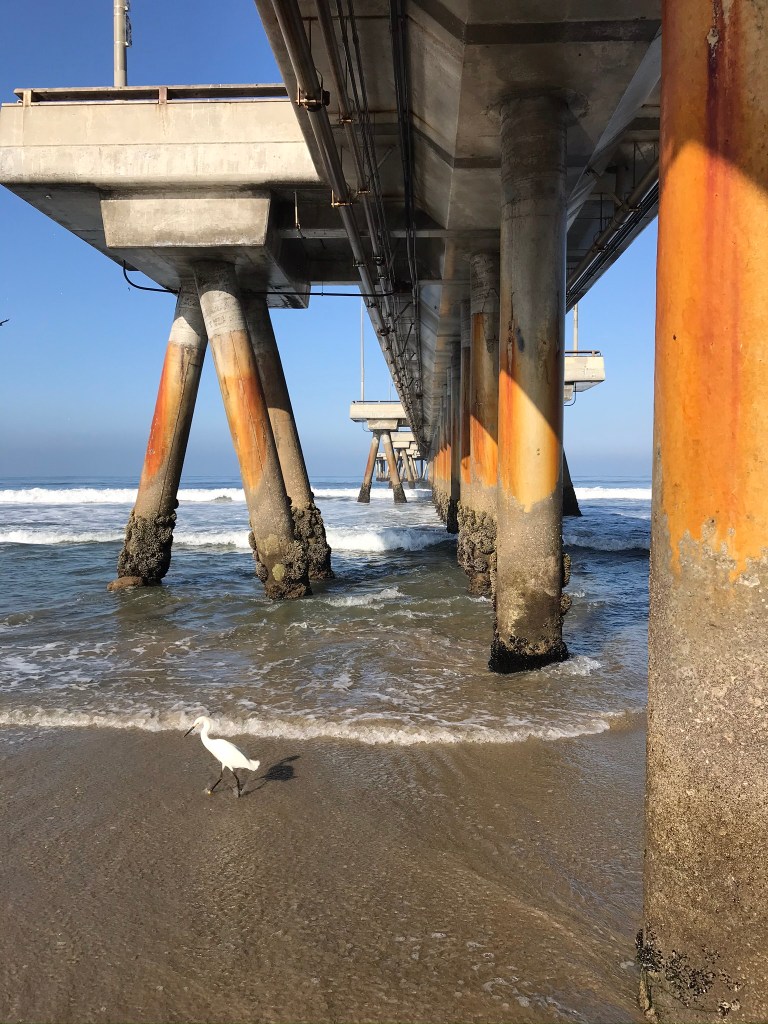
Venice Beach


September 2019

Sunrise during an early morning run in Agoura Hills


October 2019:

The Museum of Death


November 2019


December 2019

Trip 1: the weekend of December 14-15

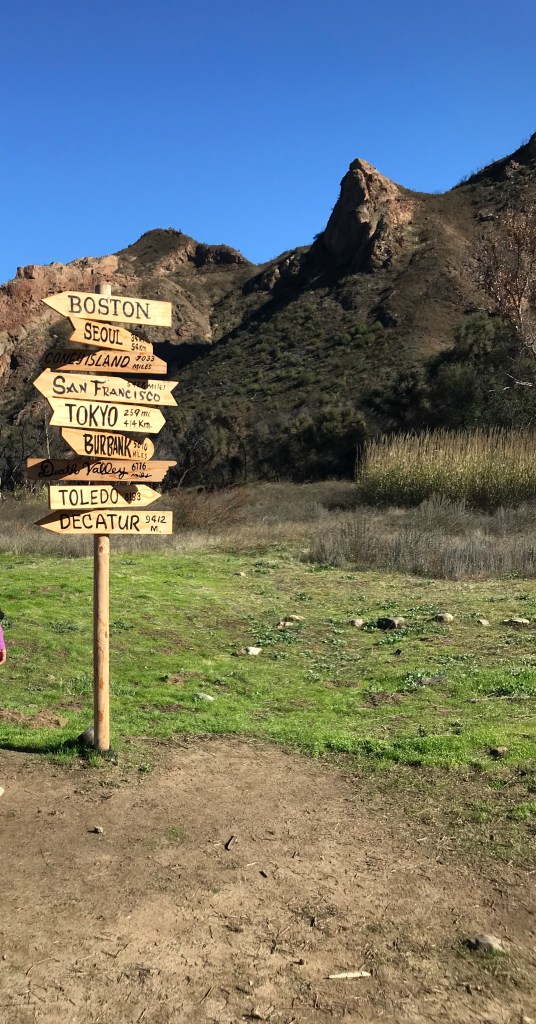
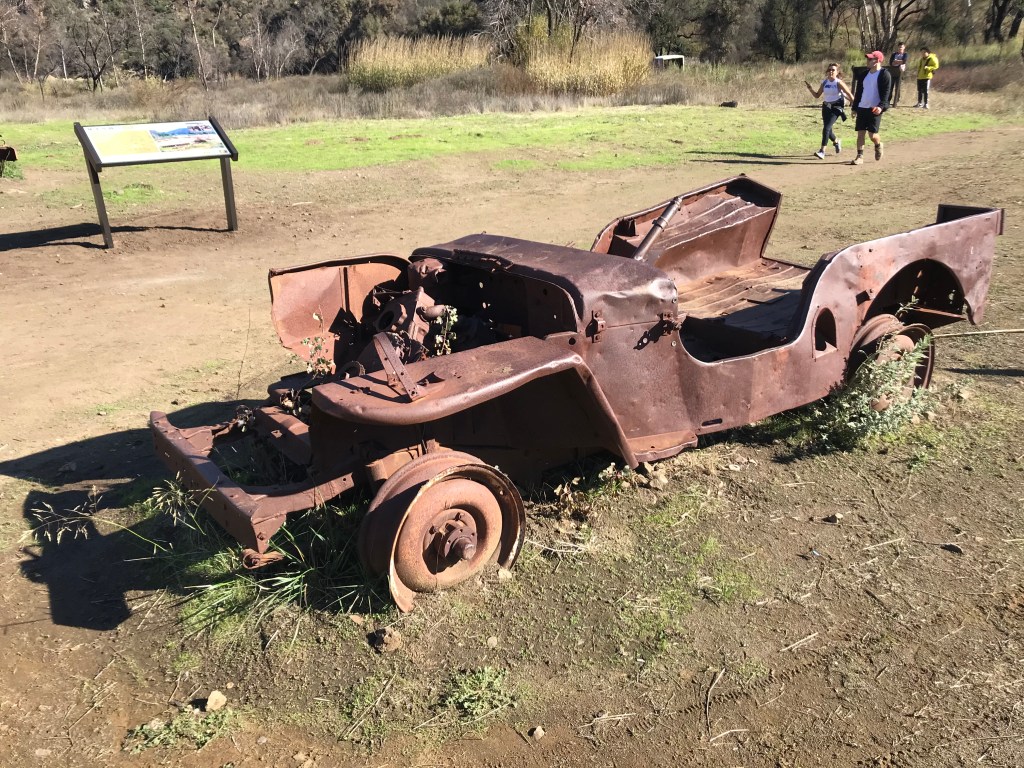
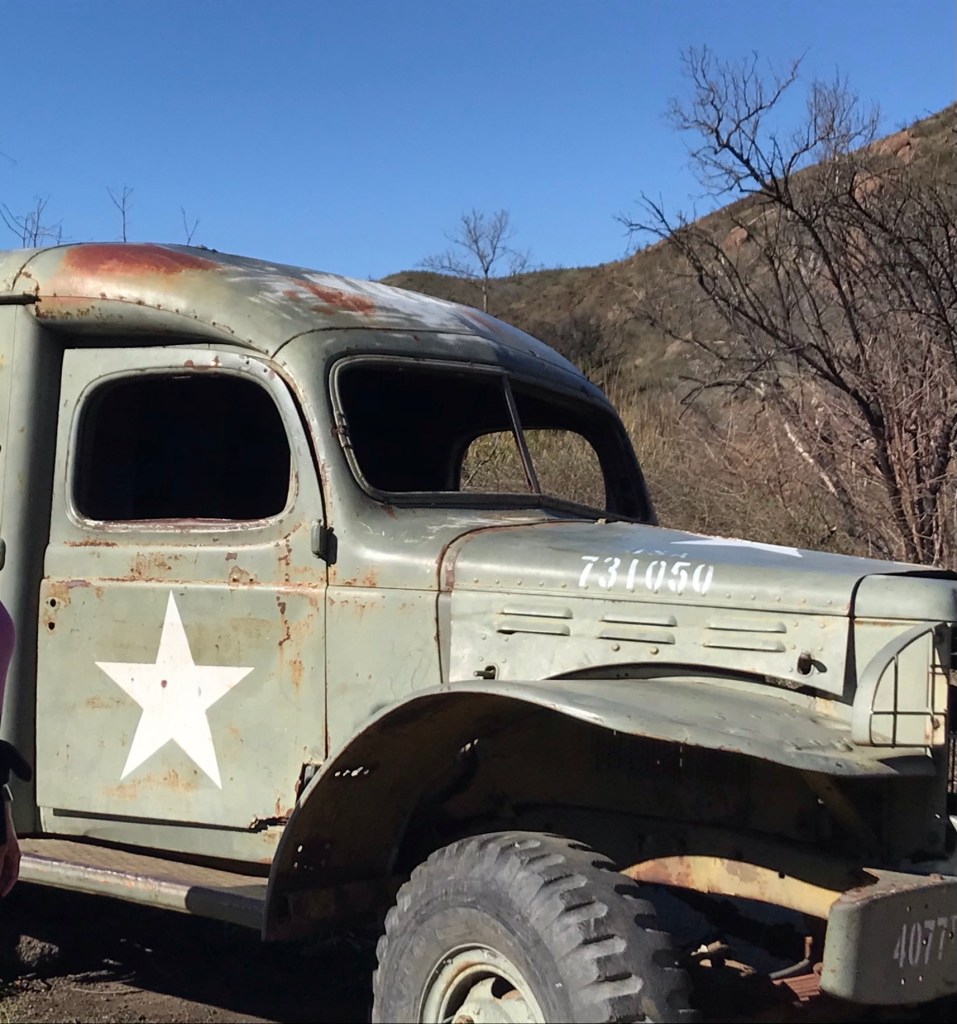
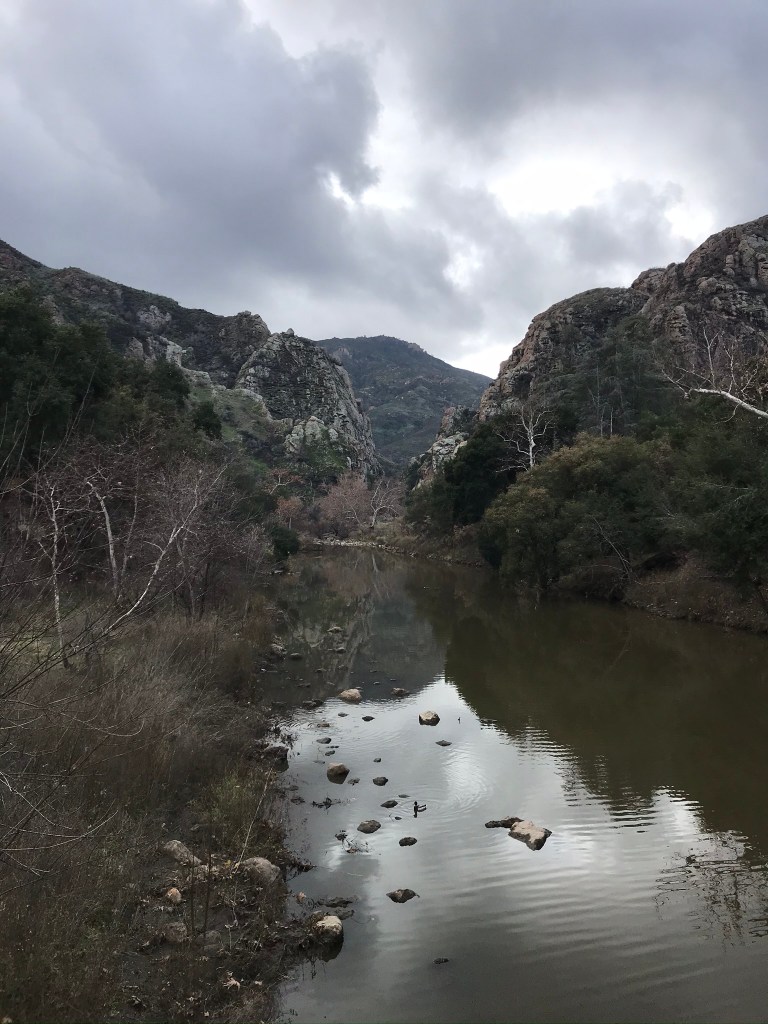
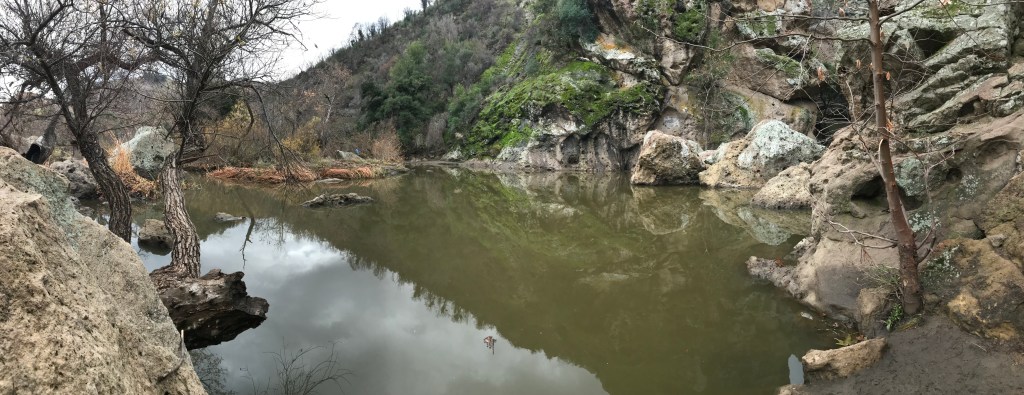
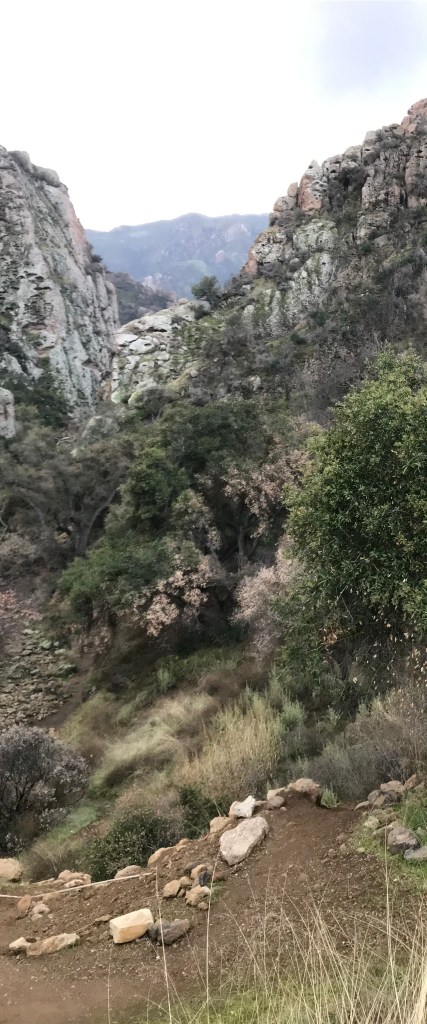
Malibu Creek State Park: a hike to the area where scenes from the tv show MASH were filmed.

Trip 2: December 24-31,

An attempt to bring us together and add some fun, in an otherwise excruciatingly hard time.

Christmas Day Hike in Malibu Creek State Park


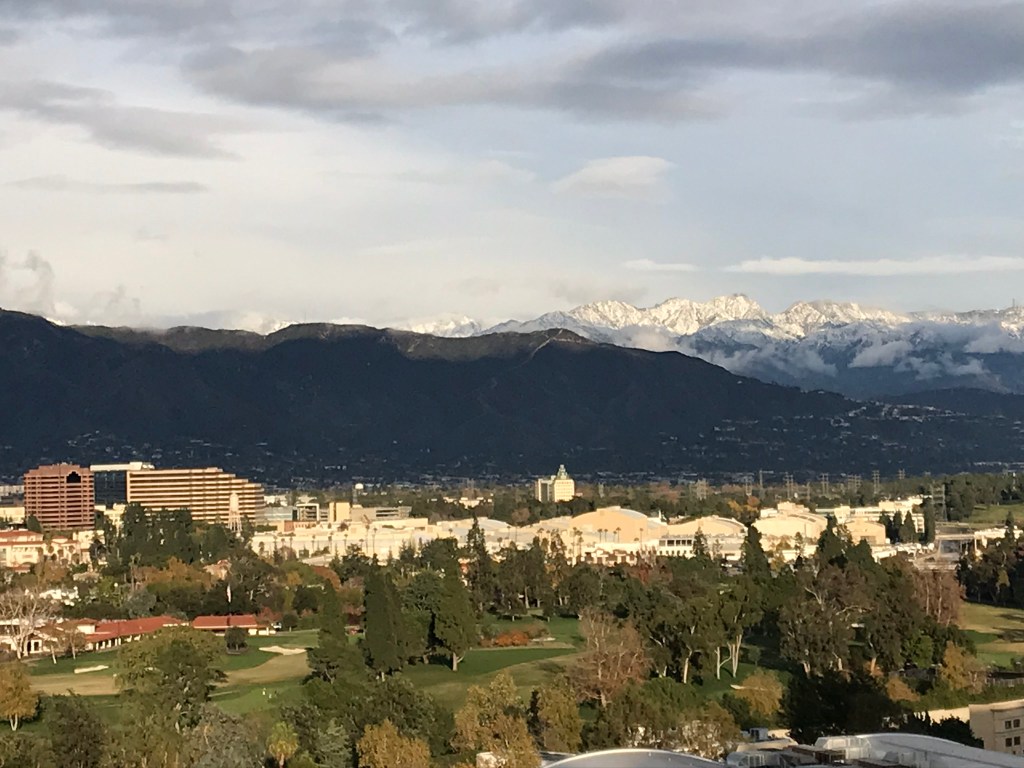
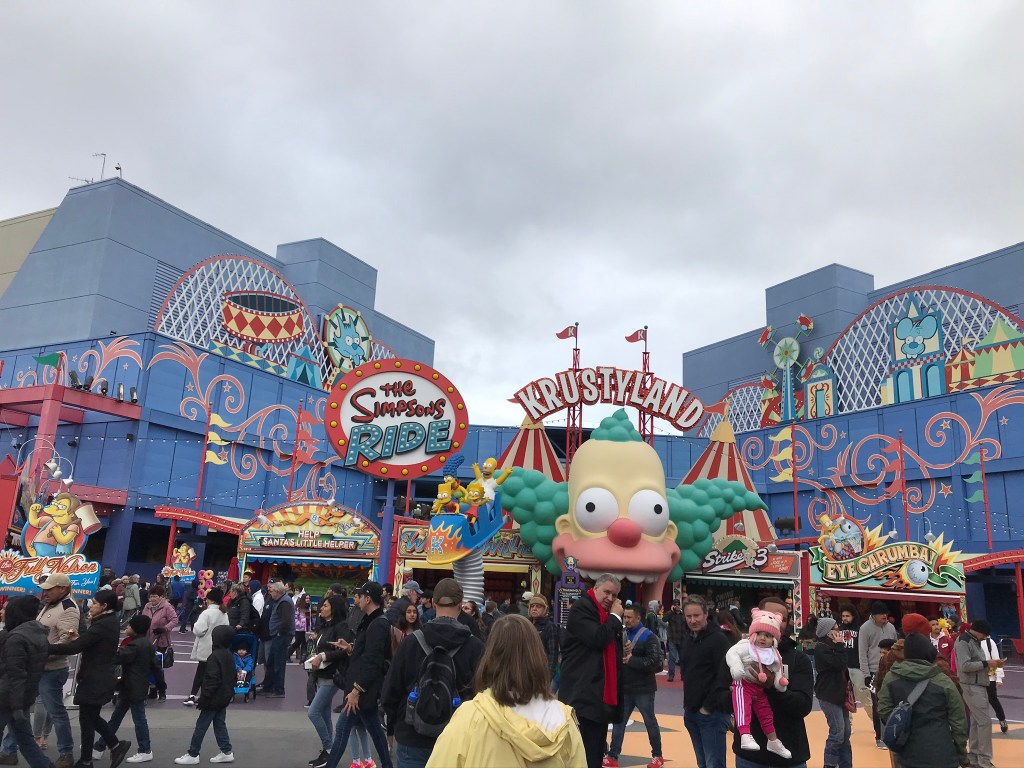
Universal City December 26, 2019
The view from Universal City
View from a hike in Topanga State Park


January 2020


February 2020: Finally feeling the sun warm our spirits

Early mornings on Venice Beach


March 2020: I flew to LA, in early March, with a fear that I would not make it home. COVID was starting to close down the world. I had a back up plan if the planes were grounded, but that did not happen.

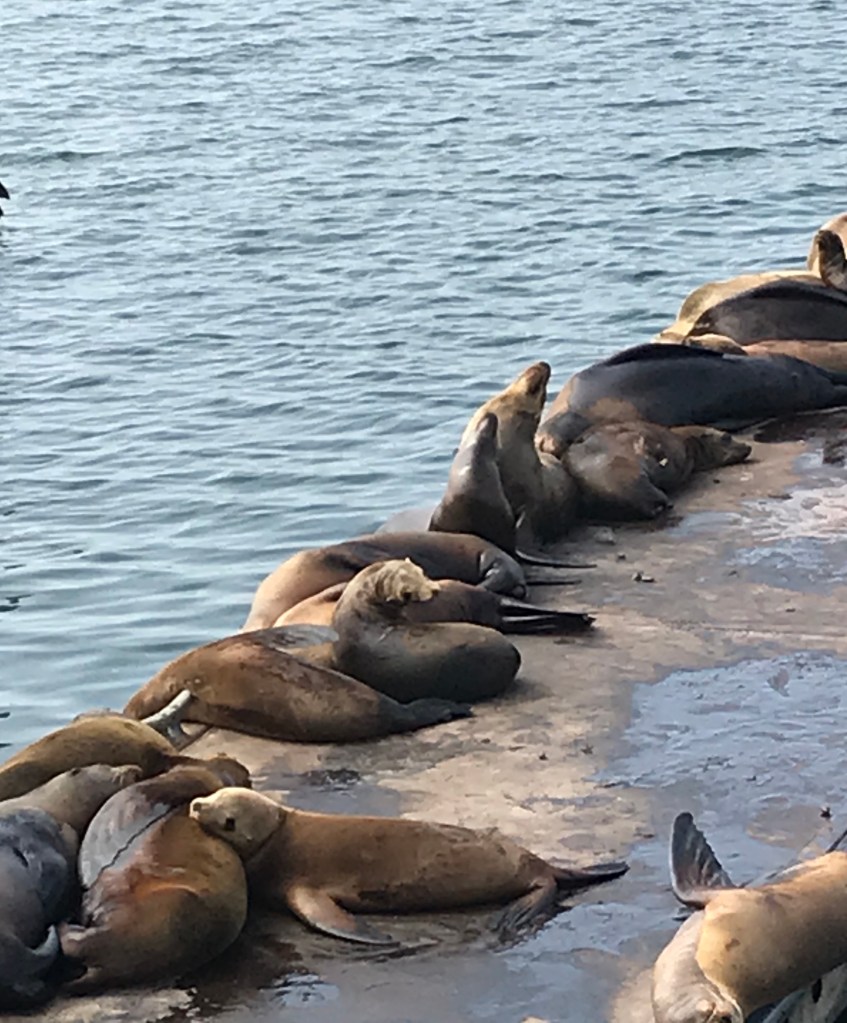
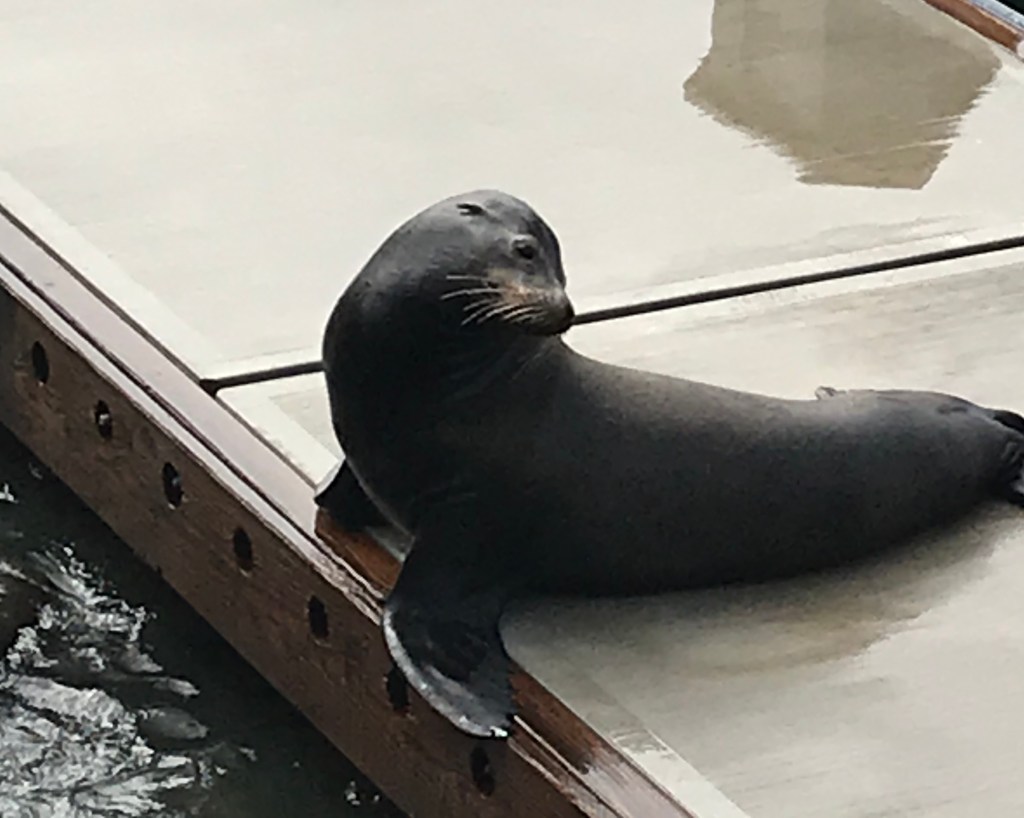
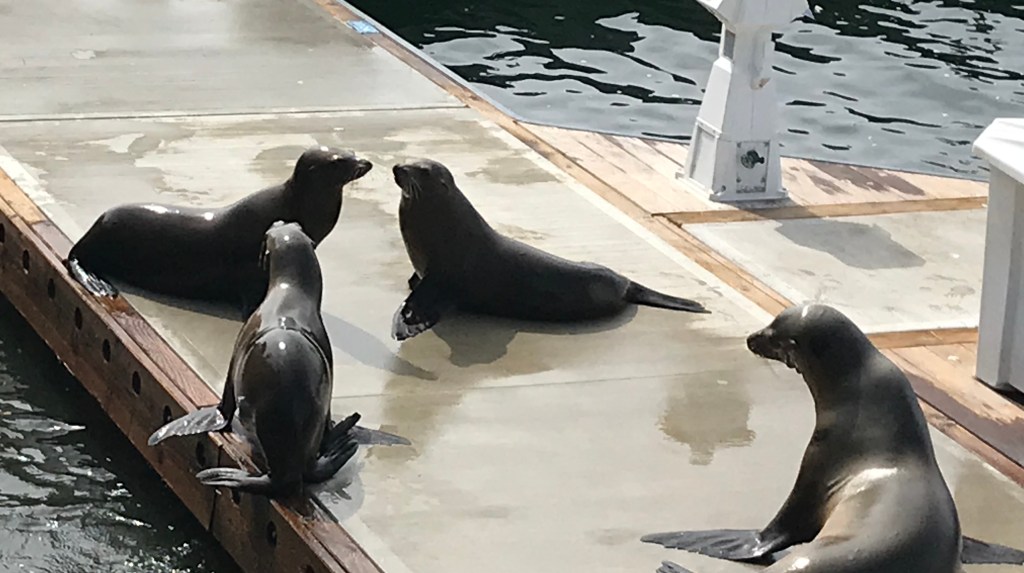
I wanted to go to the water, but not the beach. I found an area called Marina Del Rey and was pleasantly surprised to find sea lions.


Road trip up the coast to Santa Barbara

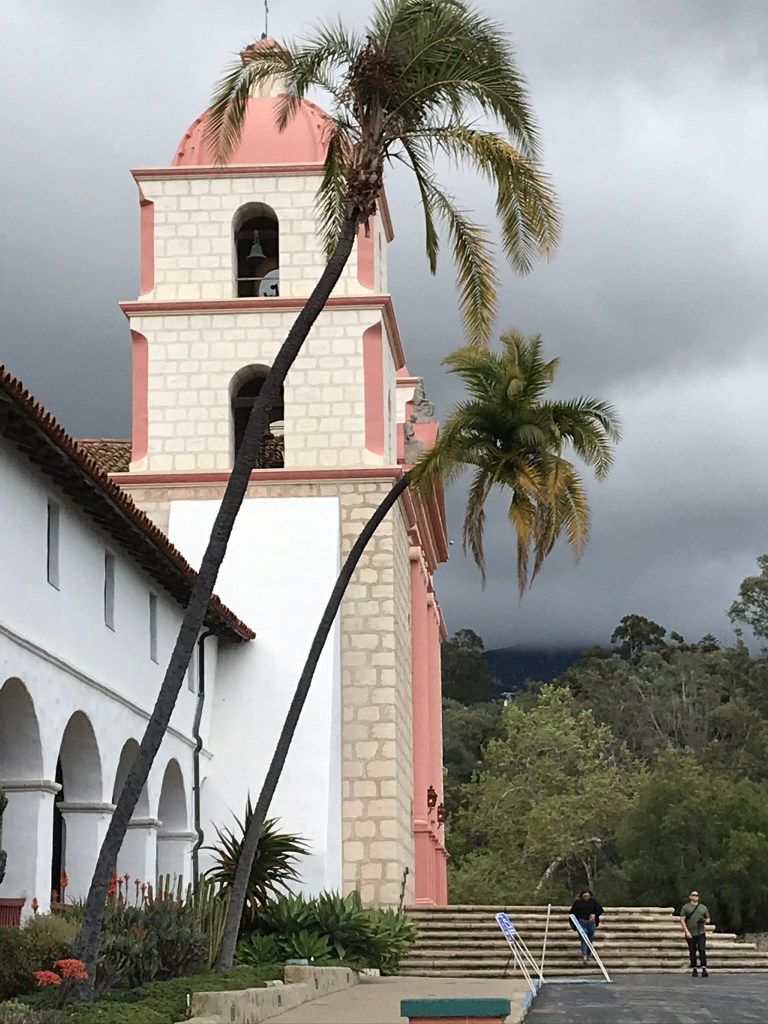
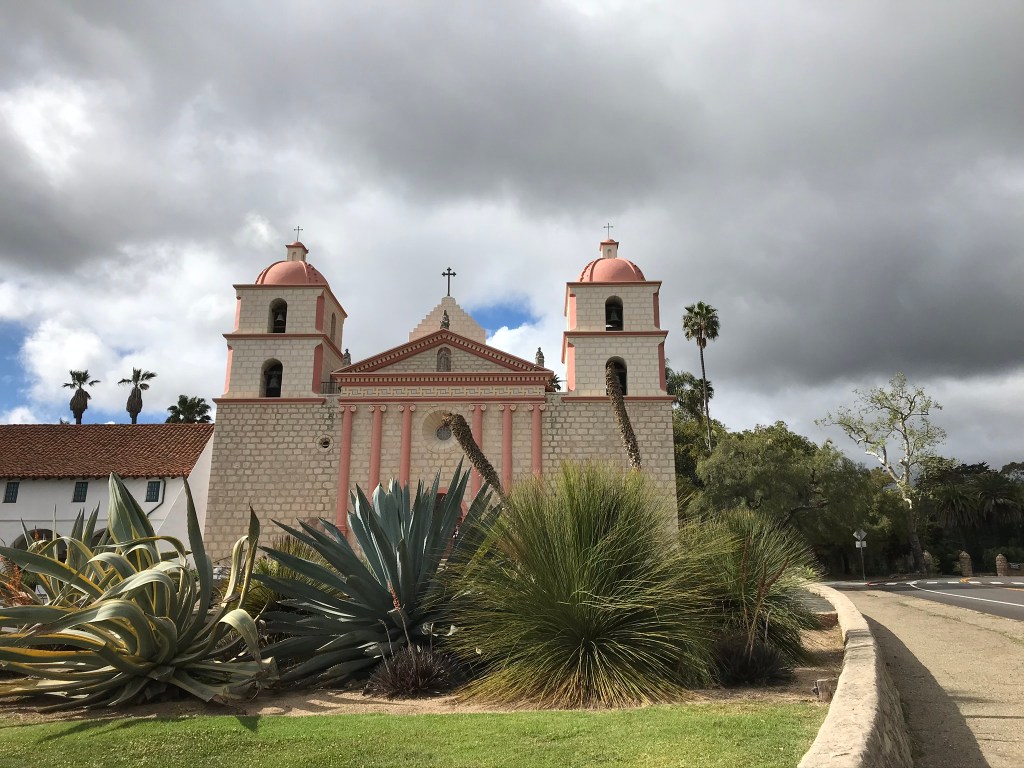
Old Mission Santa Barbara

Mid March – End of June 2020

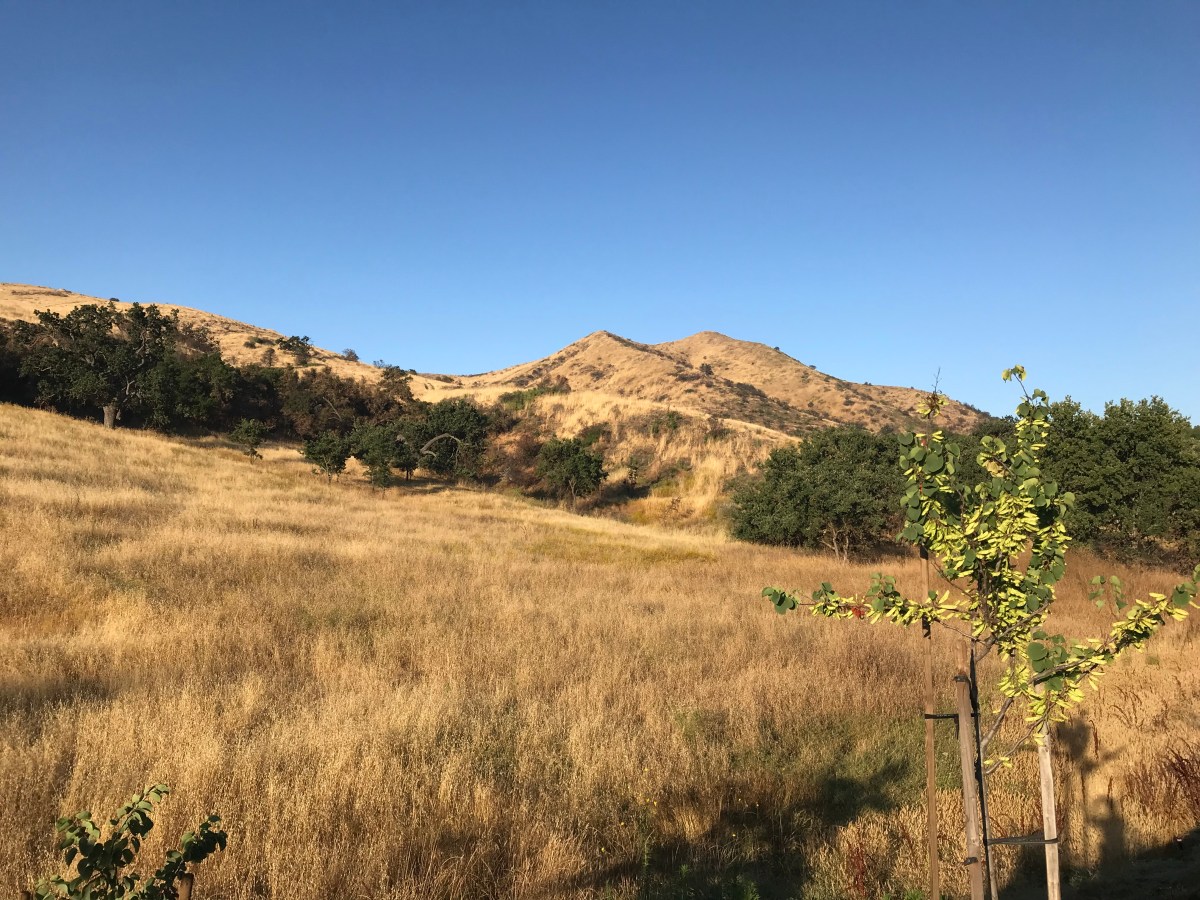
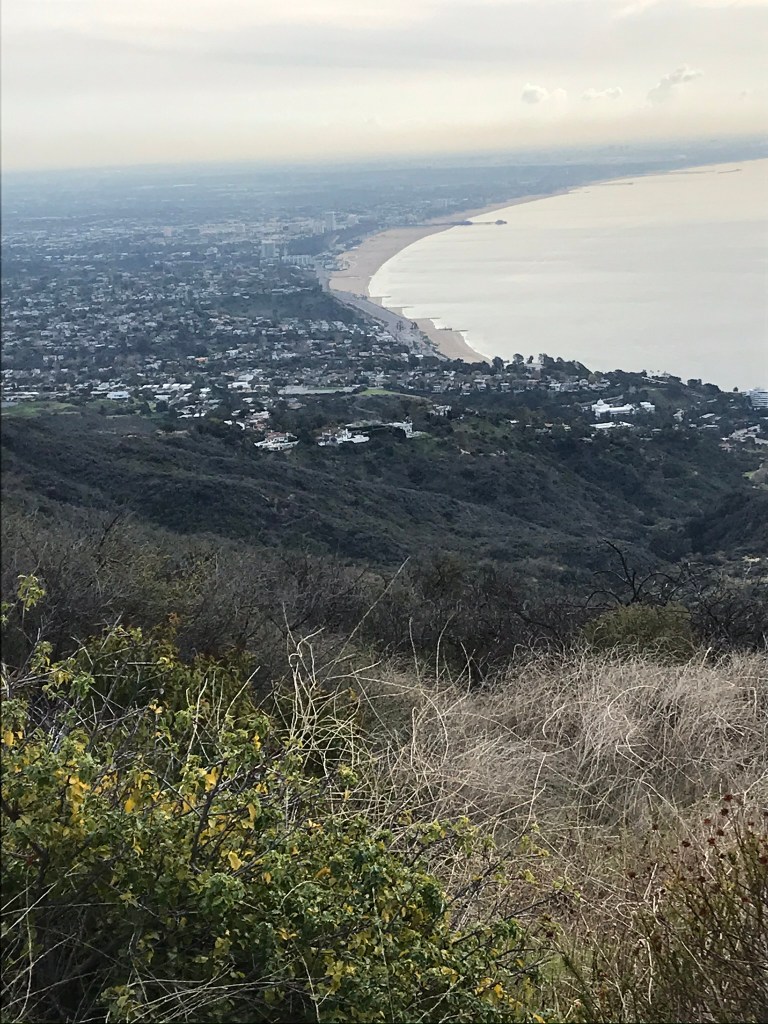
I used this time to regenerate. During the lockdown, not only was I missing the reason we went to LA, but I was strangely yearning for the area itself. I had grown to love and appreciate the beauty of the rugged hills and the vast beaches.

July 2020-August 2020: A series of four trips were taken to and from LA. Due to COVID many things were closed, but we managed numerous walks and roadtrips.

Many hours were spent in Marina Del Rey and on Venice Beach, just walking.

Venice Canals

On August 27, 2020 we departed LA. We did not return until March 2022 and that was a trip purely for pleasure.

We were emotionally and physically exhausted. I rarely brought my camera; most of these picture were taken with our cell phones. Obviously not every trip had pictorial documentation.

The Garden of Strong Mothers


This story was written last May. I am reposting it in honor of Mother’s Day this coming weekend. Wishing all mothers a very Happy Mother’s Day!

Last week, in the 32 degree weather, I headed to swim in the pool outside. I was intent on just reusing words I had written in the spring of 2020, for my next story. As I started to move through the warm water, thoughts and words swam around me. At the foundation of these thoughts, were the original words:

Growing up, I always considered my paternal grandmother (who I was very close to) the be strongest woman I knew.  She had gone through tragedy and continued to carry herself with strength and dignity.   I wanted to emulate my grandmother; I still hold her as a role model to live up to.  She was like an Oak tree, tall and strong. 

The Angel Oak Tree
A desert flower

My mother, on the other hand, is more like a flower in the desert. Something that has to have incredible strength to endure the hardships of where it has to grow. Like a flower, my mother doesn’t appear as if she would have the need of strength. She has had to go through more than one person should have to. Over the past few years, I have come to recognize that my strength comes somewhat from my grandmother, but mostly from my mom. Not only was my mother strong in the hand that she was dealt in life, but has helped me to be strong when I needed it most. She would have come to London, after the Lockerbie tragedy, had I wanted her to. When I was going through a dark period, she came to Boston . She helped lift me up when when I was separated from my first husband and pregnant with my firstborn; then through my eldest daughters first year of life. As life goes on, my mom continues to be here for me and I try to be there for her. I hope her strength will pass on to my daughters.

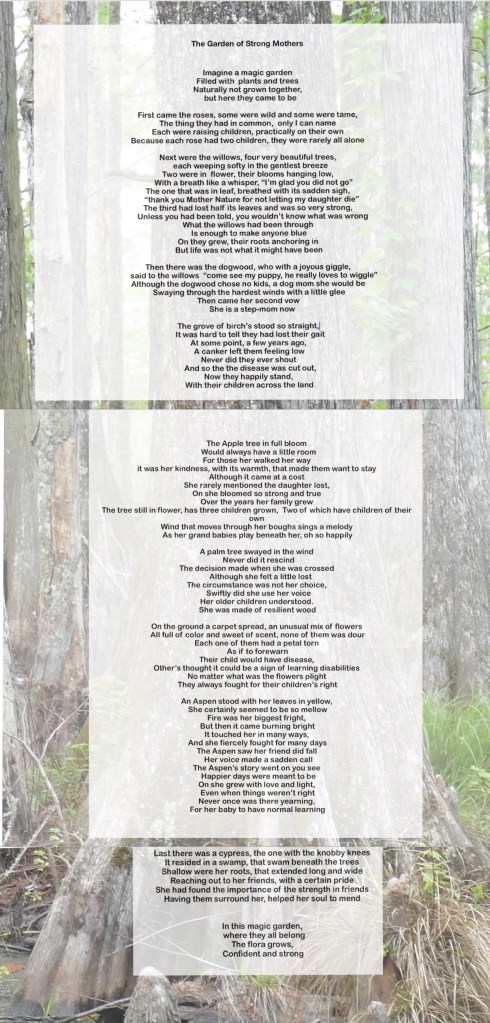
With each stroke I realized that I have surrounded myself with strong women, all mothers . I envisioned a garden where the flora represented my friends. A kind of  poem started to form….

Each time I swam this past week, I thought about this poem (I am not poet). In the end, I couldn’t think of one of my friends who has not had to carry something heavy in theirI’m soul. Does everyone have to go through hard times? I look at my grandmother, my mother… perhaps this is human nature. I don’t know the answer. What I do know is that my family and my friends are resilient, each with a special strength to be revered.

The Cat That Followed Me Home

(unedited)


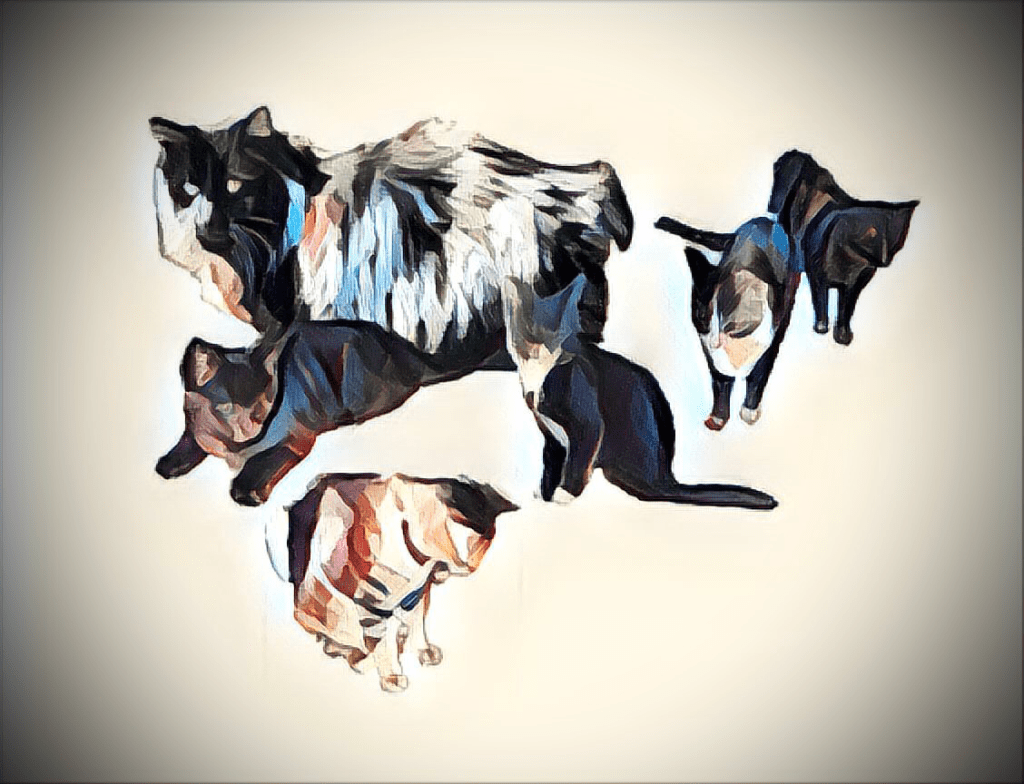
Some people say that either you love cats or hate them. I have always loved cats, but it was the cat who followed me home that solidified my desire to have cats in my life. Cats, I learned, can be fiercely independent. Yet a cat will give love and affection when you require it most and ask for it in return.

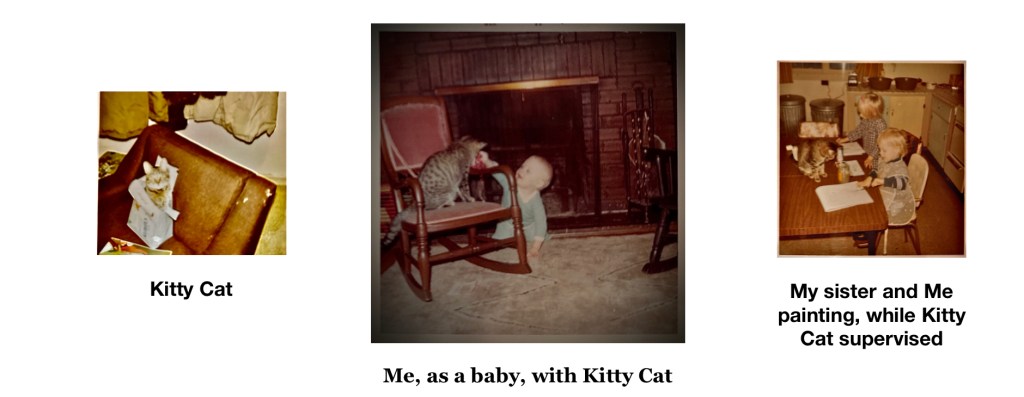
 Growing up, we always had dogs. For a short while, my family had a cat. Her name was Kitty Cat. I was a baby when we got our cat. Kitty Cat was part of our family. When we moved to Alaska, for the better part of a year, she and our dog came with us.


I don’t recall much about her, with the exception that I used to play with her on the stairs when we lived in Winnipeg, Manitoba. One day, when I was in kindergarten, I invited a friend (Stacey) over for the afternoon. I had grand plans to spend the afternoon with Stacey, both of us playing with Kitty Cat. When we came home, I couldn’t find our cat anywhere. I asked my mom and she said she didn’t know where Kitty Cat was.

That evening, my parents called my sister, brother and I to the basement, where we had a playroom. They had the three of us sit down. My father said “we have some really sad news…”. He then told us that Kitty Cat had been hit by a car and killed. Apparently, a neighbor had found our Kitty and put her in the trash can, in the back alley. That evening, when my parents had people in for dinner, my sister (two years older than me) and I walked hand in hand to the garbage can in the back alley, to say goodbye. That was my first experience with death and my last time having a cat as a pet for about two decades.

When I graduated from college, I went to Western Washington as part of a volunteer program. The first year that I was out west, I lived in a house with four other volunteers. One day my housemate, Charlie, brought home a cat. We named him Gooley, as that was the name of the house we lived in. His stay was not long. The addition of a pet was not unanimous. I think at least one of my housemates was allergic to cats. Also, we were on a budget, only being paid for our living expenses and a small stipend. I don’t remember what happened to Gooley, but I think Charlie found him a home.

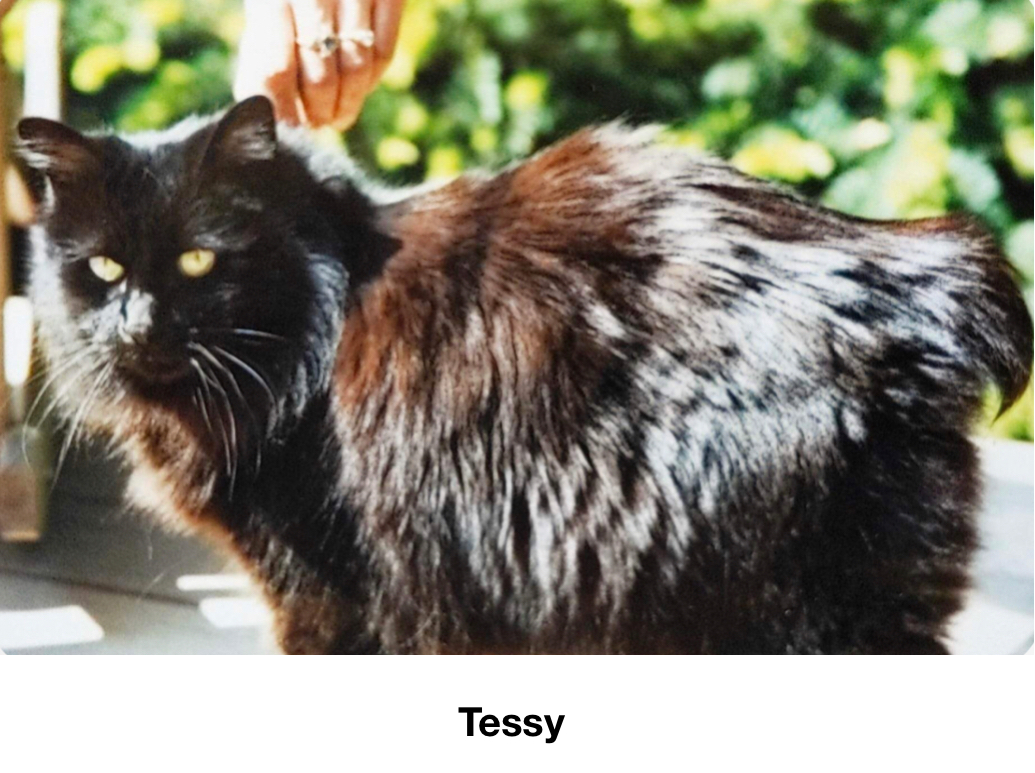
When my year as a volunteer ended, another former volunteer and I moved into a two bedroom apartment, on the bottom floor of a house. My apartment-mate, Lisa, also loved cats and soon brought one home. The cat was part Manx and had not yet been spayed. She went into heat within days of taking up residence in our apartment and was constantly yowling to get out because of her estrus. I said to Lisa, “she should be name Ecstasy”. The beautiful Manx was named Tessy, short for ecstasy.

Lisa went went home to visit her family while Tessy was in heat. Not having had a cat of my own in many years,  I didn’t realize quite how agile they are. The first night Lisa was gone, I left a high window open. When I awoke, I found the apartment empty. Tessy was nowhere to be found! Not knowing what else to do, I placed food and water outside the front door.  A few days later, before my apartment-mate came back, Tessy found her way home. Knowing that the cat could be pregnant, I had to tell Lisa what had happened. Fortunately, there were no kittens on the way!

Less than a year after I moved in with Lisa, my time living in Seattle came to an end. I had been accepted to graduate school in Massachusetts. When looking for an apartment, I made sure it was one that would allow me to have a cat if I wanted one.

During graduate school, I walked to and from most of my classes. I felt a little lost and sad the fall of my first year, for various reasons. One evening, in late autumn, as I was walking home from class, I saw a cat and stopped to pet her. The cat must have sensed a kindred spirit in me because she followed me home. I stayed in the courtyard of my apartment building, petting and talking to the cat. Eventually, I went up to my apartment. Walking up the stairs, I told myself that if the cat was still in the courtyard upon my return, I would bring her in. When fifteen minutes had passed, I went down the four flights of stairs and outside. The pretty gray cat was waiting for me. I brought her inside and she lived with me for just a little while. It was obvious to me that this cat was not a stray. I contacted shelters to see if anyone was missing a cat. Finally, one of the shelters called me. They had heard from the owner who had moved away from the neighborhood several weeks before. The cat had escaped her new home and had wandered back to her old neighborhood. I was sad to see my new friend go, but was happy she found her family. 

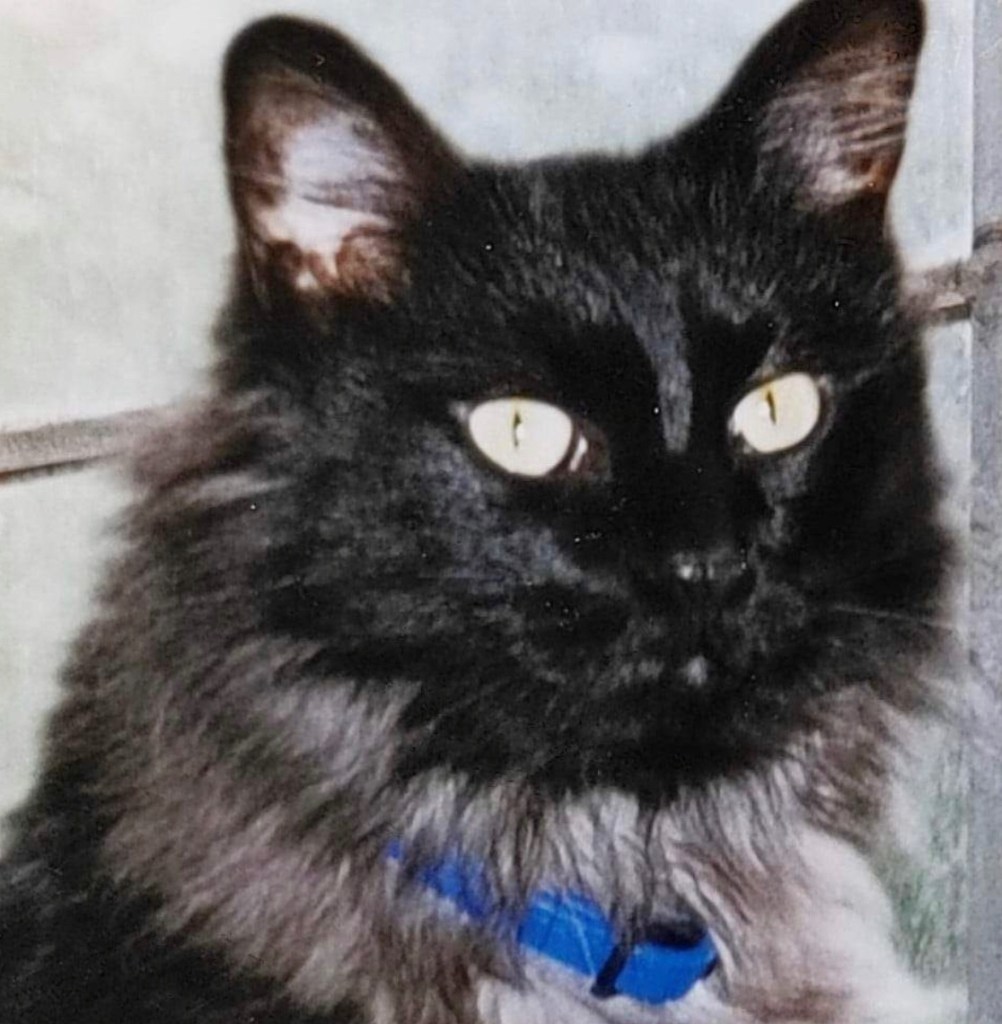
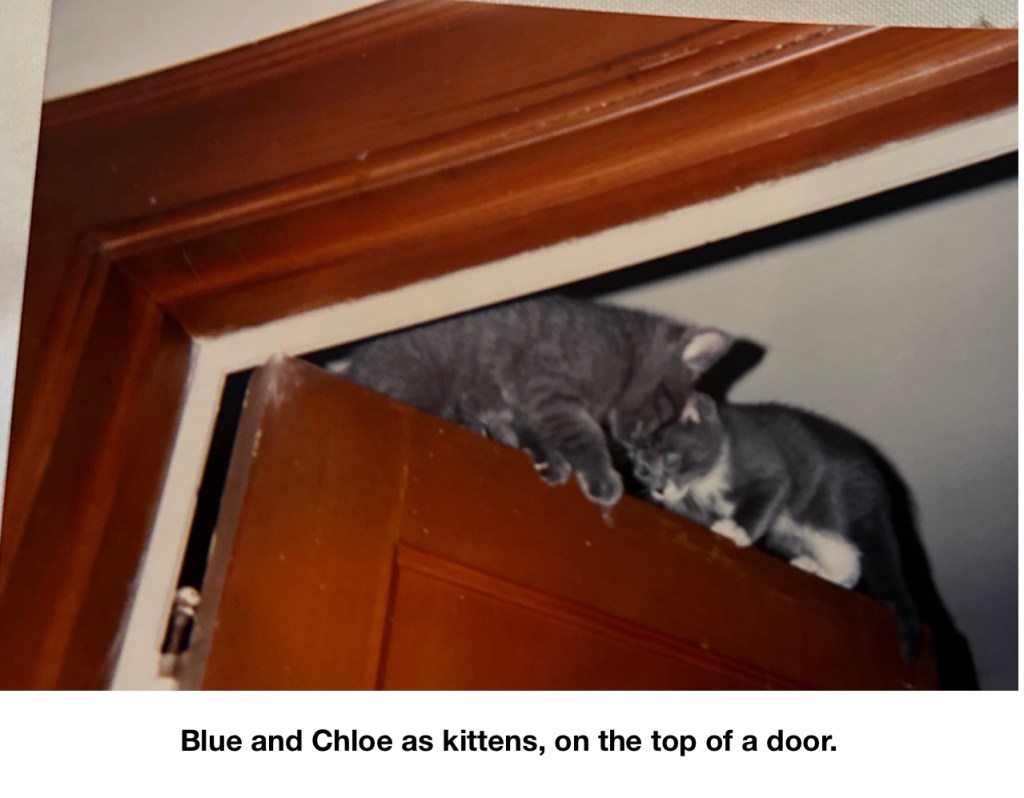
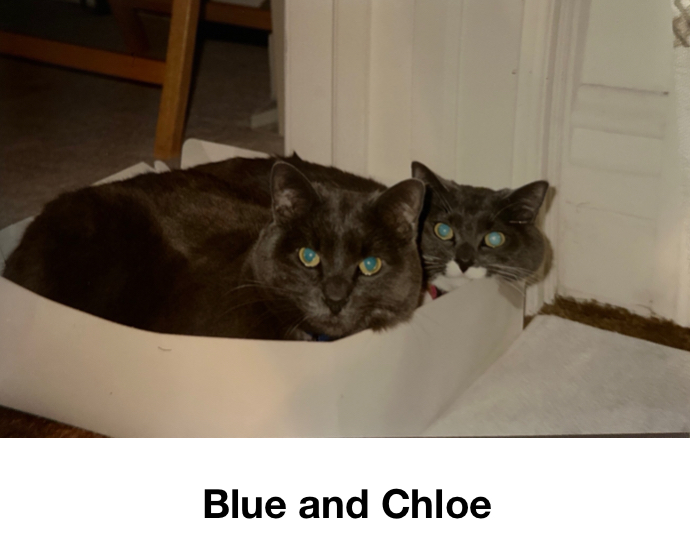
That Christmas, “Santa” gave me the promise of a cat. When I went back to Massachusetts after Christmas break, I put my name into various shelters specifying that I was looking for “blue” kittens. Early in the spring, I was told that someone was fostering a litter of the type of cat I was looking for, however there was a catch: I couldn’t adopt a single kitten, it had to be a pair. That is how I came home with two cats instead of one. The kittens were called Chloe and Blue and were brother and sister. The male cat, Blue, was all gray. Chloe, the female cat, was gray and white. 

As the kittens grew into adulthood, Blue became big and lovable. He craved attention, however he was not the smartest. For an indoor cat he ran into all sorts of trouble that could have caused him great harm, but he was a cat with nine lives. 

Chloe was the cat with the brains and more independent. She chose when to give you her attention and love. This soft, beautiful cat would have been the one to survive if she had been in the wild on her own. When I lived in a house in the country, there was a day she came up from the basement and deposited a gift at my feet. I let out a little scream as I realized that the “present” was a small live snake. 

Chloe and Blue were my babies before I ever had kids of my own. If I went on a road trip, to visit friends or go to my cottage in Canada, they came with me. These sibling cats went through some of the greatest joys and sorrows that happened in my life: the beginning and ending of relationships; my first marriage and divorce; the birth of my eldest child when I was alone; my second marriage and the arrival of my middle and youngest children….

Sadly, when he was in his teens, Blue was diagnosed with diabetes. Having a kindergartner, a toddler, and a baby on the way, I made the choice not to treat the illness. I knew that there would be no consistency in his care. We kept him as comfortable as possible. One day, when he was 14, Blue couldn’t stand up. I knew it was time for him to leave me. I took Blue to the vet and sat with him until he fell into the eternal sleep, as I wept.

Chloe lived to a ripe old age of 18. When my father took his life in the fall of 2010, I think she kept living to see me through the grief. On my birthday, in the spring of 2011, I knew it was time to say good bye. With a heavy heart and tears running down my cheeks, I sat with my faithful companion as she was put to rest.

In the summer of 2011, having just arrived home from Canada, we had a phone call waiting for us on the answering machine; it was from our cat vet. She had a client who had taken in a pregnant stray. The man was putting the kittens up for adoption, and my vet knew that we no longer had any cats, so she called us. I wasn’t ready to bring a new feline into our family, but when my eldest heard the message on the answering machine, she said “we have to call about the kittens right away”. Of my three children, my oldest was the one who had been hit the hardest by her grandfather’s death and then the passing of Chloe. Even though I wasn’t ready, I thought it was important to see the kittens for my children’s sake; my husband, who claims he only tolerates cats, agreed.

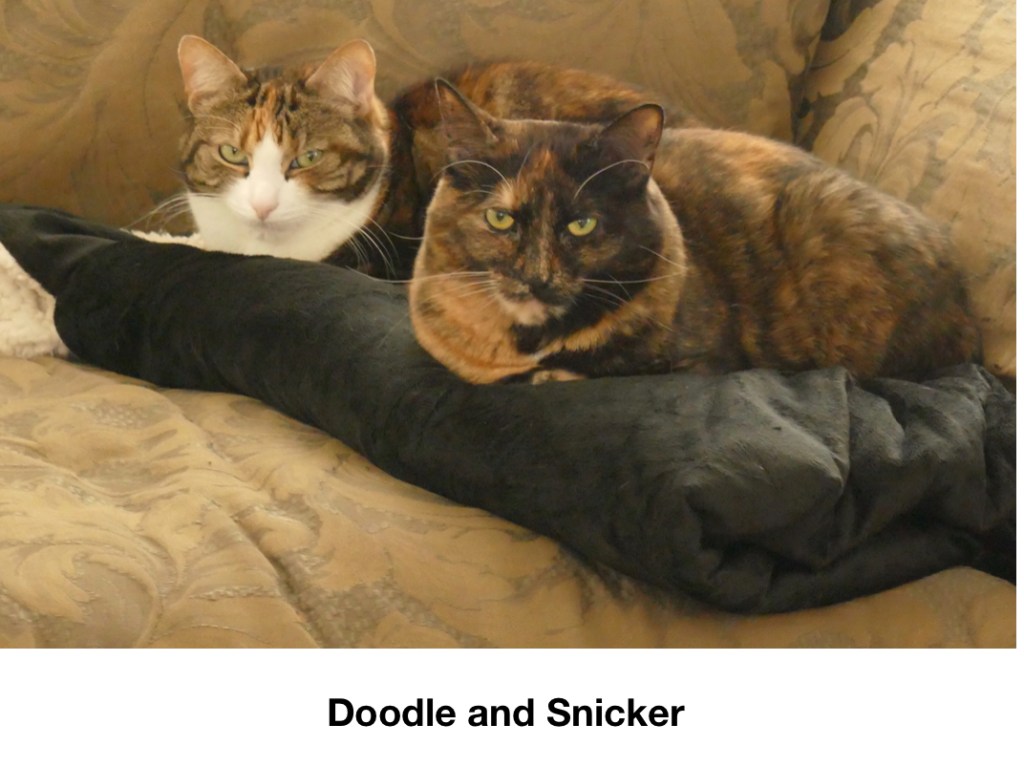
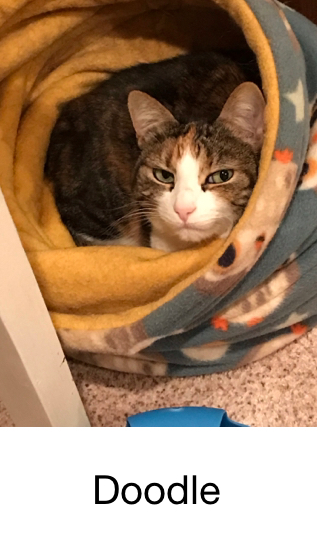
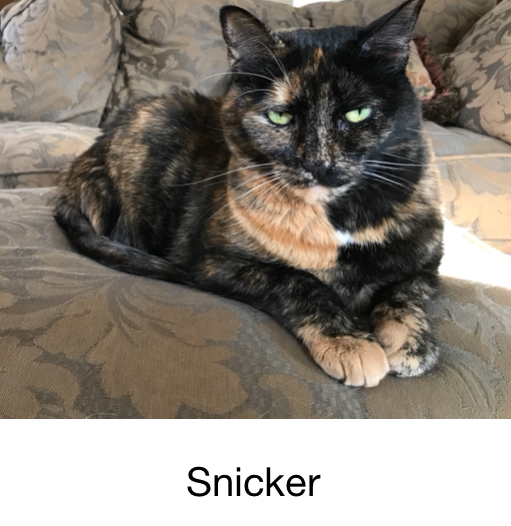
One afternoon, when the kittens were almost old enough to be weaned from their mother, the man who was fostering the cats brought them over. I immediately fell in love with a tiny, affectionate kitten, who may have been the runt of the litter; it was obvious that she would love everybody. My husband picked a second kitten, who was larger,  because he thought she had beautiful markings. Eventually these two kittens became ours. The larger of the two cats was named Snicker and the smaller one we called Doodle.

When we first got the kitties my husband said we should call them “Stinkers” and “Doo Doo” for short…remember he only “tolerates’ cats. The nicknames somewhat stuck, but more often than not Snicker was called Blue, and Doodle was called Chloe. Even I sometimes made the mistake and called them by the wrong names.  

Doodle proved to be every bit as affectionate as she was on the day we met her. She, like Blue, craved love and attention, but was not very smart. The tiny kitty tried to get our dog (Murphy) to like her, but for the most part he didn’t pay attention to her. 

Snicker, on the other hand, has always been intelligent, yet anxious. She took a long while to warm up to everyone.  First Snicker only wanted my attention. Sometimes she was like a little dog and would wait for me at the bottom of the stairs. Eventually, she warmed up to my middle child and slowly to everyone else but Murphy. 

Last Summer, while my youngest and I were away, my middle child took care of the cats.  After a few weeks of us being away, it became obvious that Doodle was ill.  My child and husband got our little kitty to the vet as soon as possible, but by then it was too late.  Cats are apparently notorious for hiding their illnesses; that is what Doodle did. She had lymphoma. Although I know how hard it was on them, I was thankful my child and husband were with Doodle when she passed. 

Upon arriving home from our summer away, I realized how skinny Snicker had become. I took her to the vet and then a specialist that our vet recommended. Originally, Snicker was diagnosed with hyperthyroidism. However the tests came back showing that the more immediate thing to treat was lymphoma. She has been on chemotherapy for a few months now and seems to be doing well. 

For the better part of three decades, I have had cats as members of my family. Would my life and love for cats have turned out differently if I hadn’t been followed home by that empathetic feline? Maybe. However, it was the cat who followed me home that showed me how two lost souls could take care of each other, in spite of being different species.

Authors note: perhaps because Doodle and Blue were not the brightest of cats you might wonder why we Doodle was often called Chloe and Snicker (while Doodle was alive) was sometimes given Blue’s name.; this was because of the size comparison, not the intelligence.

Those That Remain


Last Thursday night, I laughed so hard I cried. Less than 24 hours later my tears were caused by sadness…

As a Christmas present for my husband, I had purchased tickets to a comedy show, along with an overnight in a nice hotel and some activities the following day; this event took place last Thursday and Friday. We left our 17 year old to watch our two remaining pets: Snicker (our aging cat with cancer) and Murphy (our elderly dog); this is something she has done before. However, Murphy had been acting odd since the beginning of the week.

I can’t remember the last time I laughed as hard as I did Thursday night at the show. The next morning I texted my 19 year old (who lives nearby) and asked her to go by the house to let our dog out, before she headed to work. Mid-morning, we received a text saying that Murphy was stumbling a lot. My husband and I made the decision to cut our day short and head home. As we drove, I began to wonder if that day would be Murphy’s last. Surely this beautiful spring day wouldn’t take away our beloved family member. With my heart heavy, the tears came to my eyes and I thought “I am not ready to grieve him yet.” In the last year and a half, three of our pets have died: one of our two cats (of the same cancer her sister, Snicker, now has) and my youngest daughter’s two Guinea pigs. Luckily, we do not yet have to mourn the loss of another animal. Murphy is OK for now. In fact, today, our 14 year old mutt appeared even spry as he lunged at an unsuspecting car on our morning walk.

Grief is a hard thing to experience. The mourning process is not only about the death of someone you loved, but it could also be the extreme sadness you feel at the ending of something: a relationship, a job, the person you were before something bad changed who you are now; these are just a small handful of things that can be mourned. People often suggest that the death of a pet helps children understand what it means to die. The problem is that it is almost impossible to teach someone how to grieve. Everyone’s mourning process is different. You can explain to  someone the “stages of grieving” which are “denial, anger, bargaining, depression and acceptance”, however everyone experiences these phases differently. 

You might ask “Can the loss of a pet be as traumatic as the loss of someone you love?”. In my unprofessional opinion, the answer is, yes. Grief is mourning the loss of something or someone you love. The intensity and the process might be different, however the sadness is still there. Society treats the way we mourn our animal companions differently than the way we grieve our human loved ones:

“Although grief over the loss of a cherished pet may be as intense and even as lengthy as when a significant person in our life dies, our process of mourning is quite different. Many of the societal mechanisms of social and community support are absent when a pet dies. Few of us ask our employers for time off to grieve a beloved cat or dog because we fear doing so would paint us as overly sentimental, lacking in maturity or emotionally weak. Studies have found that social support is a crucial ingredient in recovering from grief of all kinds. Thus, we are not only robbed of invaluable support systems when our pet dies, but our own perceptions of our emotional responses are likely to add an extra layer of distress…”

https://www.scientificamerican.com/article/why-we-need-to-take-pet-loss-seriously/

Grief does lessen with time, but never fully goes away. Life is different because you have experienced a loss. For some people grief stays and doesn’t fade into the background of their life:

“For about 7 percent of those who are bereaved, however, grief sticks around in a deeply painful manner, preventing them from moving forward and healing. Prolonged grief—also referred to as complicated grief—traps these individuals in a loop of despair from which they can’t escape.”

https://hms.harvard.edu/magazine/aging/profound-sadness-prolonged-grief

I think of grief as being like a giant wave: Picture yourself standing on the sand in the shallow water. All of the sudden something happens in your life that is like a giant wave knocking you down. The swell of grief makes you feel like you are drowning. Rising back to the surface might take a long time, and you might feel as if you are lost in the ocean. Eventually, you will move forward with tentative strokes and head toward solid ground; this may take a long time. The sea of grief can be rough and may pull you under again. At some point, perhaps sooner than later, you begin to swim. When you are finished swimming in your grief you will reach land. The landscape will feel different because something important was lost. You have survived and it is your job to treasure the good memories of whatever it is you have grieved.

Having mourned many losses…people, pets, relationships, ideas…I should be an expert by now. Every single “death” has been different. I have learned more about appropriate ways to grieve as I have aged. When I was a child, I would face my mourning mostly alone, retreating behind closed doors. As a young adult, I handled my grief inappropriately and drank too much. Then, as I grew older I would run until I couldn’t breathe and the tears would come; running helped me through my grief. Sadly I had to stop running, because my knees gave out. After over 30 years of running, this was another kind of loss. “Since I can’t run, where will that leave me the next time I have to mourn?”, I asked myself in the car last Friday afternoon, then I remembered laughter. My husband helped me get through my father’s death by making sure we had a comedy to watch….There were so many movies and re-runs of Two And A Half Men. Again, when we were in that extremely difficult period of our lives, and felt as if the world was crumbling around us, we turned to funny, light, entertainment. I am sure, if I remember how I survived the hard times before, I will get though another loss. I know that grief never fully goes away, but will dull with time.

For now, we play in the shallow water, with the waves lapping at the shore. We hold up those who remain, with whatever support we can. My best advice is to live your life to the fullest. When you are knocked down by that giant wave, maybe you can find the laughter through the tears. Eventually, remember playing on the beach of life and think fondly of that which you have lost.