
By Marcia
I don’t remember when I planted my first rose bush. In 1976, I started a garden at our first home in Pennsylvania. My husband and I planted rhododendrons, a weeping cherry tree and a magnolia tree, and I attempted to create a “rock garden”. The garden was a disaster. I was new to gardening and had more enthusiasm than knowledge. I re-purposed the large rocks from the rock garden into a border for my next gardening attempt: a strawberry patch. I don’t remember growing roses at that house.
We built our second home in 1986 on a 20-acre rural property outside of Indiana, Pennsylvania. As my interest in gardening grew and I dug more holes in the yard and planted more beds, my husband delighted me by adding a six-foot chain link fence, around a quarter acre of our yard’ because the deer liked my gardening efforts, too.
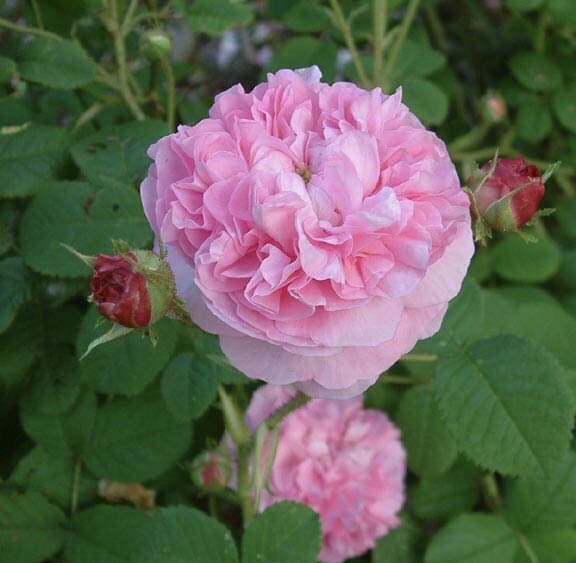
Baba, my Ukrainian-born grandmother, had a bubble-gum pink rose growing in her garden. Both my mother and my aunt had Baba’s roses growing in their yards and my mother gave me a start of that rose. If it wasn’t the first rose I planted in my garden, it was among my favorites for its beautiful, full blooms and its heady rose fragrance. That unnamed rose set me on a path that gave me years of joy and pleasure.
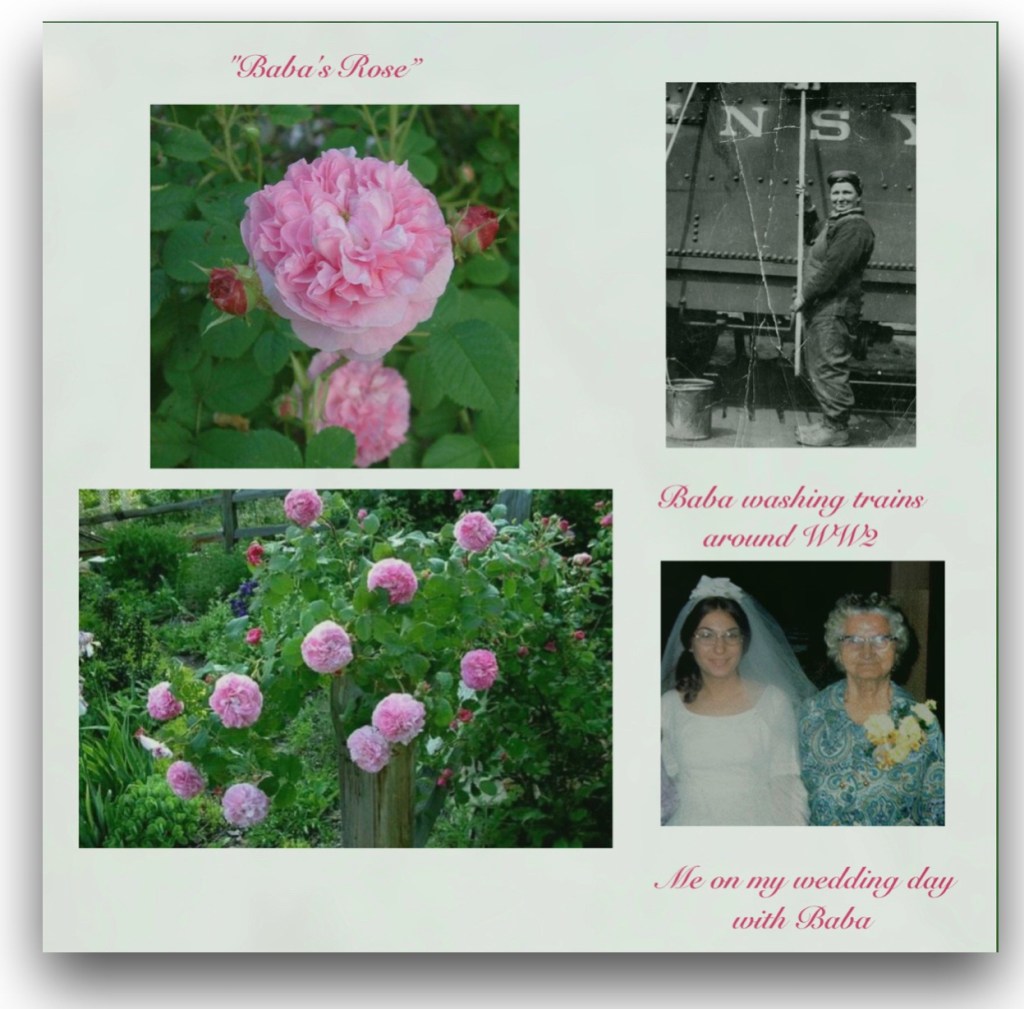
By 2001, my husband and I had been married for 30 years. He pursued his hobbies on weekends and free time. Our sons were adults and away from home. I guess the time and my emotions were ripe for me to embrace a new pastime, a new ‘lover.’
I love roses—their large, colorful flowers and sweet scents. I adore the history of the old garden roses. Some have been grown for hundreds of years. While less lovable, I accepted their thorny canes as one might overlook the less-than-ideal mannerisms in a new love interest.
In my fence-protected garden, I planted dozens of rose shrubs—one of my lists included the names of 80 roses I bought and planted over the years! I enjoyed walking in the garden and smelling the roses. I didn’t bring too many bouquets into our house—I almost couldn’t bear cutting the blooms from the plants. Reading postings on Internet garden forums, many with photos of beautiful roses grown in others’ gardens, became addictive and fueled my desire to buy more roses. Not only could I read about the plant, eventually they could be ordered via the Internet! How easy was that?! I was obsessed!
It is likely that Baba’s rose was an old garden rose. Most Heirloom roses bloom once a year, usually in late spring and early summer. What is lost by growing a once-a-year blooming rose plant is made up many times by the abundance of the flowers covering the plants and usually a very strong rose fragrance. The scent is what I loved the most about them, however the flowers were very photogenic as well, doubling my pleasure in growing them.
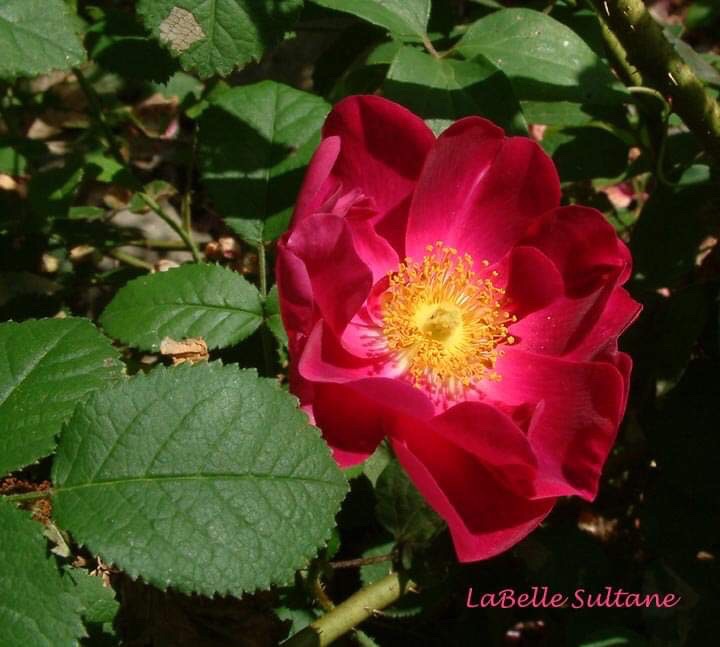
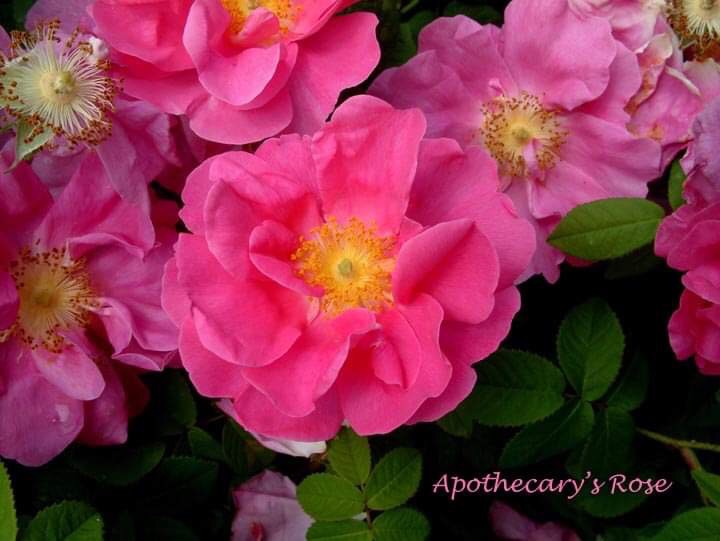
I grew the “Apothecary’s Rose,” a rose that had been grown in medieval gardens and used by herbalists for various remedies and perfumes. I added a deep pink rose, “La Belle Sultane,” who enchanted me with her frilly yellow stamens against the dark petals. She was named for a French woman Aimée Dubucq de Rivery who was captured by pirates in 1776 at the age of 13 and became a cherished concubine and mother of “Sultan Abdul Hamid the First of the mighty Turkish Empire.” Another rose, “Maiden’s Blush,” was originally named “Cuisse de Nymphe” (translation: “Passionate Nymph’s Thigh”) by the French. Perhaps the English found the original name too vulgar. There are similar stories about the names of some of the other roses I grew. And, of course, I grew Baba’s Rose.
Some fellow rose enthusiasts widely promoted alfalfa tea as a fertilizer for roses. A gardener could make this magic concoction herself. Using a 55-gallon plastic garbage can filled with water, marinate alfalfa cubes in the can over a period of days or weeks. The resulting elixir was extremely pungent (I would say it smelled worse than a neglected livestock barn). Wearing rubber gloves, unless I wanted my hands to smell for days, I used water from the soaked and rotting alfalfa to water my rose plants. I don’t know whether or not it helped the roses. As one might do unpleasant tasks for a lover, it was one ritual practiced during my rose love affair.
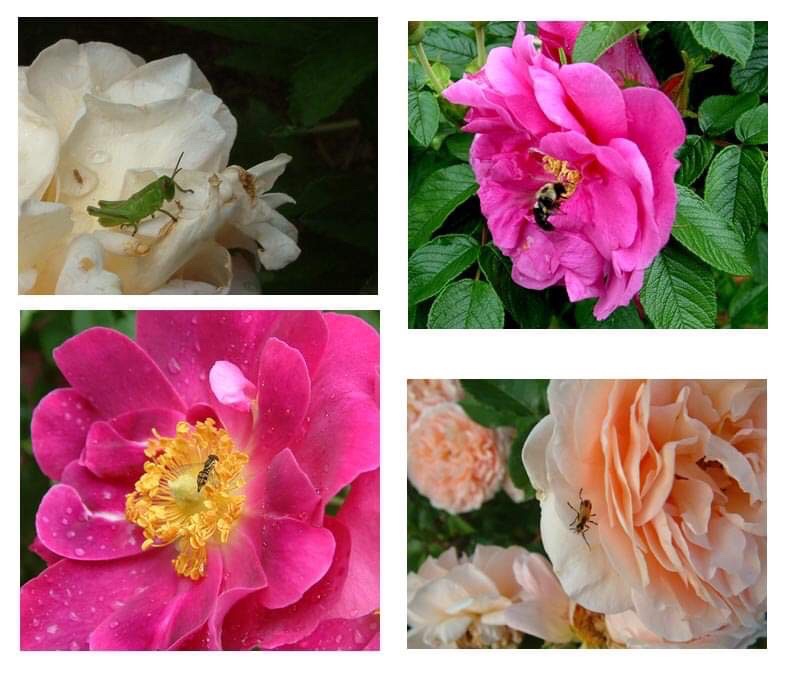
While the roses themselves brought me joy, my garden also provided the perfect place to practice a new hobby: photography. With a digital camera, I was able to take photos of my beautiful blooms and the fauna (insects) that enjoyed my roses. That was so much fun and added another dimension to my gardening pastime .
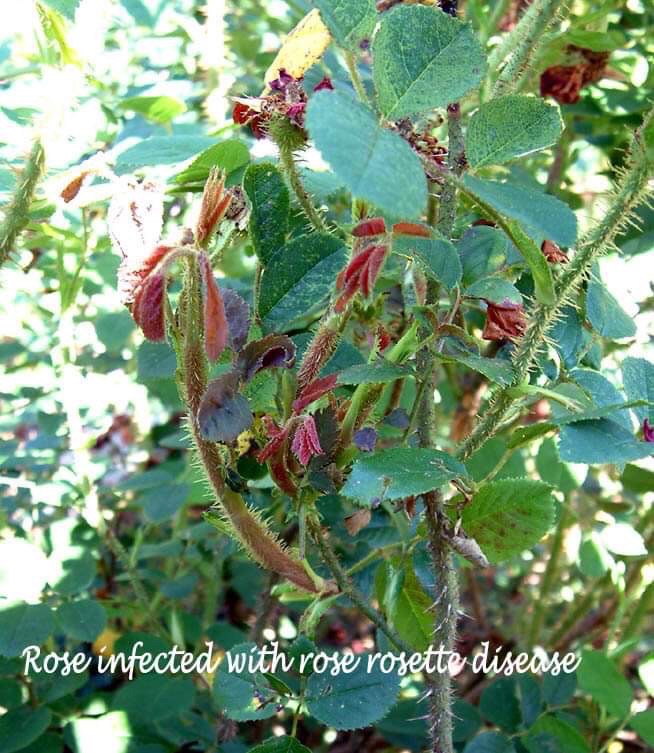
Then in 2003, a deadly scourge entered my little piece of paradise: rose rosette disease (RRD). It didn’t affect people or animals, just my beloved roses. I learned about the disease on gardening forums and the Internet. Sadly, there was no cure for the disease. RRD is caused by a tiny mite that infects the rose with a virus. Symptoms of the disease include deformed stems and flowers, an excessive number of thorns on the canes, and an abnormal number of stems growing from the rose stems. The mite can spread the disease to other roses and eventually kill them. Looking at a rose bush with RRD, it is clear there is something wrong with the plant. The advice was, and still is, to dig out and destroy any rose bush showing signs of the disease.
Each time I found a rose bush showing the infection, the grief I felt was similar to what someone might feel when discovering a loved pet was ill and nothing could be done to heal it; this may sound stupid…after all, it is just a plant! But at that time it was so much more to me. I spent hours in the garden and there was little I could do to help and protect my ‘loves’ from this disease. I was sad and angry when removing those diseased roses. After discovering the disease in my garden, I bought fewer new roses bushes and started adding companion plants to my garden beds. My love affair with roses was on shaky ground.
There were other dalliances with plants that weren’t roses: fragrant peonies (that flopped when it rained which ruined the huge blooms); iris (the iris borer decimated many of my plants); colorful daylilies (vigorous plants that needed divided often—like wrestling with an octopus and requiring the strength of Hercules); clematis with huge flowers but no fragrance (the rabbits liked them almost as much as I did); and flowering perennials, shrubs, and trees. I also had a flirtation with growing plants from seed and participated in a pagan rite by sowing them on the winter solstice (which made the sowing seem a little magical—like a celebration of the “birth of the sun”). The romance was never as strong or as long as my love affair with roses.
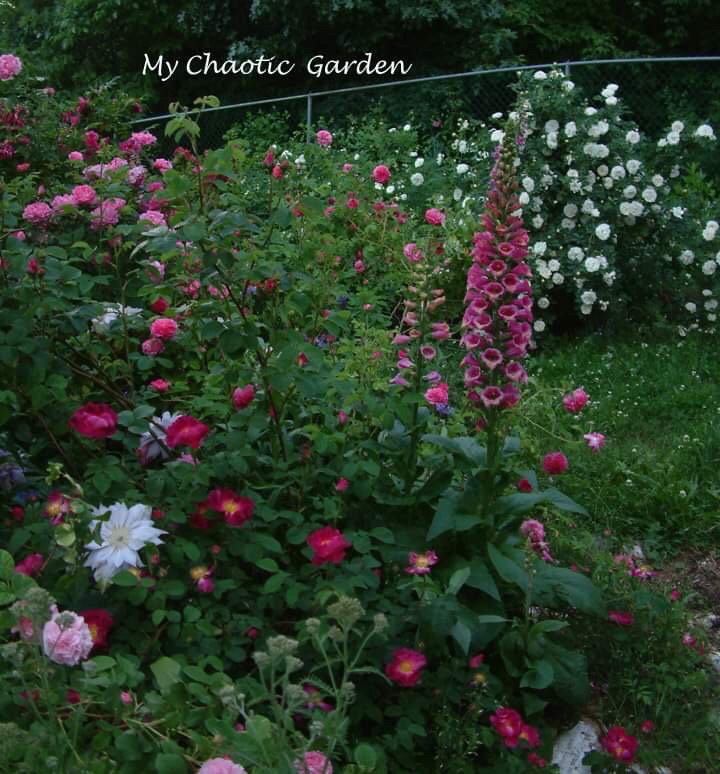
Over time, my garden became too large for me to care for. I began referring to it as my chaotic garden because it was so sprawling, untidy, and unkempt. I continued to find joy in the explosion of flowers during the spring and summer months.
It has been over twenty years since I began my love affair with roses. We moved from Pennsylvania to a much smaller property in the sunny south. I said good-bye to my loves and look back with fond memories. My days of having a huge rose garden are over. My hope is to always grow a few fragrant rose bushes to love and enjoy wherever I call home.


roses are so stunning, and I love that you have some passed down, when I visited the east coast, I encountered sea roses, naturally climbing the walls and gates, and I fell in love with those
LikeLiked by 1 person
Sea roses sound lovely! I will pass your comment on to the author of this story., but I am going to look into what they are myself.
LikeLike