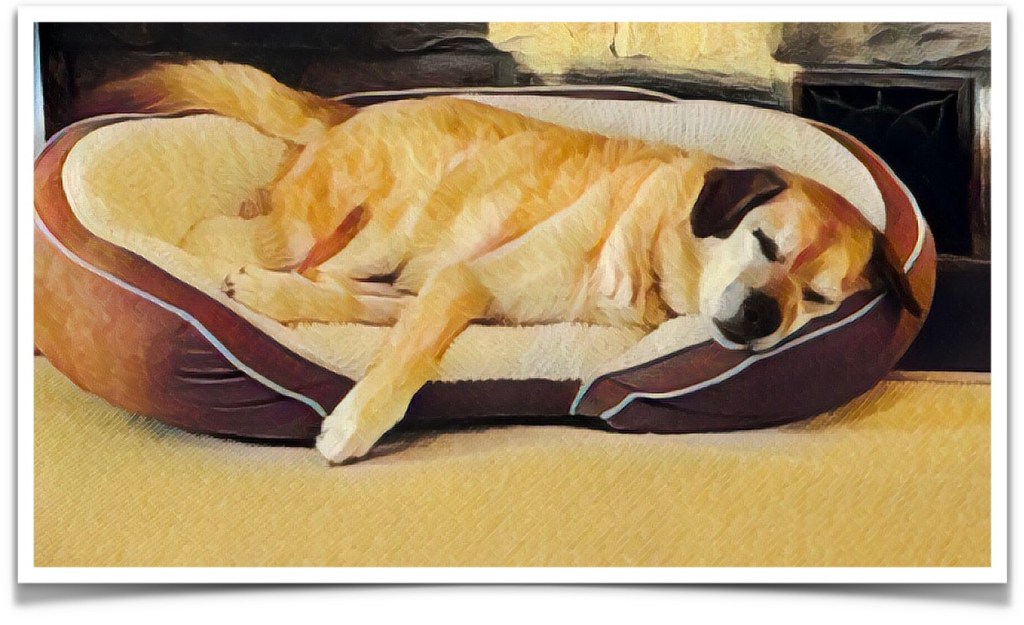
On July 4, 2023 I traveled north and slightly west. Through mountains and valleys I went. As I drove, I noticed the gentle blue Cornflowers, elegant Queen Anne’s Lace and some jaunty yellow flowers that I cannot name. Behind me, our dog sat on the floor of my husband’s truck. Every once in awhile, I would glance over my right shoulder to see how Murphy, my trusty companion, was getting along. The day was hard on him (and me somewhat) as I had to lift him in and out of the vehicle.
I hadn’t traveled any great distance with Murphy since the summer of 2019; that year he was able to jump in and out of my mini van with very little effort. In mid June of this year he turned 14, but his brain told him he was younger. Every time we were at a rest stop on our way to Muskoka, instead of waiting to let me help him in and out of the truck, he tried to jump and do it himself; this made it difficult for both of us. Neither of us thought we would be taking this trip together; my husband was supposed to drive up to our summer home with him ten days after I arrived. At the very last minute, with my car packed, my daughter and I ready to go, I was asked to stay home for a few days. My husband took my vehicle, with all my things, and headed north. Murphy and I were left behind. When I departed 4 days later, our beloved mutt came with me.
For the most part, Murphy slept the whole way to our cottage, except when we stopped for bathroom and water breaks. On the last mile of our journey, as we turned onto the road that leads to our cottage, he sat up. Murphy knew exactly where we were, even after almost four years.
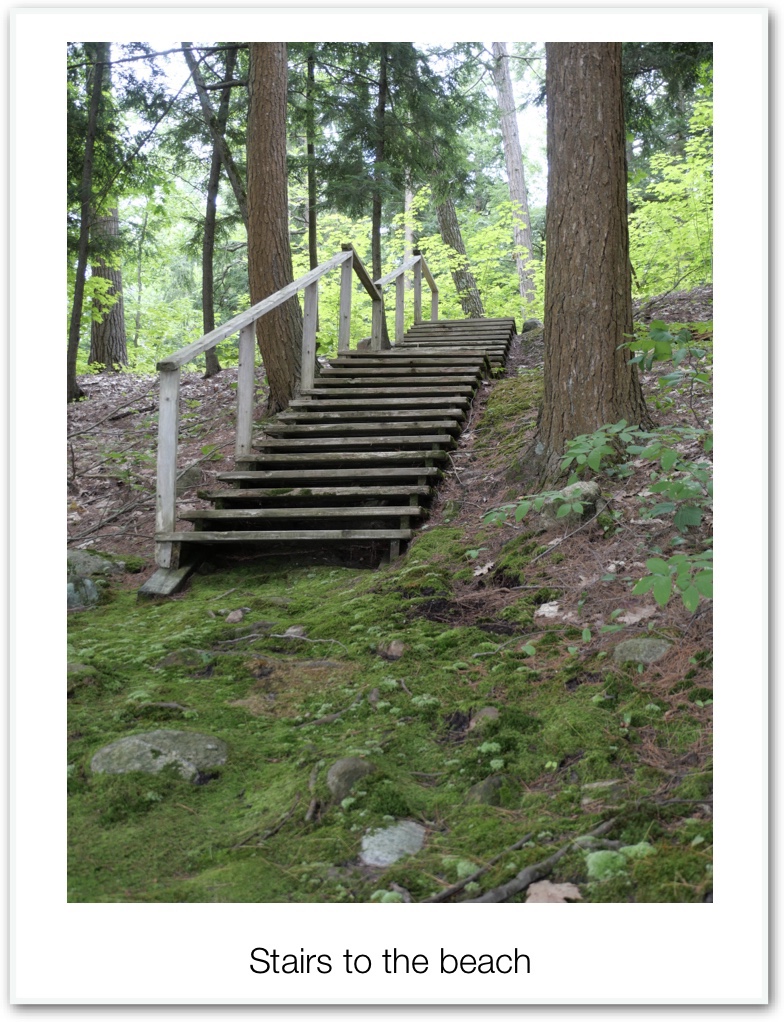
When we arrived in the late evening on July 4th, 2023, the sun was still high in the sky. After unloading and having a bite to eat, I took Murphy on a short walk toward the beach. I thought it would be good for both of us to stretch our legs after the long journey. To get to the beach, there are fairly steep stairs on both sides of a hill.
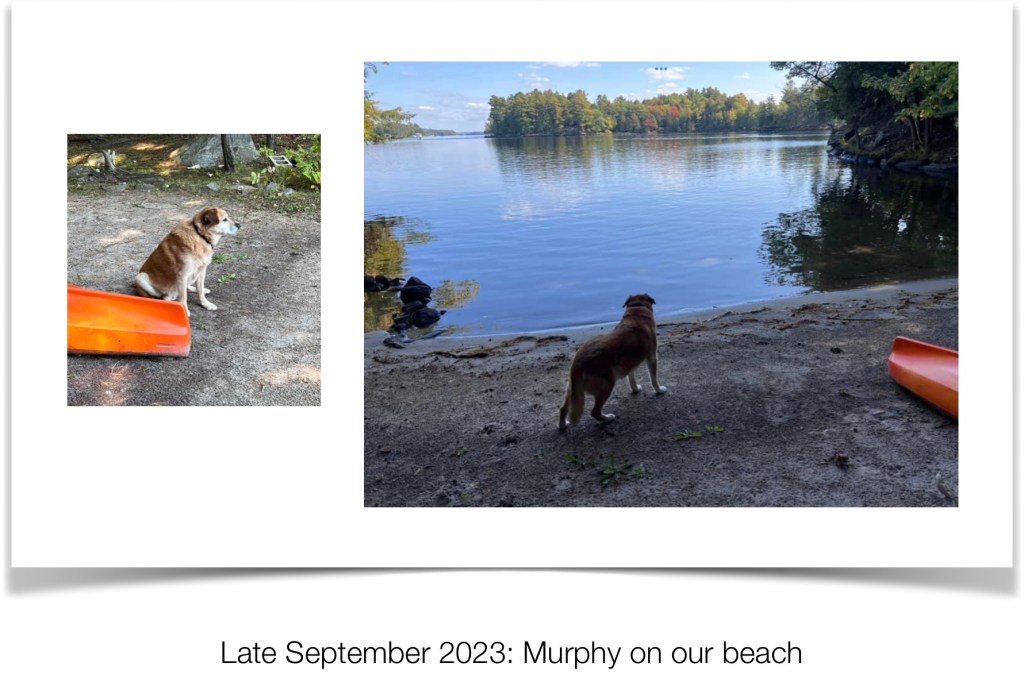
As we walked, with the moss like a cushion under our feet, I intended to turn back before we reached the steps. However, Murphy (on his long leash), had other ideas and started toward the stairs. Before I knew it, he tried to climb the first step and fell. Again, I thought my companion remembered the boundless energy he used to have: when he would go up and over the hill to the beach. In the little sandy bay our dog would play fetch with a tennis ball, then burry it in the sand. Sometimes he would chase the ducks or join my husband in a kayak.
We have had Murphy since he was a puppy. He was adopted at the end of the summer of 2009. For nine years he joined us on our trips to Canada. For several of those summers, Murphy and I would walk two miles together almost every morning.
However, life and our routine changed: in the summer of 2020 none of our family was able to set foot in Canada due to COVID. Then in the summers of 2021 and 2022, my husband chose not to join us at the cottage and Murphy stayed at home with him. Over a year ago, when I was in Muskoka, my trusty companion started walking slower; at the age of 13 he had entered his twilight years. Perhaps he had passed into his dotage before this, but I hadn’t noticed.
This past July, my husband departed our cottage about a week after I arrived. Murphy was left with my 17 year old and I until my spouse came back at the end of the month. This unexpected time with Murphy was special and important for both my daughter and me. Walks with our dog were shortened to several small strolls every day. We had to practice patience and remember he wasn’t young anymore. Our mutt’s steps were slow and painful, but he kept moving. In Murphy, I saw a reflection of what I might feel like in 25 years: slower movement, achy joints, and the desire to do something that physically I would no longer be able to do…
With the regular short walks every day, Murphy and I finally went on a successful walk to and from the beach. We didn’t stay long, but he played for a few minutes before we trekked back up and over the hill. Just over a week later, my husband took him home.
Murphy’s story doesn’t end here, but it raises the question: how do we know when it is time?
As summer turned to fall, my husband and I traveled up to the cottage to experience autumn in Muskoka for the first time. Murphy came with us. He has become too much responsibility for a busy high school senior to take care of; if something happened to our precious canine while we were away, it wouldn’t be fair to burden our daughter with this…. Although this was our first time seeing the changing of the leaves in Ontario, Murphy has probably experienced his last moments there.
We have been home from our short trip north for about three weeks now. The leaves on the trees are showing the bright yellows, deep reds and the brilliant burnt oranges of Autumn. As the leaves start to fall, I see Murphy stumbling often on our daily strolls, choosing the smooth side of the curb to walk on, rather than the grass. Each step Murphy takes looks excruciating. Every day, for the last week, I’ve asked myself: “When the trees are bare, will our old dog still be with us or will his rest come with the quiet of winter?”. Only time will tell.
Some people say that either you love cats or hate them. I have always loved cats, but it was the cat who followed me home that solidified my desire to have cats in my life. Cats, I learned, can be fiercely independent. Yet a cat will give love and affection when you require it most and ask for it in return.
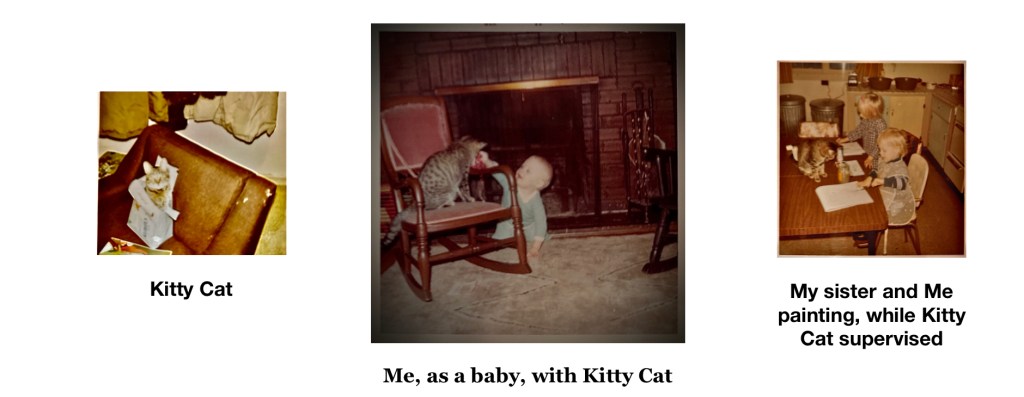
Growing up, we always had dogs. For a short while, my family had a cat. Her name was Kitty Cat. I was a baby when we got our cat. Kitty Cat was part of our family. When we moved to Alaska, for the better part of a year, she and our dog came with us.
I don’t recall much about her, with the exception that I used to play with her on the stairs when we lived in Winnipeg, Manitoba. One day, when I was in kindergarten, I invited a friend (Stacey) over for the afternoon. I had grand plans to spend the afternoon with Stacey, both of us playing with Kitty Cat. When we came home, I couldn’t find our cat anywhere. I asked my mom and she said she didn’t know where Kitty Cat was.
That evening, my parents called my sister, brother and I to the basement, where we had a playroom. They had the three of us sit down. My father said “we have some really sad news…”. He then told us that Kitty Cat had been hit by a car and killed. Apparently, a neighbor had found our Kitty and put her in the trash can, in the back alley. That evening, when my parents had people in for dinner, my sister (two years older than me) and I walked hand in hand to the garbage can in the back alley, to say goodbye. That was my first experience with death and my last time having a cat as a pet for about two decades.
When I graduated from college, I went to Western Washington as part of a volunteer program. The first year that I was out west, I lived in a house with four other volunteers. One day my housemate, Charlie, brought home a cat. We named him Gooley, as that was the name of the house we lived in. His stay was not long. The addition of a pet was not unanimous. I think at least one of my housemates was allergic to cats. Also, we were on a budget, only being paid for our living expenses and a small stipend. I don’t remember what happened to Gooley, but I think Charlie found him a home.
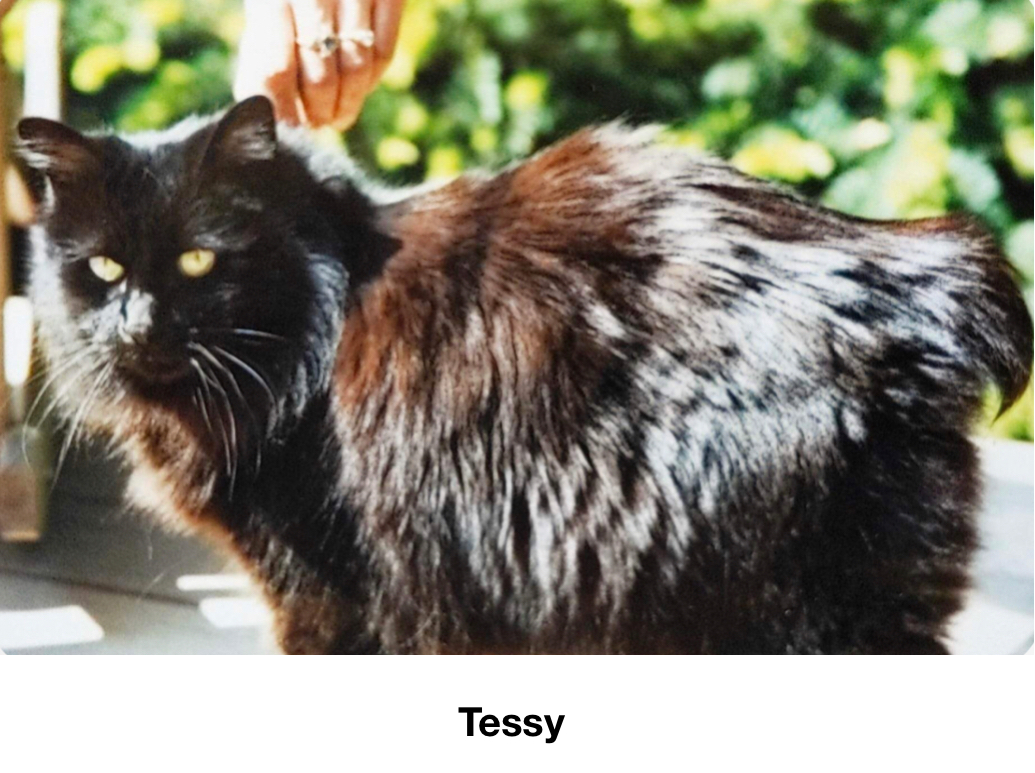
When my year as a volunteer ended, another former volunteer and I moved into a two bedroom apartment, on the bottom floor of a house. My apartment-mate, Lisa, also loved cats and soon brought one home. The cat was part Manx and had not yet been spayed. She went into heat within days of taking up residence in our apartment and was constantly yowling to get out because of her estrus. I said to Lisa, “she should be name Ecstasy”. The beautiful Manx was named Tessy, short for ecstasy.
Lisa went went home to visit her family while Tessy was in heat. Not having had a cat of my own in many years, I didn’t realize quite how agile they are. The first night Lisa was gone, I left a high window open. When I awoke, I found the apartment empty. Tessy was nowhere to be found! Not knowing what else to do, I placed food and water outside the front door. A few days later, before my apartment-mate came back, Tessy found her way home. Knowing that the cat could be pregnant, I had to tell Lisa what had happened. Fortunately, there were no kittens on the way!
Less than a year after I moved in with Lisa, my time living in Seattle came to an end. I had been accepted to graduate school in Massachusetts. When looking for an apartment, I made sure it was one that would allow me to have a cat if I wanted one.
During graduate school, I walked to and from most of my classes. I felt a little lost and sad the fall of my first year, for various reasons. One evening, in late autumn, as I was walking home from class, I saw a cat and stopped to pet her. The cat must have sensed a kindred spirit in me because she followed me home. I stayed in the courtyard of my apartment building, petting and talking to the cat. Eventually, I went up to my apartment. Walking up the stairs, I told myself that if the cat was still in the courtyard upon my return, I would bring her in. When fifteen minutes had passed, I went down the four flights of stairs and outside. The pretty gray cat was waiting for me. I brought her inside and she lived with me for just a little while. It was obvious to me that this cat was not a stray. I contacted shelters to see if anyone was missing a cat. Finally, one of the shelters called me. They had heard from the owner who had moved away from the neighborhood several weeks before. The cat had escaped her new home and had wandered back to her old neighborhood. I was sad to see my new friend go, but was happy she found her family.
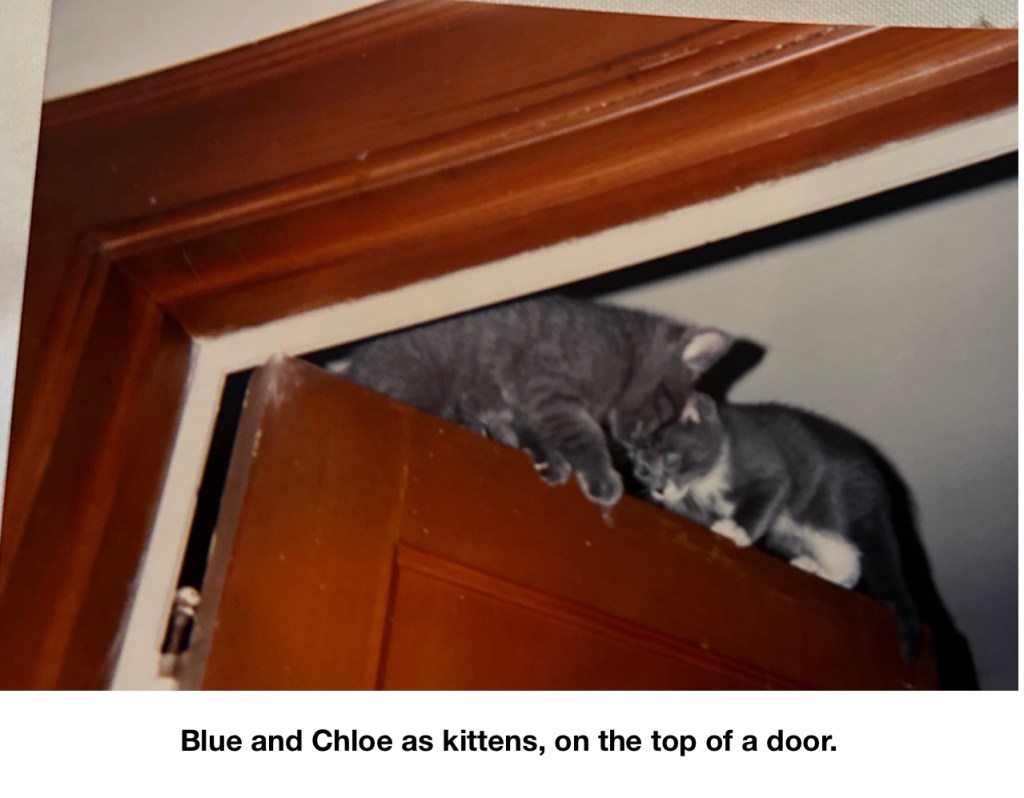
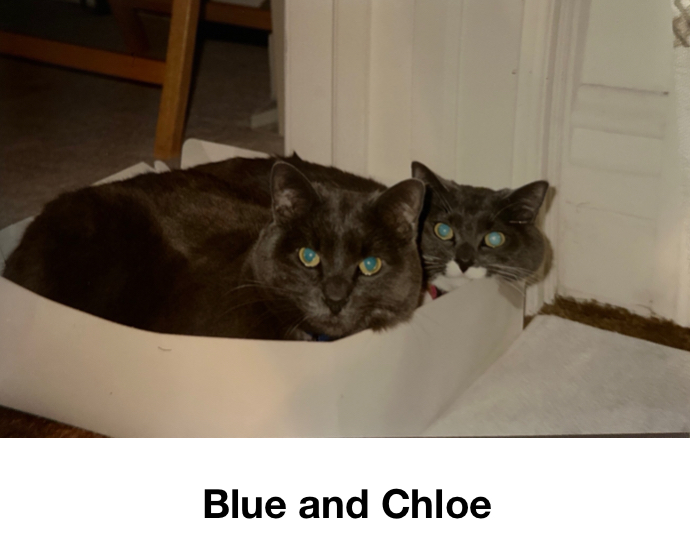
That Christmas, “Santa” gave me the promise of a cat. When I went back to Massachusetts after Christmas break, I put my name into various shelters specifying that I was looking for “blue” kittens. Early in the spring, I was told that someone was fostering a litter of the type of cat I was looking for, however there was a catch: I couldn’t adopt a single kitten, it had to be a pair. That is how I came home with two cats instead of one. The kittens were called Chloe and Blue and were brother and sister. The male cat, Blue, was all gray. Chloe, the female cat, was gray and white.
As the kittens grew into adulthood, Blue became big and lovable. He craved attention, however he was not the smartest. For an indoor cat he ran into all sorts of trouble that could have caused him great harm, but he was a cat with nine lives.
Chloe was the cat with the brains and more independent. She chose when to give you her attention and love. This soft, beautiful cat would have been the one to survive if she had been in the wild on her own. When I lived in a house in the country, there was a day she came up from the basement and deposited a gift at my feet. I let out a little scream as I realized that the “present” was a small live snake.
Chloe and Blue were my babies before I ever had kids of my own. If I went on a road trip, to visit friends or go to my cottage in Canada, they came with me. These sibling cats went through some of the greatest joys and sorrows that happened in my life: the beginning and ending of relationships; my first marriage and divorce; the birth of my eldest child when I was alone; my second marriage and the arrival of my middle and youngest children….
Sadly, when he was in his teens, Blue was diagnosed with diabetes. Having a kindergartner, a toddler, and a baby on the way, I made the choice not to treat the illness. I knew that there would be no consistency in his care. We kept him as comfortable as possible. One day, when he was 14, Blue couldn’t stand up. I knew it was time for him to leave me. I took Blue to the vet and sat with him until he fell into the eternal sleep, as I wept.
Chloe lived to a ripe old age of 18. When my father took his life in the fall of 2010, I think she kept living to see me through the grief. On my birthday, in the spring of 2011, I knew it was time to say good bye. With a heavy heart and tears running down my cheeks, I sat with my faithful companion as she was put to rest.
In the summer of 2011, having just arrived home from Canada, we had a phone call waiting for us on the answering machine; it was from our cat vet. She had a client who had taken in a pregnant stray. The man was putting the kittens up for adoption, and my vet knew that we no longer had any cats, so she called us. I wasn’t ready to bring a new feline into our family, but when my eldest heard the message on the answering machine, she said “we have to call about the kittens right away”. Of my three children, my oldest was the one who had been hit the hardest by her grandfather’s death and then the passing of Chloe. Even though I wasn’t ready, I thought it was important to see the kittens for my children’s sake; my husband, who claims he only tolerates cats, agreed.
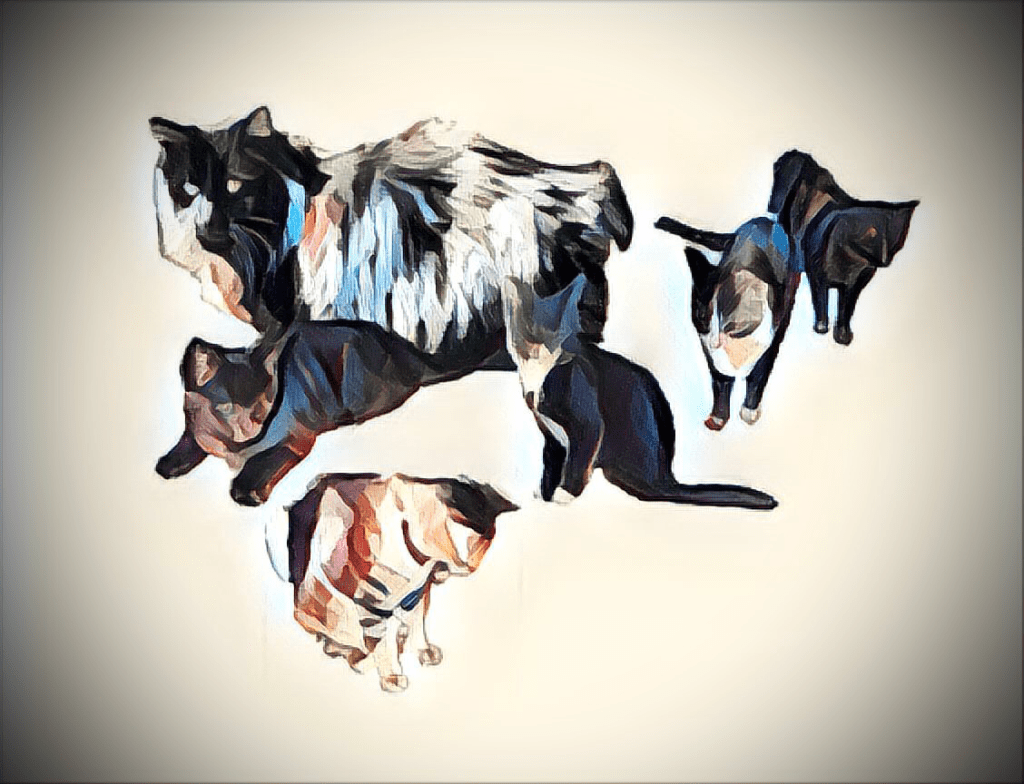
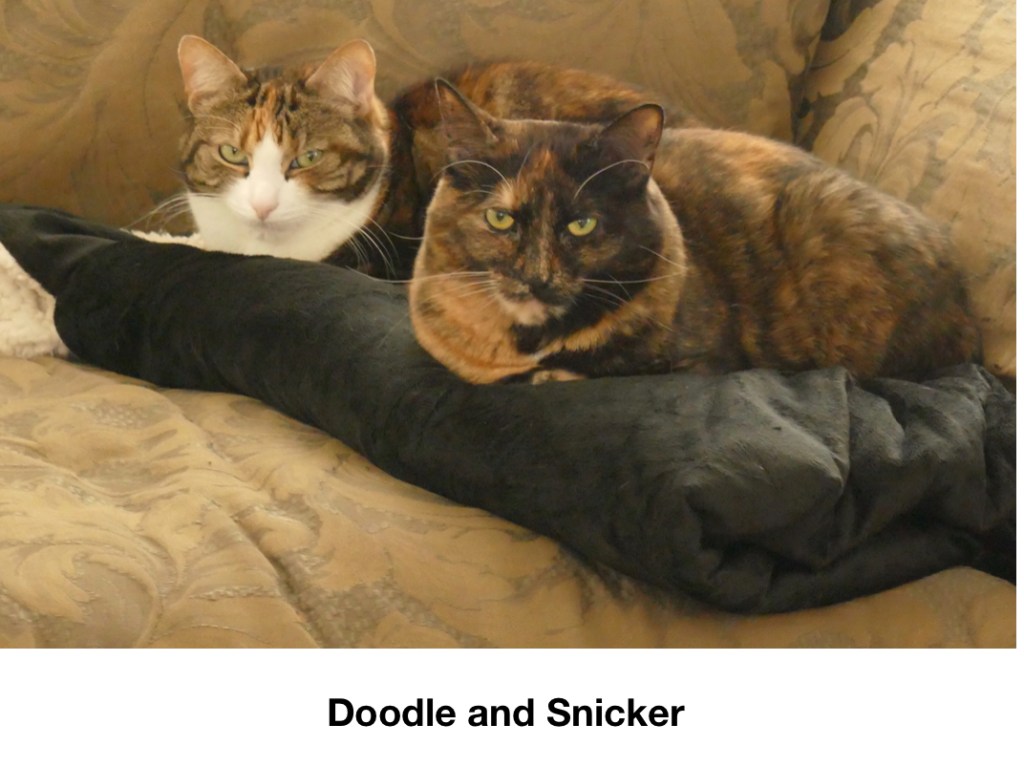
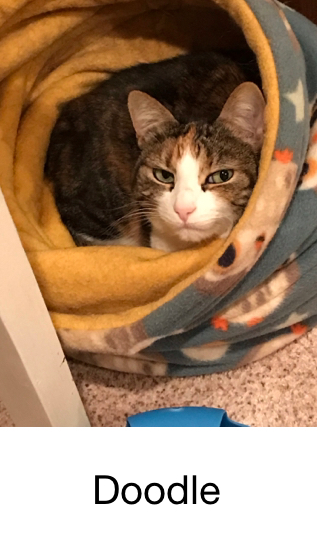
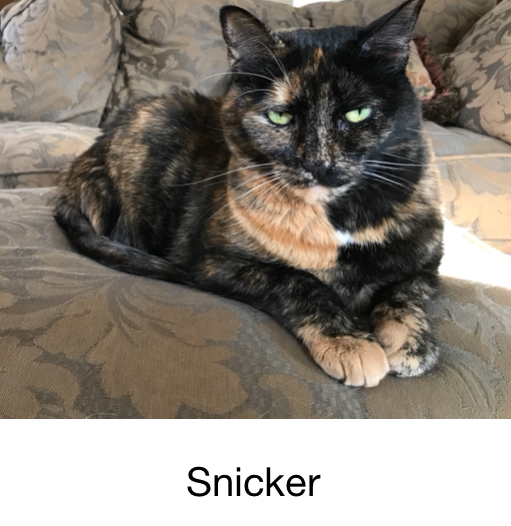
One afternoon, when the kittens were almost old enough to be weaned from their mother, the man who was fostering the cats brought them over. I immediately fell in love with a tiny, affectionate kitten, who may have been the runt of the litter; it was obvious that she would love everybody. My husband picked a second kitten, who was larger, because he thought she had beautiful markings. Eventually these two kittens became ours. The larger of the two cats was named Snicker and the smaller one we called Doodle.
When we first got the kitties my husband said we should call them “Stinkers” and “Doo Doo” for short…remember he only “tolerates’ cats. The nicknames somewhat stuck, but more often than not Snicker was called Blue, and Doodle was called Chloe. Even I sometimes made the mistake and called them by the wrong names.
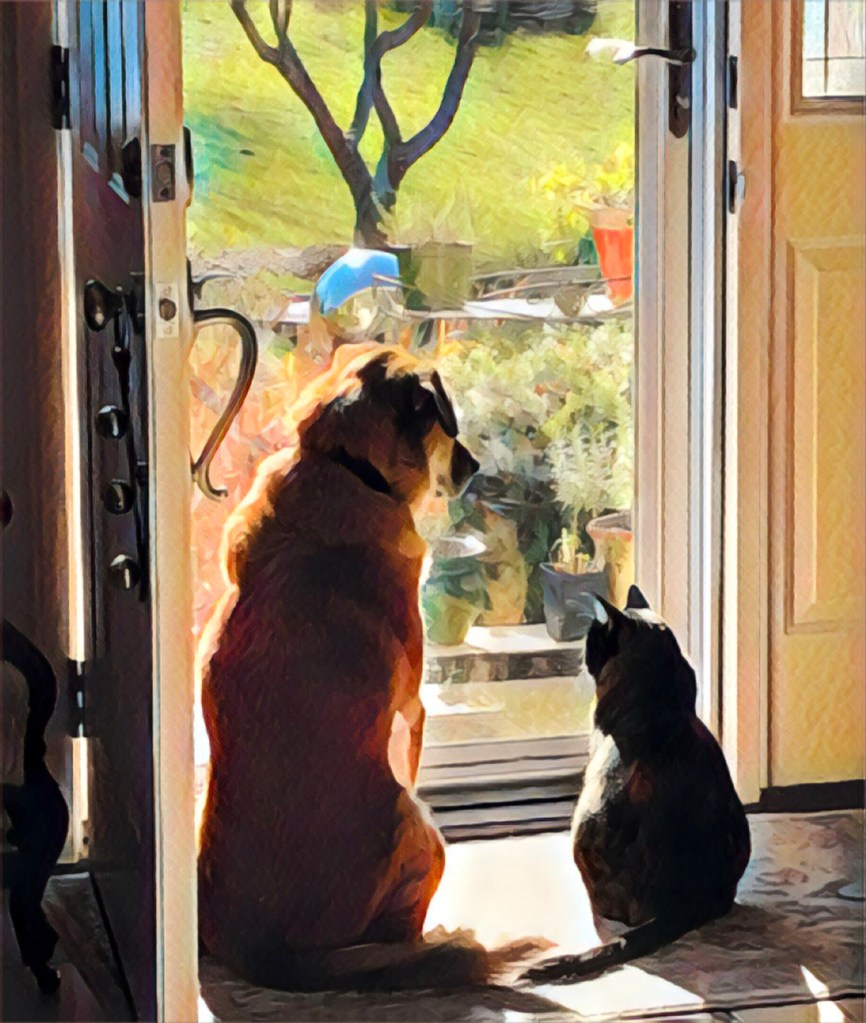
Doodle proved to be every bit as affectionate as she was on the day we met her. She, like Blue, craved love and attention, but was not very smart. The tiny kitty tried to get our dog (Murphy) to like her, but for the most part he didn’t pay attention to her.
Snicker, on the other hand, has always been intelligent, yet anxious. She took a long while to warm up to everyone. First Snicker only wanted my attention. Sometimes she was like a little dog and would wait for me at the bottom of the stairs. Eventually, she warmed up to my middle child and slowly to everyone else but Murphy.
Last Summer, while my youngest and I were away, my middle child took care of the cats. After a few weeks of us being away, it became obvious that Doodle was ill. My child and husband got our little kitty to the vet as soon as possible, but by then it was too late. Cats are apparently notorious for hiding their illnesses; that is what Doodle did. She had lymphoma. Although I know how hard it was on them, I was thankful my child and husband were with Doodle when she passed.
Upon arriving home from our summer away, I realized how skinny Snicker had become. I took her to the vet and then a specialist that our vet recommended. Originally, Snicker was diagnosed with hyperthyroidism. However the tests came back showing that the more immediate thing to treat was lymphoma. She has been on chemotherapy for a few months now and seems to be doing well.
For the better part of three decades, I have had cats as members of my family. Would my life and love for cats have turned out differently if I hadn’t been followed home by that empathetic feline? Maybe. However, it was the cat who followed me home that showed me how two lost souls could take care of each other, in spite of being different species.
Authors note: perhaps because Doodle and Blue were not the brightest of cats you might wonder why we Doodle was often called Chloe and Snicker (while Doodle was alive) was sometimes given Blue’s name.; this was because of the size comparison, not the intelligence.
Last Thursday night, I laughed so hard I cried. Less than 24 hours later my tears were caused by sadness…
As a Christmas present for my husband, I had purchased tickets to a comedy show, along with an overnight in a nice hotel and some activities the following day; this event took place last Thursday and Friday. We left our 17 year old to watch our two remaining pets: Snicker (our aging cat with cancer) and Murphy (our elderly dog); this is something she has done before. However, Murphy had been acting odd since the beginning of the week.
I can’t remember the last time I laughed as hard as I did Thursday night at the show. The next morning I texted my 19 year old (who lives nearby) and asked her to go by the house to let our dog out, before she headed to work. Mid-morning, we received a text saying that Murphy was stumbling a lot. My husband and I made the decision to cut our day short and head home. As we drove, I began to wonder if that day would be Murphy’s last. Surely this beautiful spring day wouldn’t take away our beloved family member. With my heart heavy, the tears came to my eyes and I thought “I am not ready to grieve him yet.” In the last year and a half, three of our pets have died: one of our two cats (of the same cancer her sister, Snicker, now has) and my youngest daughter’s two Guinea pigs. Luckily, we do not yet have to mourn the loss of another animal. Murphy is OK for now. In fact, today, our 14 year old mutt appeared even spry as he lunged at an unsuspecting car on our morning walk.
Grief is a hard thing to experience. The mourning process is not only about the death of someone you loved, but it could also be the extreme sadness you feel at the ending of something: a relationship, a job, the person you were before something bad changed who you are now; these are just a small handful of things that can be mourned. People often suggest that the death of a pet helps children understand what it means to die. The problem is that it is almost impossible to teach someone how to grieve. Everyone’s mourning process is different. You can explain to someone the “stages of grieving” which are “denial, anger, bargaining, depression and acceptance”, however everyone experiences these phases differently.
You might ask “Can the loss of a pet be as traumatic as the loss of someone you love?”. In my unprofessional opinion, the answer is, yes. Grief is mourning the loss of something or someone you love. The intensity and the process might be different, however the sadness is still there. Society treats the way we mourn our animal companions differently than the way we grieve our human loved ones:
“Although grief over the loss of a cherished pet may be as intense and even as lengthy as when a significant person in our life dies, our process of mourning is quite different. Many of the societal mechanisms of social and community support are absent when a pet dies. Few of us ask our employers for time off to grieve a beloved cat or dog because we fear doing so would paint us as overly sentimental, lacking in maturity or emotionally weak. Studies have found that social support is a crucial ingredient in recovering from grief of all kinds. Thus, we are not only robbed of invaluable support systems when our pet dies, but our own perceptions of our emotional responses are likely to add an extra layer of distress…”
Grief does lessen with time, but never fully goes away. Life is different because you have experienced a loss. For some people grief stays and doesn’t fade into the background of their life:
“For about 7 percent of those who are bereaved, however, grief sticks around in a deeply painful manner, preventing them from moving forward and healing. Prolonged grief—also referred to as complicated grief—traps these individuals in a loop of despair from which they can’t escape.”
I think of grief as being like a giant wave: Picture yourself standing on the sand in the shallow water. All of the sudden something happens in your life that is like a giant wave knocking you down. The swell of grief makes you feel like you are drowning. Rising back to the surface might take a long time, and you might feel as if you are lost in the ocean. Eventually, you will move forward with tentative strokes and head toward solid ground; this may take a long time. The sea of grief can be rough and may pull you under again. At some point, perhaps sooner than later, you begin to swim. When you are finished swimming in your grief you will reach land. The landscape will feel different because something important was lost. You have survived and it is your job to treasure the good memories of whatever it is you have grieved.
Having mourned many losses…people, pets, relationships, ideas…I should be an expert by now. Every single “death” has been different. I have learned more about appropriate ways to grieve as I have aged. When I was a child, I would face my mourning mostly alone, retreating behind closed doors. As a young adult, I handled my grief inappropriately and drank too much. Then, as I grew older I would run until I couldn’t breathe and the tears would come; running helped me through my grief. Sadly I had to stop running, because my knees gave out. After over 30 years of running, this was another kind of loss. “Since I can’t run, where will that leave me the next time I have to mourn?”, I asked myself in the car last Friday afternoon, then I remembered laughter. My husband helped me get through my father’s death by making sure we had a comedy to watch….There were so many movies and re-runs of Two And A Half Men. Again, when we were in that extremely difficult period of our lives, and felt as if the world was crumbling around us, we turned to funny, light, entertainment. I am sure, if I remember how I survived the hard times before, I will get though another loss. I know that grief never fully goes away, but will dull with time.
For now, we play in the shallow water, with the waves lapping at the shore. We hold up those who remain, with whatever support we can. My best advice is to live your life to the fullest. When you are knocked down by that giant wave, maybe you can find the laughter through the tears. Eventually, remember playing on the beach of life and think fondly of that which you have lost.




 Tell Me Your Story