While I was growing up, every evening my siblings, parents and I would meet in the family room for cocktails. We kids would have soda. My mother probably had a glass of white wine and my dad often had whiskey. Cocktail hour was a time for us to come together and talk. Dinner was still being prepared and we didn’t rush through it, like one might at a meal; it was nice. There were times that I would miss these gatherings because of my swim team practice, but that was only for a brief period of my childhood.
My father drank his whiskey “neat”: no ice, no water; almost anyone who knew my dad was aware of this. He held his liquor well. If he had a few drinks too many, you couldn’t tell; the man was as smooth as his drink.
When my siblings and I grew up, and moved out of the house, my parents would come together at the end of their busy work days and continue the tradition of cocktail hour. One night during such an occasion, the pleasant evening my parents were having took a turn and my father ended his life. Just like that: no warning, no note. My mother was left trying to make sense of what made my dad snap. He ended his life in front of her eyes.
The fall that my father died, I had just started to run again. Running was my therapy; time for me to process what had happened. At the time, I didn’t run with music. One song kept playing through my mind; it was “Whiskey Lullaby”. The circumstances of the man in the song were very different than my father’s, but it was these four lines that stuck in my mind:
I ran with these words playing through my head. The run would eventually end with tears in my eyes and a lump in my throat.
That fateful night he put the whiskey to his lips and pulled the trigger; he no longer had the strength to go on. Dad didn’t think, but only acted, leaving trauma in his wake. Unlike the woman in the song, my mother had the incredible strength to get up off her knees…
For me, the “her” in the song was my father’s life: he had suffered so much and he was tired.
Music sometimes resonates with you for a certain reason. “Whiskey Lullaby” filled me with sadness; it evoked an image I didn’t want to see. When my father died, I couldn’t listen to contemporary music of any kind. For a few years following my father’s death, the music from my youth were the songs I chose to listen to; these tunes filled me with the sound from a time when my family would sit around talking, sharing our day, while my dad drank his whiskey: “no ice, no water”.
Authors note: We are nearing the end of September, which is National Suicide Prevention Month. Suicide can happen any day of the year and any month; awareness should be always be present. Remember to support those around you. Know the the risk factors and warning signs of suicide (https://afsp.org/risk-factors-and-warning-signs). There is also a National Suicide Prevention Lifeline, the number is 9-8-8. Please ask for help, if you need it. Learn to recognize the warning signs that might lead to suicide. Unfortunately, my father didn’t ask for help and we hadn’t recognized the signs that told us he was in distress.
Last Thursday night, I laughed so hard I cried. Less than 24 hours later my tears were caused by sadness…
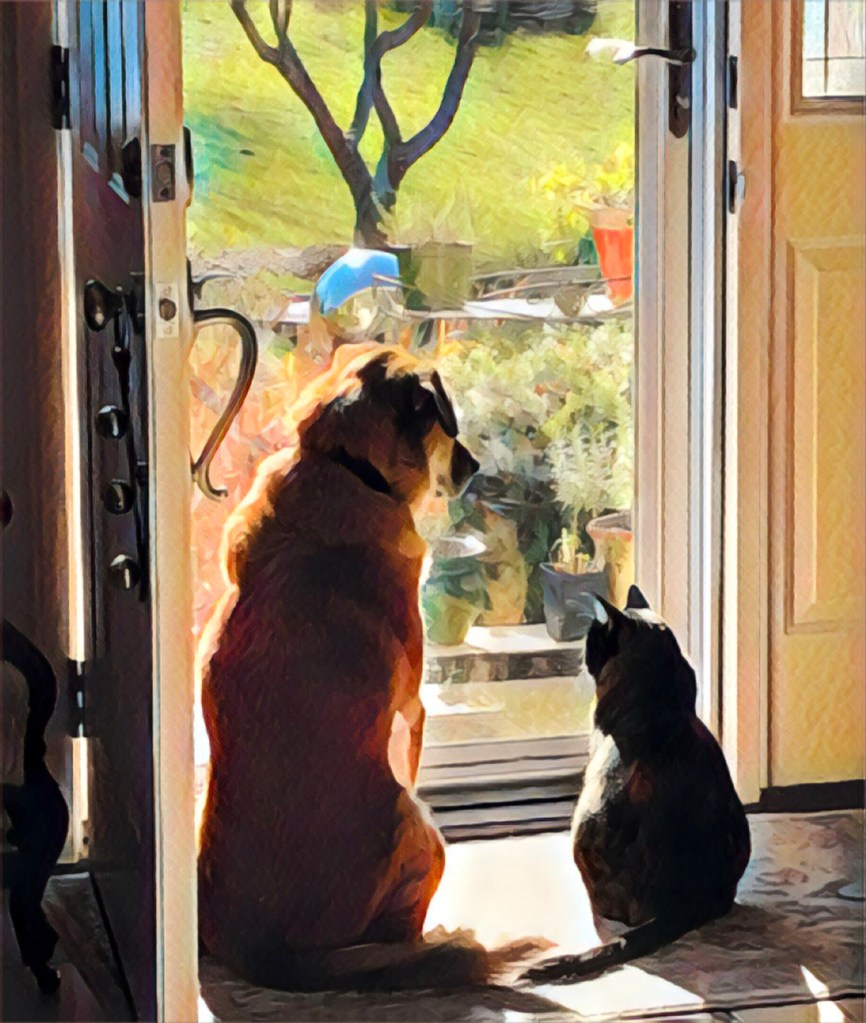
As a Christmas present for my husband, I had purchased tickets to a comedy show, along with an overnight in a nice hotel and some activities the following day; this event took place last Thursday and Friday. We left our 17 year old to watch our two remaining pets: Snicker (our aging cat with cancer) and Murphy (our elderly dog); this is something she has done before. However, Murphy had been acting odd since the beginning of the week.
I can’t remember the last time I laughed as hard as I did Thursday night at the show. The next morning I texted my 19 year old (who lives nearby) and asked her to go by the house to let our dog out, before she headed to work. Mid-morning, we received a text saying that Murphy was stumbling a lot. My husband and I made the decision to cut our day short and head home. As we drove, I began to wonder if that day would be Murphy’s last. Surely this beautiful spring day wouldn’t take away our beloved family member. With my heart heavy, the tears came to my eyes and I thought “I am not ready to grieve him yet.” In the last year and a half, three of our pets have died: one of our two cats (of the same cancer her sister, Snicker, now has) and my youngest daughter’s two Guinea pigs. Luckily, we do not yet have to mourn the loss of another animal. Murphy is OK for now. In fact, today, our 14 year old mutt appeared even spry as he lunged at an unsuspecting car on our morning walk.
Grief is a hard thing to experience. The mourning process is not only about the death of someone you loved, but it could also be the extreme sadness you feel at the ending of something: a relationship, a job, the person you were before something bad changed who you are now; these are just a small handful of things that can be mourned. People often suggest that the death of a pet helps children understand what it means to die. The problem is that it is almost impossible to teach someone how to grieve. Everyone’s mourning process is different. You can explain to someone the “stages of grieving” which are “denial, anger, bargaining, depression and acceptance”, however everyone experiences these phases differently.
You might ask “Can the loss of a pet be as traumatic as the loss of someone you love?”. In my unprofessional opinion, the answer is, yes. Grief is mourning the loss of something or someone you love. The intensity and the process might be different, however the sadness is still there. Society treats the way we mourn our animal companions differently than the way we grieve our human loved ones:
“Although grief over the loss of a cherished pet may be as intense and even as lengthy as when a significant person in our life dies, our process of mourning is quite different. Many of the societal mechanisms of social and community support are absent when a pet dies. Few of us ask our employers for time off to grieve a beloved cat or dog because we fear doing so would paint us as overly sentimental, lacking in maturity or emotionally weak. Studies have found that social support is a crucial ingredient in recovering from grief of all kinds. Thus, we are not only robbed of invaluable support systems when our pet dies, but our own perceptions of our emotional responses are likely to add an extra layer of distress…”
Grief does lessen with time, but never fully goes away. Life is different because you have experienced a loss. For some people grief stays and doesn’t fade into the background of their life:
“For about 7 percent of those who are bereaved, however, grief sticks around in a deeply painful manner, preventing them from moving forward and healing. Prolonged grief—also referred to as complicated grief—traps these individuals in a loop of despair from which they can’t escape.”
I think of grief as being like a giant wave: Picture yourself standing on the sand in the shallow water. All of the sudden something happens in your life that is like a giant wave knocking you down. The swell of grief makes you feel like you are drowning. Rising back to the surface might take a long time, and you might feel as if you are lost in the ocean. Eventually, you will move forward with tentative strokes and head toward solid ground; this may take a long time. The sea of grief can be rough and may pull you under again. At some point, perhaps sooner than later, you begin to swim. When you are finished swimming in your grief you will reach land. The landscape will feel different because something important was lost. You have survived and it is your job to treasure the good memories of whatever it is you have grieved.
Having mourned many losses…people, pets, relationships, ideas…I should be an expert by now. Every single “death” has been different. I have learned more about appropriate ways to grieve as I have aged. When I was a child, I would face my mourning mostly alone, retreating behind closed doors. As a young adult, I handled my grief inappropriately and drank too much. Then, as I grew older I would run until I couldn’t breathe and the tears would come; running helped me through my grief. Sadly I had to stop running, because my knees gave out. After over 30 years of running, this was another kind of loss. “Since I can’t run, where will that leave me the next time I have to mourn?”, I asked myself in the car last Friday afternoon, then I remembered laughter. My husband helped me get through my father’s death by making sure we had a comedy to watch….There were so many movies and re-runs of Two And A Half Men. Again, when we were in that extremely difficult period of our lives, and felt as if the world was crumbling around us, we turned to funny, light, entertainment. I am sure, if I remember how I survived the hard times before, I will get though another loss. I know that grief never fully goes away, but will dull with time.
For now, we play in the shallow water, with the waves lapping at the shore. We hold up those who remain, with whatever support we can. My best advice is to live your life to the fullest. When you are knocked down by that giant wave, maybe you can find the laughter through the tears. Eventually, remember playing on the beach of life and think fondly of that which you have lost.